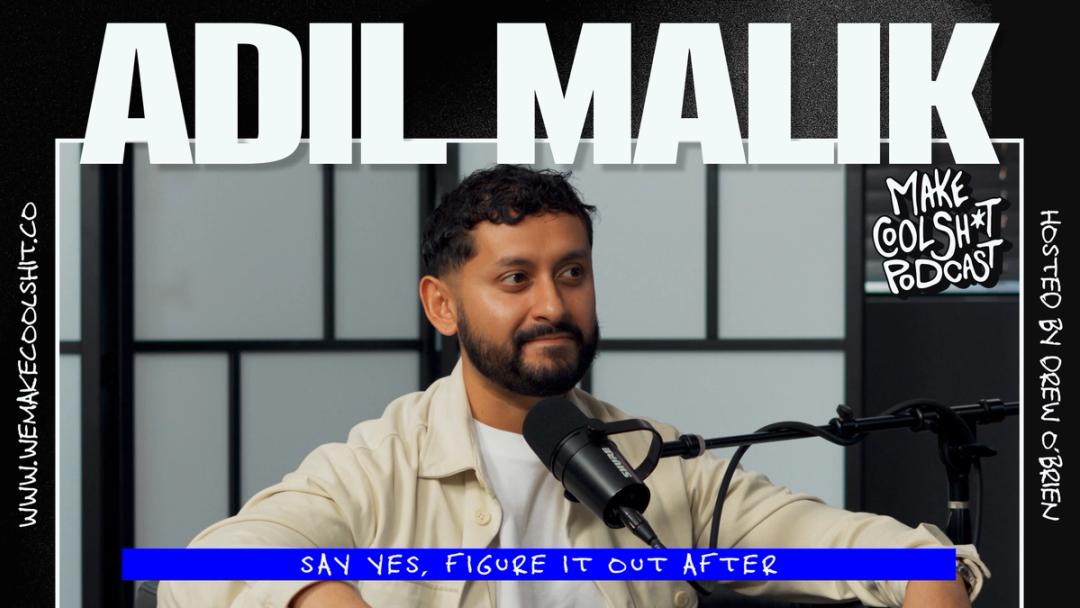
What's up, everybody. Welcome to another episode of the Make-A-Wisher Podcast. Today I'm sitting down with Adeel Malik, co-founder of Origin Partners. Is that— is that good? That's correct? Yeah, yeah. Okay, cool. Normally I ask the guests of like, "Hey, how did we meet?" But we're recent friends, and we have a pretty wild, weird, entangled backstory almost. Yeah. So I went to this random event with this guy who I didn't know shit about, called David Meltzer. Because at the time one of my employees was like, "Yo, let's go check this guy out, like he's an entrepreneur, blah blah blah blah blah." And in my head I'm like, "Okay, cool, whatever." And he kind of, like, dragged me to this event. First event I was at, I didn't meet you or your wife, Mitra, shout out, who's here in the background. Didn't meet you guys at the first time I was there. And I think the second event I went to— because I really enjoyed the first one, right? Yeah. I actually met Janae Barnes, who I think was episode 8 of this podcast, at this event. Fast forward, meet you, we chop it up, we're having a good time. Meet Mitra as well. At that point, you have no connection to David. That was like my second time meeting him, but like first time at one of those dinners. Same. So you're— we're almost in the same place. Yeah, yeah. Right? Fast forward to today. David Meltzer is a business partner of mine in a— in a panel brand called Made for Mistakes, coming soon.
We'll bring it back to you now. Yeah, yeah. What the hell do you do? Yeah, so rewind back. So I actually had my own solar company for a while, and then I merged with a company February of this year. So I've had my own company for almost 5 years. Congrats. And thank you. And I've known— there was this individual named Chris Hanley who I've known for years. And he's always wanted to kind of do something together. We tried, and we were like, "Oh, like, you know, let's look into it," but nothing ever actually happened. And my wife and I traveled last year. We went to 17 countries— or 17 countries over 60 cities last year, or 2 years ago. 17 countries? Yeah. We— we want— we said that before we have kids, we're going to travel the world. So when my lease expired in Miami, we decided to go and pack up all our shit and just go see the world. And we didn't have an itinerary. We just were like, "We want to go to South America, Europe, and Asia." Okay, real quick. Yeah, yeah. I know you're about to go through this whole backstory. Yeah. Favorite spot. Favorite city. Dude, favorite country would be Vietnam. Favorite city, it's hard to say. Maybe Florence, maybe Tokyo. Every— I feel like every country has something different to offer. But top— top 3 countries would probably be like Vietnam, Japan, Italy, and Peru, I would say like top 4. Interesting. Yeah. That's awesome. Vietnam, Vietnam, hands down, bro.
Vietnam is. You're like the third person that said that to me in like the last 6 months. It's— I can't— Because I think Vietnam gets a bad rep. Yeah. For whatever reason. Right? I think we all know why, but like— but. No, bro, it's one of the sickest countries in the world. I'm the person that's like, "I've never been there, so I can't comment on it." It's— it's just the definition of like, like when you think of an Asia backpack type, like a crazy adventurous, diverse experience, food, this and that. When you think of something that's just so foreign to you, but it's like so exhilarating and so new, it's— Japan is still kind of close to the West. It's more clean and more refined. Even parts of the Middle East, like you go to, it's nice. Dubai kind of has things that are similar to US cities. But going to Vietnam, it's super raw, and it's like, "Whoa, I feel fucking alive." It's an experience. It's an experience. It's like, "Whoa." Like your senses are stimulated to the maximum degree. And like the people are amazing. They're like not like— and every Asian country, the culture is a little bit different. Just like every state, it's a little bit different. Like people from the South are different than people in the Northeast. All the Asian countries, everyone's culture is a little bit different. And Vietnam was just very warm, very almost aggressive and assertive, like New Jersey and New Yorkers. Fit right in. Yeah, they were like that. But then they also have this like Latin flair and culture that's very vibrant and
out there and outgoing. And then the food is super different. It's like all we know about is like pho and banh mi, but they have all these hundreds of dishes we've never heard of. They have like egg coffee, caramel, chocolate, like coffees we've never heard of. And then the best part is like you're rich there. Your dol— your— the dollar goes so far. It's like I think it's like 10 cent, 50 cents for like a cup of coffee. Like it's a joke. You just— you're automatically a millionaire there. Your currency just goes further. Well, let me— let me book my ticket to. Yeah. Vietnam, bro. Vietnam. So sorry. I didn't mean to totally derail you, but I— so once again, this is why I love this podcast. I had no idea that you guys just like packed up, dipped out. Because I did have a child, and that's very hard to do now with a 2-year-old, right? So it's actually amazing that you guys plan that out as a couple because that's hard to do. And it gets more difficult with a kid and more expensive with a kid. And— and you don't really get that true experience without having to worry about another life. Yeah. While doing all of it, right? So I think— honestly, I think that's amazing because there's like maybe 1% of people in the world that say it and then actually do it. There's a lot of people that say it. Yeah. And then they don't actually just— once again, business owner, sold the company. So was that the order?
You— Yeah, so— and then when I came back, I was— I wasn't sure if I wanted to stay in solar. This is actually pretty crazy. I was— I was getting frustrated. Solar is great. It's given me an amazing life. It's taught me so much about entrepreneurship. But it's a very complicated business because it's construction, a lot of different variables. You're dealing with the city, you're dealing with permitting, you're dealing with contractors, dealing with like homeowners. And even if it's a business, it's— there's just so much to it. There's so many variables and things I didn't know. I still built an amazing life with the business, but I was like, "Well, what if I entered— what if I stepped into a new vehicle?" So I already had that curiosity, and I was looking into software or something AI related. I just didn't know what. But I was like, "Ugh, like, okay, I'll leverage everything I learned from solar, but I'll apply it to a new business." So as I was thinking through that, Chris Hanley just said, "No, I— I don't think you should leave solar. I think you should give it more time, but let's expand on what we're doing in solar." And he's a service disabled veteran, so he was like, "Let's go over government projects. If you have the commercial experience, which I don't, let's build out the commercial part of the business and come in as an— as an equal partner." Now that I think about it, I think you introduced me to him quickly. Yeah. We were at the bar at Arnold's. Chris is the one that brought me to the David Meltzer dinner. Okay. Shout out Arnold's, by the way.
This is like the third time I've shouted out this restaurant on this podcast. But I think you— like I walked in, we were all early, and then I had a quick drink with him, and then we went into the event. Just hit it off, yeah. But that— that's Chris. So Chris is the one that brought me in. And then that— then we started to— he started to get closer with David. So I was kind of more on the outside. Chris and David had a relationship. He was actually a one-on-one client. And as that relationship started to evolve and naturally we started having other conversations, David started making some introductions. And that's where we started opening up looking into government contracts and Department of Defense and RFPs and just that whole world of government contracts, which. Which is a wild world. A wild world, yeah. So a lot to learn. We started meeting with consulting firms and trying to figure out how we're going to put this together. And during that time, I met somebody that basically was like, "Hey, I know you're working on this. It's going to be a long game, but I have immediate needs here in the data center world in regards to solar and battery storage." And I was like, "Oh, well, I know enough about that to have this conversation." And then I realized I have access to things that they need that they just aren't even aware of. They don't have the contacts. They don't know the suppliers, the distributors. So overnight, I started to kind of get involved and focus on data centers. You had the playbook.
Yeah, I had— had the playbook. So it was just— it was— it was— I was leveraging what I was already doing. And again, I wasn't thinking that I was going to do this full-time. I still was— we still have the solar business. And things started to evolve where I was getting involved in more conversations. I started going to conferences where I was just learning about data centers. It was climate week in September in New York City, and I got invited by— through one of the contacts that I had— got invited to all these different meetings where I met all the— and everything around climate week was just around energy and the fact that data centers is going to be a huge thing, huge topic. It's already a huge thing. So— yeah. So that just started— that conversation just started to evolve. Then a solar contact of mine was interested in purchasing data centers and having me as a solar piece. And that is kind of the time when I met Alex through David. Alex Wachuka, which is actually one of our— our mutual friends. We found out way after the fact. But me and Alex were working on a marketing SaaS product for solar. And my business partner, Chris Hanley, actually went to him and was like, "Hey, you know, I hope this doesn't take too much of Adeel's time because we're working on this stuff on data centers." And Alex is like, "Wait, what are you doing with data centers? I have a bunch of contacts in the data center world." And that is when the conversation really started with Alex. And fast forward, we have Origin Partners today, which is an infrastructure advisory platform.
It's at the intersection of 3 things. So deal flow, capital, and energy. So what started out as, "Let's— let me do the energy piece," turned into, "Hey, if you're helping us with the energy piece, something else we need help with is raising some debt or raising money or raising capital for this." So I went back to other people in my data center network that I met so far, and they were like, "Hey, we actually provide capital. We deploy $150 billion annually just for data center opportunities. These are the parameters that we're looking for, and we'll provide debt at very low interest." So now I get to provide basically— or advise people and refer them over to this— to this institution that can help them hopefully raise money or whatever it is for their data centers. So it wasn't that I was the expert, but I was very resourceful with my network that I just started falling and just sitting in the right rooms. And thank God for ChatGPT and Claude. Every second that I'm not on a meeting, I'm learning. I'm like, "Okay." And I feel like in business and entrepreneurship, a lot of times you just say yes and then figure it out after. Say yes, figure it out after. Every day. Every day, right? And it's like, I don't know everything, but I have enough context and I have enough confidence in my ability to figure it out that I'll just figure it out. And then you combine that with the right team and the right people with the right skill set that are complementary to each other, and it is magic.
Like I can't even describe it. As cliché as it sounds, I say this probably more often than I should, but your net worth is your network. Yeah. Right? So like, first off, the fact that you hooked up with Alex Wachuka is wild because I grew up with him. Shout out, Alex. How you doing, pal. And once again, we all go from a bunch of people at this meeting, and now even your wife, Mitra, now works through. Yeah, she works for David. She works for David. So we all went to this second time meeting. Now that I'm thinking about it, we might have been literally all there together the second time. And now we're all doing something with David. Doing something different. But more importantly, we're all in different rooms now. Right? That's why I went to those events, right? Yes. I'm not normally— let me rephrase. I didn't used to be the guy that would go to a networking event, right? Because in my mind, I'm like, "What's this going to do for me?" It can be cheesy. Sometimes it can be a little like cringe, I guess. For sure. Yeah, yeah, yeah. But those rooms— now the David Meltzer room specifically, I enjoyed that room because I was one of one. Meaning there's not that many creative people that are going to that meeting. So I saw an opportunity selfishly to be like, "Okay, there's clients here for me." Yeah, yeah. I could— I say this all the time. There's a million Adobe cons. I could go to a graphic design summit, creative director
summit, whatever. And I would love it, and I would chop it up and be nerdy and talk about design and all that shit, right? But I'm not going to take time away from my daughter to go to an event where I'm not going to get a client. Once again, that's just me. That's just how I look at it. Yeah. I remember one of our first conversations, we talked about that. And I think there's something about the fact that like David and— David does this thing where it's— it's very intimate. The crowd is very intimate. And there's so much trust and admiration for who he is as an individual and as a business person that people are kind of like, "Well, if we're in this room, we got to help each other with our businesses and support each other one way or another." It's almost like the guard is completely down, and it's like people really going out of your way. The big networking events, it's not intimate. So it's like there's not as much substance or depth in the— in the conversations. It's kind of like, "Oh, nice to meet you. What do you do? Okay, cool." And then on to the next thing, you're— it's like volume and trying to shake his hand. Yeah. You just take the business card and you're like, "Whatever." You're like, "Maybe I'll follow up with that person later." Versus like, "Oh, shit. I told Andrew I would introduce him to somebody, and I'm going to see him again next month at the next dinner, so I got to make sure I actually see—" there's like this— this unspoken
accountability. Yeah. And the first Meltzer event I went to, to piggyback off of your point, and maybe this was like my New York City East Coast like mindset, I was like, "What do these guys want from me?" Because like everyone was so helping. Yeah, yeah, yeah. And they actually wanted to provide value to me rather than, you know, it wasn't a transactional situation. Usually you go to these networking events. And by the way, every event that I go to, yeah, I'm looking at it as a business opportunity. I'm trying to see who I could sign. I think any business owner needs to have that mindset. But the difference is they would— people would come up to me, strangers, "Oh, what do you do?" I would say, "Oh, how— oh, I know this person." And I'd be like, "What?" Like you don't even know. Like everybody was just trying to provide value. Yeah. And not make it about them and make it about how they could help, right? And I think to give David credit, David Meltzer credit, I think that's what he brings to the table, right? Where it's like he has a Rolodex that's unheard of, right? And as soon as we became partners, Dave hooked me up with like 2 or 3 clients already. And someone's like, "Oh, who designed this?" Or he's like, "Go to Make Cool Shit." But he doesn't have to do that, right? So that's why I loved the event. Forget business, forget all that, because every single person I met there, including you, was like, "All right, what could we do together? How could we help? How could we grow?" Yeah. And yes, money does come from
that, and— and revenue comes from your network and partnerships and everything like that. But the— the vibe was so— it was so— it was so helping. I couldn't believe it. I was like, "What do—" like I was like, "What's the—" I was like, "What's the cult here? What's like the end goal here?" Like, you know, but I think it's important because how many events have you been to, like you said, where it's like fucking bullshit transactional? You forget it, you leave, and you go home and you're like, "Why did— why did I even go there?" You know what I mean? Yeah. It was a waste of— waste of time, waste of resources, waste of energy. But I think sometimes it still takes the mindset of being willing to go to that shit that you find the good shit that actually works out, right? Correct. So you have to say yes to kind of everything and then just be like, "All right, well, let me refine here how I use my time. I got nothing from this, so these types of events I'll avoid, and I'll invest more in whatever, these dinners or this type of event." So for a layman, a.k.a. me, right, you have a lot going on with your businesses and you're— you're— you're raising capital, you're advising, you're doing this and that. What is like an ideal client for you guys, right? Like give the listeners a breakdown, a.k.a. just my mom. Yeah. My mom's the only one that listens to the podcast. This is— this is hard. I got this question yesterday, and I was trying to explain it to somebody from solar, and I just— it's— the thing is, it's such
a high-ticket item. Like the average data center is $250 million. Like there's ones that are smaller, $50, $100, but like some of them, we— we're looking at data center portfolios that are as much as $40 billion. But $250 million. With a B. With a B, $40 billion for one project. So $250 million is about the average, I guess, CapEx of these data centers. And the reason why it's just such an insane industry because AI, as we know, is booming, right? This is the infrastructure behind AI. But people don't know that. Yeah. People have no idea how much energy, how much electricity, how much space, how much construction. Yeah, there's so much complexity. That goes into that ChatGPT prompt that you were talking about earlier. Yeah. So like there— there's the cloud, right? But people don't realize there's an actual physical place where every time you put— do a ChatGPT prompt or Claude or Grok, whatever it is, that has to process, and you're getting an answer. There's actually a physical building where that is being taken place. That prompt is being processed somewhere. It's like a supercomputer brain. And there's cloud-based. And then also ChatGPT, if you have the premium version or whatever, it has— let's say you've had it for 2 years, it has 2 years' worth of data on it. All— every question you've asked, it basically has memory that's being stored in a cloud somewhere that has to be physically— there's a— that's a software, but there's a hardware part, and that has to be at a physical building. People just think the cloud is an invisible thing. Yeah, it's an invisible cloud.
Oh, it's in the cloud. No, no. It's actually— there's an actual place where this is happening, and it's being stored. So it's in these massive industrial warehouse-looking spaces where there's just supercomputers and computers and just aisles and aisles of computers and all this stupid thing. In the middle of nowhere. Wires going everywhere in the middle of nowhere, in the middle of Oklahoma or Texas, wherever it is, that's doing all the processing. So we've had data centers for 30, 40 years or as long as computers have been around, right? It's been scaling up quickly, but now because of AI, the demand for data centers is astronomical. I mean, it's— it's like literally 10 to 20x almost every year, and it's just going to compound more and more. Right now. And that's unheard of in business. Yeah, it's unheard of. It's just because the— the thing itself, AI itself, is becoming more intelligent. So the technology itself is compounding on its own, even without the use of— and then as we adopt it more and more, we have robots in our houses. It starts to become our financial advisor, does everything. I mean, pretty sure— pretty soon we're not going to even have apps because you can just create an app on site with a prompt, right? So rather than using an app that you're like, "Oh, well, I don't need all this stuff," you can just say, "Hey, create an app that links my bank account and does this, and I can just say this and then does this." And then it'll just create a personalized app for Drew that does the functionality of 30 different apps. Like that's the direction we're headed.
But how much power and how much hardware is required for that? Well, that's— that's why they're expanding on data centers. And there aren't that many clients in the data center space because not everybody can afford a $250 million data center. And that's kind of the floor. Yeah. Pricing. That's kind of the floor. Exactly. So it's all institutional investors, private equity firms, family offices, or the tech guys. So xAI, Elon Musk, Meta, Mark Zuckerberg. You're talking about the Amazon. It's basically. The 0.01% of the world. That's— that's basically our client base. And then it's because they're the only— only ones that can afford it. And then on the other side, we have sellers. And then the same people that are buying, they're not buying one data center. They're buying as many as they— as— as money allows or as many as we can provide and can source for them. So it's just insane because it's repeat customers over and over again at the highest level with the highest ticket item. So— so when you're at a cocktail party enjoying a drink, how do you even explain to somebody what you do? It just depends. Like I— I try not to talk about it too much unless some— it's— it's a very easy conversation with somebody that has a little— a little bit of an idea of the space. But the best way I say it is like it's just real estate, essentially. It's just real estate, but there's another— there's something else on top of it, which is it's real estate plus energy. Meaning when— when a client is looking at what is a good— where are they
going to get a good ROI on a data center, they don't start with the location. They start with the amount of energy that can be fed to that specific physical site. So what does the utility company allow? And number one. And the second question is how much power or how many solar panels can I put there? How many turbines or natural gas— how much natural gas can I pump into this site? And based off of how much electricity is what I know my ROI will be. Then second is the land and how cool are we to abody— how close are we to abody water to make sure that we're properly cooling this place? So it's all of those questions first, and then it's the physical space itself. Yeah. And I think people don't understand. The only thing that's really going to slow down AI is ourselves. Meaning where we can't scale as quickly as the technology is scaling, right? Because also there probably needs to be a different way to figure out the server situation and— and— and your— your business, right? Because there's going to come a time 10, 20, 30, 40, 50 years from now where, you know, every town's going to have a data center in it. Trump just did a State of the Union address where he basically is saying states can no longer regulate energy. It's going to be federally regulated. And it's basically like there's no limit to how much power if you're building a data center or doing something on industrial level that there cannot be— there can't be any red tape around it because otherwise he knows it's going to slow down.
We're going to lose to China, Russia, all these countries that are in the data— data. Basically the— whoever controls the infrastructure and the energy and can build as much infrastructure on AI is going to be the most powerful country in the world because it applies to military, applies to food, applies to every aspect of our lives from the ground up. Every single thing that we do in terms of interacting with humans, currency, everything is going to be digitized and everything— the base of everything is going to be artificial intelligence. So whoever controls not just military, but technology and whoever controls AI, they're going to have a more refined and better and more precise military than any other country in the world. So it's almost a matter of national security to have AI, to allow AI to continue to scale at this— at the rate and actually enable it to scale even more. So we have the government behind us. We have all the institutional capital behind us. So it's— and we know that AI is not going anywhere. It's just scaling. So the timing of this is just— it's— it's insane. It's bigger than the gold rush. It's bigger than anything I've ever seen. Yeah. And I think a lot of people don't understand when people hear AI, like— like we said earlier, they just think you put a prompt in the computer and then it poofs into the air and it goes into the cloud. Yeah. People don't really understand the infrastructure. Now, I always understood it. Obviously, you're giving me a little bit of a bigger background here, but this isn't something that you go to college. No. To learn how to do.
So how did you get into this world? Because. Yeah, I know. It's a loaded question, bro. I— I know that you owned a solar company and then you met the right people and now you're in this now. So you got to where you are now through your network, right? Yeah. In the simplest. Honestly. And then again, coming back to the networking thing, right? I was the type of person, to be honest, before this year where I was like, "Ah, when I make more money, when I make more money, I'll start going to these networking events." And Chris, who I look at him not just as a business partner, but as a mentor because he's— he's like double my age. I'm 32. He's like 56. So he's— he has a. I'm sure— I'm sure he would love. Yeah. Love hearing that. He's— he's been around the sun. He's been around the sun more times than I have. But I think, you know, one of the things that I've learned from him where he's really pushed me is he's like, "Just do it." Even when the business has taken dips in terms of, you know, monthly revenue for that month, he's like, "This is an investment. This is worth it. Let's go to this dinner. We're going to be around important people." I couldn't agree more. He's really pushed me where I'm like, "Ugh, you know what the— is it really— is it really necessary?" Like I have to really understand, you know, there's a difference between just visiting and just going there for the sake of going or like trying
to get something out of it. And I think, you know, him kind of pushing me put me more in the mindset of like, "Make sure I definitely get something out of it or be very present." And naturally, I'm kind of an extrovert and I'm a people person, so it made it easier. But I really did everything I could in those rooms to get everybody's phone number, get in touch with whoever, and present my best self. And I've learned so much in those rooms, right, from the David Meltzers and all the people and the guests he brings. These are people double my age that have been around. They've made more mistakes than I have. The more mistakes you make, the more you're going to learn, the more wisdom you're going to have. And I've learned so much. And Chris has really broken that barrier of like, "Just go. There's an ROI on this. It's not an immediate ROI. It's not an ROI you see. Sometimes. Yeah. You got lucky where you see three or four clients, right? Sometimes you might not see clients for an entire year or two years. Yeah. Of investing and going to these dinners and. It could be two years of— of going to these events. Paying tens of thousands of dollars and you're not seeing anything come to fruition. But it's like one handshake, one relationship, and one deal is all it could take— take— all it takes to change the trajectory of not just your life, but your family's life, your kids' life. It's like so much could happen.
And it's like— so it's worth going through all that pain, the struggle, the sacrifice, adversity of business, but then also doing things that you really don't feel like doing and then still having faith when nothing externally is validating that you have any reason to have faith and just being positive and pushing forward. And then eventually you're like, "Oh, this is why." It starts to click. You start to get signs. But it's not obvious. It's not always obvious. Yeah. And it's funny you said that because pretty much anytime Dave throws a dinner in New York, I'll go, right? Assuming I'm in town. Yeah. Maybe the second or third one. I would say I've been to like six or seven at this point, right? Just specifically dinners, right? Yeah. One of them, whatever number event it was for me, I had a long day. I already paid the money. I didn't want to go. I— I had that mindset, right? I didn't want to go. I took the train in. I missed my train home, and I was just like— I was just pissed the whole time. Yeah. And that one day, I didn't really talk to anybody. I kind of went, sat down, ate my salmon at Arno's, and like— like listened and just went home, right? I just— I went through the motions. Yeah. And then I was on the train ride home and I was like, "Man, I just wasted time. I just wasted so much time, energy." You were there anyway. I was there anyway. Yeah. And now how I look at things outside the traditional
9 to 5 is I look at networking events and anything in my life is, "Am I going to go do this? Or if I am going to go do this, is it going to be value that's taking away time away from my family?" So I didn't have that mindset back then, right? So now if I'm doing something, I'll be like, "Okay, this is worth it for me," right? So I'm not just going to do something that some slap dick just like invited me to, right? David Meltzer, I know the right people are going to be there, right? I get invited to things all the time. I don't always say yes if it— if I think it's going to bring me value. And to your point, if I think I can make a handshake there and I think if it can bring me value down the road doesn't happen that day, right, then I will do it. And then that will deem me spending time away from my family. Yeah. You have to be very open-minded. You have to be okay with also meeting people that do waste your time, maybe not even intentionally. Like sometimes people think like, "Yeah, I want your branding. Like me, you know, help me out with this." They get on a couple of calls and you're excited and then you realize they don't have the money for it, whatever it is, or it's not a good time, it's not a good fit. Yeah. Helping folks. And you waste your time. So then it's like that can be discouraging too where you're like, "I went to this networking event.
I thought this person was going to be a client." But you still have to literally be like, "Nope. I'm still going to put my best foot forward and show up again and again and again and again." But that's the life of an entrepreneur, right? Yeah. Yeah. Yeah. Just doesn't stop. We're not— we're not normal people. Yeah. Yeah. Right? And I— and— and I never meant to be a business owner, right? I— I got laid off from a job in New York City. I got laid off from my dream job and then my career kind of just happened, right? But that's why I was asking you, right? Like you don't go to school to do what you're doing, right? So. No. I'm a bio major, bro. Like. Well, okay. So— so what were you doing before you started your own solar company, right? Like. I— I worked as a sale— solar salesperson, but I was actually— my plan was to be a dentist. So that— I just— I wanted to be an entrepreneur. What's happening? Which is crazy, bro. It's— I don't even know how to explain it. Bio major, dentistry. Yeah. I was going to. Travel the world, solar salesman. Like we have one life. We got to do as much as we possibly can. Make it an interesting story. Make it a movie. Make it cool. Bro, you— you could have given me a hundred guesses on what I would have thought. Even hearing bio major, I wouldn't have said dentist. Yeah, I know. It was— it's my dad's a physician, South Asian culture.
I was like, "Okay, I want something safe." Shock. Shocker. Yeah. So. You either had to be a lawyer. Doctor, dentist. Doctor, doctor. I picked the one that I was like, "Oh, where do I have a little bit more peace of mind? Maybe it's a little bit easier." But even with— even with dentistry, I actually wanted to get into the business side of dentistry. So I— my plan was to own like a chain of dentist offices in Southern California. I lived in LA at the time. And then I was just like, "This is not it. I don't want to do this. I'm just doing this to make my parents happy." I actually did ayahuasca, and then that's when I kind of had this epiphany though. Most immigrant. Yeah. Most kids of immigrant parents, right? That's. Yeah. Just do it to make your parents happy. Do it to make your parents happy. Go through the motions. Something stable. And then you— you can do something after the fact. But I was like, "I don't want to have any backup plan. I have to just burn the boats and like commit to something." And then it's like get rich or die trying, essentially. Like 50 cents at it best, bro. Get rich or die trying. But side note, go back and listen to that album. My buddy Dimitri, he texted me like six months ago. He's like, "Dude, just go back and listen to Get Rich or Die Trying album. It's amazing." It's the best album ever. It gets better with time.
It— it does. So legendary. So, dude, the dentist thing is throwing me off. Yeah. Like knowing your personality and knowing you a little bit more. And obviously, once again, I think I said it already. I don't know if we're recording or not, but this is why I love the podcast, right? Yeah. Who— Mitra, who did you marry over here? Like this— you married like 12 different people in— in one. Yeah. And she sees me change like every— I'm such an introspective person. So like I go through the motions, bro. I like question myself, doubt this. Oh, I want to do this. And then I'll just have an epiphany. Like, you know what? Fuck it. We're not renewing our lease in Miami. Like why would we do that? We have one life. We're never going to be this young again. People regret not traveling before they made it. Like let's not wait. Let's do it now. It's going to be harder to travel in our 50s and 60s or whatever. Let's do it now. Yeah. I thought— I thought you wouldn't. Yeah. Yeah. And thank God. Honestly, I have a great partner. Like she— she reflects back to me almost like a better version of myself. And then when I have doubt, she— she's very good at like uplifting my fucking inner child. It sounds like fucking cheesy and whatever to say. No, no, no. I don't think it's cheesy at all. It's like the doubts and stuff that you have. And this is all for— for
all the young men out there. I had my fun in LA and I had a great time. And it's cool to be with your boys and whatever, but to have a good woman— a good woman is key. Not just beautiful, but like a good woman inside and out that sees the potential that you see in yourself, but they see it with just as much confidence, if not more confidence, is one of the most beautiful gifts the world has to offer. If you can find that in someone that is your best friend and they check off all the other boxes, you can put them around your homies, your family, everybody, and then they're— they do that for you and they hold you accountable. Not just criticism. I think there's a difference because young men, especially when women give us feedback or criticism, we take it the wrong way. Our ego gets bruised. We get very reactive. But if we can listen through sometimes their mood swings on the substance of what they're saying when they're giving us feedback, it's usually constructive criticism. And if we can apply that, we'll be refined. I don't think I would be in the position that I am, as honest as I am, as good of a friend, brother, son, everything I am if I— if I wasn't a good husband first because of my wife. She's reflected back the best parts of myself that I should keep elevating and all the negative shit that I need to get rid of and work on myself. She's— she's really helping me work on that character growth. So as much as entrepreneurship is business, work ethic, everything else, there's the other side
of it, which is like character growth. So she's speeding up that process so I can show up to— in, I guess, in front of the universe and dreams and the world at large, like in the way that I have to be to get what I want, right? Listen, I couldn't agree more. And also, we'll clip that from Mitra. So when— when— whenever you guys are fighting and or you're being— you're being mean to her, she's going to play— play— play back that clip. But— but all joking aside, that's an amazing thing. And— and I— I have something similar with my wife, right? I think I told this story on the podcast, but I'll make it quick. I've— I've owned Makershift for nine years, right? Yeah. And this is like. You even have a— you have a— you have a— bro, you're a father. Like it's even another level for you. I can't even imagine. Well, so that changed everything for me. Yeah. Right? That's what I want to know from you. Like I'm so curious what it's like to be a father. Like there's entrepreneurship, husband, and now it's like father is like the ultimate. The best way that I can explain it, I— I can only speak for me, right? I have a daughter. So I also grew up in a family where before my daughter, there was only one woman born in the O'Brien family in the history of our lineage. So I was surrounded by men my whole life. The only women that were in our family were married in.
So my mom always used to tell me as a kid, she's like, "You're going to have a girl." And similar to you, I had my fun before I met my wife and I was a bit of a savage in my earlier days, right? So I knew. But I am not a religious person, but someone told me this and it really hit me. They said, "God gives you what you need, not what you want." Yeah, that's true. Applies to everything. So that— so that— like I get goosebumps just hearing it. So like someone told me that, "Who is a girl dad?" And they were like, "That's why you have a daughter." So like I see the world differently now. I don't trust men. I look at men totally differently now. But all joking aside, from a business owner standpoint, I have less time to do more. Meaning I want a bigger company now. I want to expand, but it's not just for me now. Yeah. It's A, because diapers are expensive, but B, maybe this is something that she wants to take over one day. And if she doesn't, that's cool too. Yeah. But now I didn't have to leave my office at between 4:00 and 5:00 to go pick up my daughter from daycare. Before my daughter was born, I was at my office from 7:00 to 7:00. Then I'd go home, I'd eat dinner, then I'd be on the laptop, right? I still do the same amount of work. I just need to work so much smarter. Yeah. And so much faster. So I cut out all of the unnecessary pieces. I don't go outside of my office to get lunch, right?
It's like these little things that people don't even think about, right? Like. Yeah. I just make sure that my 8 hours, which is usually like 12 hours, I think I truly think that I get done what a 9 to 5 person does. Like 25 hours is my 8 hours. Yeah. I'm just a savage. There's no— my only breaks are to go to the bathroom. Yeah. Yeah. But that's because I also have the privilege of leaving my office whenever I want and going to pick up my daughter from daycare and drive her home and sing songs with her in the car and do all that stuff. You just operate. You just operate differently. That's— that's why I can't wait to meet the version of myself that's a father, man. I can't wait to be a father. I have crazy baby fever and I'm just like, "I can't wait because if this is how I've showed up as a husband, holy crap." Like as a father, like you said, because now time is more limited. You have another precious, literally human in your life that you want to make time for, that you want to be around for. So it's like that's— that's the biggest priority in your life. So how do you deal with the business priority, like the entrepreneurship side where it's stressful? So which— which is— it's the only— your kid is the only priority in your life. Right now, your business is your baby. You— once you have an actual baby, that's number one. The baby is the priority over my wife as much as I will ever. And she will say the same thing to me.
My wife is the second most important woman in my life. Think so. Not your wife. My wife is for sure the second most important woman in my life. It's my daughter, my wife, and my mother in that order. Sorry, mom, you're down to number three, but people grow. And you know, now I have a life with— with my wife. The point is we could get divorced one day. Bad things can happen, but my daughter will never go anywhere, right? And my wife knows that too. But the difference is now through your business, you will be like, "Okay, how can I make my daughter's or child's life better through the business?" Right? Yeah. You're going to have less time if you want to be a present parent. What I struggle with every single day is, "All right, how can I grow my business, all three of them that I own? How can I be a good father, a good husband, all within this 24 hours that we have in a day?" Yeah. It's tough. Very tough. Right? But we also own businesses. So it's okay if down the line I can go to a soccer match of my daughter at 3:00 p.m. if I want to because I have the freedom in order to do that. But. That's the biggest thing as an entrepreneur. It's not that you ever stop working. I— I remember my first or second year in the business. No, not first year in business. I asked somebody far older than me. They were like a mentor at the time. And I said, "Hey, how like
when do you really turn it off?" It just seems like you kind of always like you might get a phone call at like 9:00 p.m. and they're like, "Welcome to the game. You never turn it off." And I didn't know— I didn't know what that meant. And I was like, "Well, I'm going to find a way to have more flexibility or whatever." And it's like you do have flexibility. Flexibility is if you need to go pick up your daughter or go to a soccer game, you can— you can— you don't have to put your meeting at that time. You can make sure you remove any conflict of schedule. But you might get a call that's very important while you're at the soccer game. So you're physically there, but you might have to step out in 10 minutes. That's like— that's what it actually looks like on paper. That's the trade-off. Never turn it off. Yeah. That's the trade-off. So I— I see maybe this is just my algorithm, but I keep getting these videos on Instagram where it's like just a random image of a business owner and the caption is something along the lines of like you own a business, but it really just looks like you're in a toxic relationship because you're just taking phone calls like in the middle of nowhere. Yeah. Always on the phone. That's it. But so people say all the time and— and— and real business owners know this. "Oh, I'm going to quit my 9 to 5 to be an entrepreneur." So you're going to quit your 9 to 5 so you can work 24/7, right?
I work more than any, but all business owners work more than any other 9 to 5er. That just— if your business makes money, you are working more than anybody. You just have the ability to do whatever. I don't think I've taken a day off in nine years. Yeah. That doesn't mean I'm building brands and designing and building a website or sketching or drawing every single day. But Saturday morning, 6:00 a.m., I check my phone. Like the volume of work might look different depending on the day, but I agree. It's just, bro, I love working on the weekends because I'm like, "Oh, not a million people aren't going to bother me." So I can focus on certain things, more strategy, clean this up, do some admin stuff, but you still have to get work done. Like it doesn't stop. You might have to have calls. Like you're absolutely right. My— my mother-in-law calls me the walking call center because every time we're together, whether it's on vacation, vacation, or whatever we are. Yeah. There's no such thing as true vacation. Yeah. There's no— there's no— I also become miserable, bro. We went to— during our world travel, I still worked. Like I— I have VAs and everything. So I worked all the time. But when we were in Thailand, I remember this is the last part of our trip in Thailand's amazing. I feel bad because now if I could go back, I would have been a little bit more present. But I was losing my ship because I had all these opportunities that I had to be in the US for. And it was at the tail end of our trip after traveling a year abroad.
And I was just like Mitra was enjoying it. She was having the time of her life. But I was like, "I need to get back to the US. I need to work." And I realized work has now become a part of my identity where if I don't— if— if too many days go by where I'm just like relaxing and I'm not working, I start to lose my mind. I start to become moody. I snap at people because I just feel like part— it's like if you go to the gym all the time and you don't go to the gym, you're going to feel off. If you eat healthy all the time, you don't go, you're going to feel like something's off. You— like the routine is honestly healthy and it's good to like even if you're only doing an hour of work that day to still look at your email and do what you need to and feel like you accomplished something that day. Yeah. My wife makes fun of me because— and maybe this is my coffee intake slash my massive ADD that I have slash OCD slash I can't sit still, but I can't really go like I can't even watch a full movie. Meaning like I can't. It's not enough stimulation. Well, no, it's not even that. I can't do nothing. Yeah. I'm— I— I have trouble. You feel like you're wasting time, right? Correct. Yeah. You feel like you're wasting time. Now, by the way, I'm not saying what— what— what I'm not saying what I'm saying is healthy. Yeah. Yeah. Yeah. Right? Like I have truly— even my daughter, like
my wife yelled at me last night and she is 100% right. I used to be the guy who reads all the books to my daughter for bedtime. We do bedtime routine. Me, my— me and my wife, we do it together. Dad's no longer the story guy. Mom, not because she wanted to, just our daughter started wanting mom to read. Now I'm like secretly pissed because I'm like I'm the— I'm the fucking. How— how old is your daughter? She turns two in a couple weeks. Damn. Happy almost birthday. Yes. So she's— she's like becoming a real human being. Yeah. And it's incredible. And I love. That's— that's like the best age if you're. And I love every fucking second of it. But my daughter last night, literally last night, goes to my wife with the book. She goes, "Book, here you go." Boom. They're— they're reading. I pull out my phone. And I— I hate even saying it out loud. My wife— my wife looks at me. She goes, "Andrew, excuse me." Yeah. And then I— I— I'm— because I'm a dick. I was just like staying on my phone for like another 10, 15 seconds and I'm like scrolling. By the way, I pulled out my phone. I wasn't doing anything. I think all guys do that. I do the same thing with Mitra. She'll be like— she'll be in the middle of saying something and then I'm like— and then I got the text and I'm like, "Oh, fuck." Like now I can't get my mind off. Correct. I have to respond to that and get that off my mind. It's also part of our ADHD brain. I swear.
100%. Now I have 75 fires that I have to put out. I have 20 brands that I'm building. I have 100 emails that I got to go through. But going back to once you are a dad, I try every day and I— and I struggle with it. But like, yeah, my phone from like 4:00 to 7:00, I try to put my phone away because that's when my daughter's awake outside of school, right? The second I put her down, laptop is up or I'm even driving back to the office, right? And I'm getting work done. And that goes back to, yeah, it's a 24/7 thing. Last night I'm on my laptop in bed with my wife. It's 9:30. She's watching TV. I'm fucking sending out proposals, right? But that's not what people talk about on social media, right? I took those couple hours to go be a present father or I failed at being a present father in those couple moments, but I try to look at it like, okay. And also to take a step back to give my parents credit, everybody tries to like give your kid a better childhood and upbringing than what we had. Now, we didn't grow up like rich or anything like that, but like looking back at it, like I had a pretty fucking good childhood. So now I got make fun of my parents. I'm like, "Thanks a lot." Like. Yeah. The bar's set pretty fucking high. High. Yeah. Now— now I want to get a nicer house. I want to do all this stuff.
But at the end of the day, what I really am realizing is that that stuff is great and I want that, but at the end of the day, you just have to spend more time with them. Yeah. That's— that's all they— that's what they really care. That's all she's going to care about. That's all my daughter's going to care about. She's not going to care about who I signed on as a client. She's two. Yeah. She cares about was I there to eat dinner with her. When I first started in solar sales, a lot of my residential solar customers were over the age of 60. Some retired, some not, or some about to retire. And you know the. Why was that? I don't know. They— they had more time on their hands maybe. They could talk to you for 45 minutes as you try to sell them. Yeah. Like, yeah, exactly. So, and they. Yeah, talking more. They're just killing time. Yeah. So there was something, you know, nowadays I feel like in the information age, we feel like we always have to go on a podcast and learn from some expert and go on Spotify and YouTube shit, whatever it is. Sometimes, like, we don't realize that everyone around us is full of wisdom, right? Even the person that's just you're crossing paths, even if it's a janitor at some like school, that guy's been through life. He's made mistakes. He's maybe divorced or even through mistakes, people come to a place in their life, especially as they get older, that they— they have a lot of wisdom, right?
So I made it a point that I kind of started it as like a sales thing, a sales tactic, but then it became a part of like who I am and just naturally and fed my natural curiosity where I was like, you know what? If they— if they're willing to be vulnerable with me and share things about their life with me, I can ask them questions, make them feel like the expert on their lives, and then they'll trust me more and listen to what I'm saying about solar, right? So started as a sales tactic. Yeah. It's not a sales tactic. You're just being a good human being. You're just being a good human being. Yeah. But that's the difference, right? So I tell people all the time, I don't sell. I make cool shit at Sunday Sauce. I made from mistakes. By the way, name you've like hit on our demographic the whole time here. We're going to clip like 10 of your things from made from mistakes. But I used to try to sell. I used to take like I used to read all the selling books and my dad came from sales. My dad's a salesman. So like he's great at it. But I realized that me trying to be a salesperson, I wasn't actually selling anything. I was actually being fake and I was using the right words. And I used to say like a good example, I used to be like $50,000 project. I'd be like, "Hey, listen, give us $1,000. Now we'll deposit.
We'll put you in our system." Like. You don't have to do all that, like all that bullshit. But I realized that if I just now today I don't sell, I don't use any buzzwords, I just speak on what I know. I'm an expert in our space. And if that's not enough for them, then that it is what it is, right? Because if I try to use some snake oil salesman type bullshit, which I used to try to do, man, people, the the real clients, the people that you want on your team, people that you want to work with, I should say, man, that could sniff that out in two seconds. It's just you're just educating. I feel like sales gets a bad rep. The only reason why you should have to like do all these sales tactics is either you don't have a good product or you don't have integrity. Like that's the only reason why you have to sell. That's a bar right there. Yeah. You like but if you if you have a good product and you're just educating, there's a gap between what that person knows and what you know. And then the second thing is how does that gap, once you fill in that knowledge gap, how does that apply to their problem? That that's all your that's the whole. That's all any business is doing. Yeah. That's all. Yeah. So it's your ability to communicate that is sales, I guess, or persuasion. But you're not really persuading. If you educate them properly and then they trust you because you've built enough rapport, then they'll do it.
But it's not really sales. But anyway, coming back to it, the two res the residential solar customers, I asked every person, you know, do you have any regrets in your life? What what do you regret? Because I feel like you learn a lot from people's regrets and. So you asked this on a on a cold sales call? No, this is like on closing calls. So like maybe I met with them once or twice, but like usually, but I've already sat with them for 45 minutes. Now they're signing a $40,000 contract or whatever it is. So I would ask them just like, "Hey, I want to get to know you. It's a word of mouth business. I hope I get referrals. I'll take care of you. Hey, so like, you know, tell me more. So how long, you know, and I'm asking them, I'm I'm like, how long have you lived in the home?" Right? You ask some kind of personal questions. You're getting their social security number. You're running their credit. So it's it's they have to trust you. It's not like they're buying a pair of shoes. No, exactly. So. It I would ask them, what do you regret? And across the board, every single person, they only had two regrets. Every old person, it was either I wish I traveled more when I was younger and I didn't wait to have money or make it. I didn't have I didn't I I I made career such a priority that I forgot to enjoy life and my youth more. Right? So.
It's like you're speaking to me right now. Yeah. Yeah. So. This is my mindset. Yeah. They they were like, I wish I traveled more because eventually when I got to a point where my kids were at college and they weren't living at home, when I started traveling these countries, you can't walk as much. Your back starts aching. You're like in your 50s and 60s. Yeah, you're not maybe un you're you're healthy, but you don't have the energy. You don't have the energy to enjoy it as much. You don't want to go on these long flights. So you can only take it for so long you crave just coming back to your home. So. Which is one of the reasons why I could not get that out of my head. I was like, we need to travel while we're young. So cross that off the bucket list. The second thing, which you'll really appreciate, and this is probably the biggest regret of of all the people I spoke to, I wish I was more present during my kids' life while they were under the age of 10. I wish I I wish I cared a little bit less about money and career. And I wish I was just more present, more more spent more time with them curating relationship because what it does is they did that more with their younger ones and made the teenage years a little bit more a little easier and less less friction. But those are precious moments that never come back because when they're teenagers, then they're busy with sports, extracurriculars, so you don't get time with them.
They're barely in the house. Yeah. And then when they're 18, they start their own life. So actually, the only time you really have to have the most influence on your child and have the ability to show them who you are and have a relationship, that foundation is built in the first 10 years of their life. And that's when you also have the most energy and you're young, you're alive, you can do a lot. So worry more about your career if you need to in your 40s. Don't make it then so or make your money before their before their age three so you can spend as much time as you can with them till they're 10. So in my head, I'm like, fuck, man. I got to close these data center deals, make shit happen. So when we have kids, I want to be present as present as I possibly can be up until the age of 10. And then it's like, all right, let them kind of go and stumble. And then you can just kick them out of the house. Yeah, pretty much. Honestly, that that hits I'm kind of doing like all of that in one, right? In in whatever way I can. But another random Instagram like thing that got me the other day was what what was the bar? And dude, it hit me so hard. It was don't focus on giving your kids the best life. Focus on giving them the best day. Yeah, I like that. Right? Because yes, yes, you do need to focus on it.
Like you want to give them a good life, but everybody's always so focused on giving them a better house or a better this or a better that that they're not present. Yeah. They're not having fun with them on a Tuesday morning. Bro, I barely remember the toys and shit that my dad got me. Maybe a couple things that he surprised me with my mom. But what I remember the most is like my dad was like he was super busy. He was doing night shifts at the hospital and we just moved to Pennsylvania from New York. And my dad, every time he would get off one day a week and all he would do is take us to the park. We would run errands with him. When he could, he would bring us to the hospital with him. I remember all the moments with him. Same with my mom when she took us to the park when she did this, the activities we did with her. You don't remember the Nerf gun. Yeah. You don't remember like the cool gadget that was cool. Yeah. There was like yoyos and Pokémon cards and Yu-Gi-Oh, whatever. Like random shit. PlayStation. You got it. But that was like very fleeting. But what you carry with all the time. And I'm sure when I'm at my parents' funeral one day, what's going to kill me most is the moments, the intimate conversations I've had when I cried with them, when I laughed with them. That's that's the substance. And I feel like that's the juice of life.
Like it's those moments. So it's like we have to give our kids as many of those moments while they're young. I don't even have kids yet, but you know, you're going with this. From what I remember. Yeah. I've seen on Instagram, do you also have a podcast? Are you growing a podcast? Did you have one? Are you you're you're it's funny. You've influenced me in this way. Again, you can get influences from everybody. People you're super close with, not as close with, but you are you're a very genuine person, right? I'm sure you know this. You're very authentic. I feel like some people could mistake be intimidated by it or it could feel too intense to people. But I actually welcome this because even though I didn't know you super well, we knew each other well enough that even the first interaction, I just trusted you more than most of the other people that I met in that room, right? Likewise. Yeah. Just just when you know, you know, some people you can just feel it with. And I think it's because our values are aligned. We're probably similar in our in our philosophy and our approach towards life. And I was kind of battling. So I was posting on my podcast, posting my podcast, and then I started getting to a place where I felt like it was I wasn't being 100% myself. I was just like trying to copy other podcasters. So I stopped a little bit and then I recorded all this content that I didn't release. And then I started getting in my head about it.
And I had this inflection point. This was actually last summer, this past summer. And I was like, all right, I'm going to start posting again. And I was talking to you and I was like, honestly, I don't think I even want to post as much on my podcast. I want to still figure out what I'm going to do with that, but I want to start building a personal brand. I think that's my bigger goal. It's not just a podcast. I thought that was my means of growing a personal brand. But there's no right or wrong. I have to be okay. It's called fail up, funny enough, right? And it's like. It's a good name. Yeah. And I'm like, I want people to see me fail in real time. So then when I make it one day, this is going to hold a lot more weight. You get to see my entire journey. And I was like, well, my goal is to build a personal brand. Why don't I just start talking in the camera instead of making a production, interviewing people sitting there? This is awesome, but this is also a big commitment. And I was like, what can I commit to? I can commit to just posting a video regularly on social media. So I started that in August of 2025. I've been posting pretty consistently a couple times a week, if not every day. And just my video that I put the least amount of effort to. This was early June. It's always the video. The video that I just didn't care
about. And I was like, Adil, just focus on the volume. And obviously, as you walk the path, it becomes more obvious. You get insight naturally. So it's like it's really about execution. You don't have to know if even if you know 10% about a topic, but you start to just get into the weeds of it in the in the trenches, you'll figure it the fuck out. Any human being that has any level of competency will figure it out. No. You don't think so? That's an entrepreneurship mindset. That's a business person's mindset. If you get over yourself and think you're not so special and get over your fears and you you do the action, you'll figure it out. It's a lot of caveats. Yeah. Yeah. There's a lot of caveats. Yeah. Well, people just are too scared of what fucking people think. I think that's like 50% of the game. By the way, like you you mentioned you gave me the compliment how like I'm transparent and authentic. That was only because I had personally and professionally 27 years on this planet. I was a fraud. Not literally in not so much my personal, but in the business. When I started the company, I wasn't. Imposter syndrome. 100%. That's all I did. And then one day I I woke up. I was like, dude, I'm I'm a joke. I was like, I'm building all these dope authentic brands for my clients, but like I'm walking into meetings with jelled hair, wing tip boots, like all this shit that I was the guy that I thought
the person that was going to pay me money wanted to see. And then when I changed my mindset and when I said, I'm just going to be me. Yeah. And by the way, I still don't love when I get haters on social media, which happens. I still don't love the negative comments, but. Bro, it's funny. I used to think it would affect me more. You know what? I don't care about strangers. I think it's more like I had to overcome this like what are my friends and family going to think because somehow their opinions. I'm actually starting a company that's called Make Cool Shit. Yeah. What the fuck are you doing, Drew? Yeah. And and my my in-laws who are. And it's usually friends and family that talk the most shit, by the way. It's it's always them. And my my my family, I also realized that no one owns a business. Generally speaking, no one has this path that I'm on. The person that I don't that I knew at the time that run a business was my dad. He owned a he owned a bar in Queens and he's the only person who was an entrepreneur. And he I asked him, he's like, is it what you want to do? I said, yeah. He said, then stop asking me. Right. But to to make a long story short, the only reason why I am who I am today personally and professionally is because I was the person that I hate. I was the person that I make fun of now. Not literally, but I was the person that I would judge now.
Yeah, I know. I know what you mean. I would judge, bro, if I look back at my 26-year-old self, 24-year-old self, oh my god, I just I'm like, who was that? So now when I see young guys that act like I used to act, I just want to smack some wisdom into them. Yeah. And and and you'll feel it eventually because you want to be a dad once you are a parent. Now, like, dude, I'll catch myself like driving down the street. I'll be like, I'll see some like 17-year-old girl like just minding her own business. I'll be like, put a coat on. Like, dude, like the point is starting to feel like the old man. Yeah. I'm already my dad. But but you'll find out that the what I've seen is that the benefits of being a parent is actually helping me out in my business as well because I I look at the world a little bit differently and I value different things now. So. Ryan Mack episode two sat in that chair and what he told me was blew my mind. He goes, I only take on clients. He is another agency owner, studio owner like me. I only take on clients that I would let watch my kid for the weekend. And I was just like, part of me was like, yo, man, you're crazy. Part of me was like, that's a high bar. But he's like, yeah, well, if someone's spending 100 grand with us, I'm going to spend a lot of time with that person or 200 grand or 200 million or whatever. Like, I need to be able to know that they got my
back and I got theirs. But that mindset was just like a wild thing to say to me at the time, but I was like, wow, okay, now now I understand. Something so simple, but it's true. Yeah, because there's a lot of schisters out there. There's a lot of scammers out there. There's a lot of all that out there. Business is the wild, wild west. 100%. So going back to your podcast, are you starting it up again? So I I started posting on social media. I am going to get back into the podcast, but I really want to just focus on the personal brand aspect and posting on social media. I remember you told me in July, you were like, dude, who cares if it's perfect? If it's not, just post, post, post, post. That's all. And perfect ones gets more get more views. Just post. And then I had my first one go viral. So I've been doing consistently for I literally made a countdown timer and to the tea, I think within the week of when I said it would hit a video would hit. And I've been posting on school, Alex Hermosi's platform about like my insights, what I've learned. It's like a journal basically. Like and I had my first video. It's still climbing. It's like over 300,000 views, 6,000 shares. That sounds cool. No, it's on Instagram. What I'm saying? 300,000 views, 6,000 shares, over 1,000 saves, and it's still getting comments every day. And it was like, how to save money and not like this is a hack
for Las Vegas. Like instead of paying $13 for like a shitty bottle of Aquafina. Like, bro, no editing. Like they I didn't even have good service. I just took it and just turned it around. It was like a 20-second video and that's what blew up. I got so many followers from people now messaging me, asking me what I do. And now the other videos are starting to get some more views. So. I'm just going to stick with it and I'm definitely going to get it back into the podcast thing for 100%. But I'm glad that sometimes again, I realized I had to start the podcast to realize I really actually care about having a personal brand and influence to realize that I'm okay with posting videos and I'm cool with being in front of the camera. The podcast was an excuse for me to like not have to be in front of the camera like this and just my voice. It was a way for me to ease into it. So, it's like it's never a straightforward process. It's like you zigzag. That's entrepreneurship. It's like, you know. Yeah. You figure it out. It's like here and then you'll go back and you'll make more money one month and then you'll not have nothing for like six. You'll like have this crazy lifestyle and then you're like, "Oh my god, I need to like conserve my lifestyle for a little bit because I don't know what's going to happen." It's like fucking. It's not for everybody. It's just so wild. It's not for everybody. I I don't know if I would have started in entrepreneurship had I known what
I've had to go through the last five years. Oh, I would have never done. I would have never done. If someone told me because I was just like, "Yeah, cars, house. Yeah, nice watch, like Rolex." But if I went back and someone's like, "Yo, this is what it's going to look like. Your wife is going to really question you some days and some days of like, do you really want to do this? It's hard." And now someone else has to endure the sacrifices that you're you're okay with, but maybe they're not. Which is an important piece. Which is really fucking hard because now you feel all this guilt and shame. And then it's like you already deal with your doubt while like your friends and family are like, "You're an idiot. What are you doing? You're wasting your potential in your life." It's like all of that. And then at the same time, your business is crumbling and like you're behind on rent and your car payments at the same time. And you're like, "What the fuck am I doing?" Yeah. What am I doing? I understand all that. I wish I did it, but I didn't. So, you're like, "What?" And when it rains, it pours in business sometimes. But then when you when you like close a big deal, it's like, "Holy shit, I did that. Like, I'm the fucking man." So, it's this constant polarity of like, "Am I good enough?" Versus like, "I'm better than I think I'm better than anybody more qualified to do this." Yeah. It's it's it's multiple waves of emotions going on on a daily basis.
So, you mentioned you're now posting daily. Where can people find you on social media? My Instagram is the best place for you to keep up. I post there regularly. It's Adil, A-D-I-L, M-A-L-I-K, the number two underscore. And if you're watching this on Instagram, this clip, I'll collaborate it with you. Yeah, let's do it, bro. Well, listen, man, the reason why I love this podcast, I think I've said it already three times on this podcast, is because we know each other a little bit, right? And now, selfishly, I get to sit down and have a 45-minute conversation with you. And yes, we're going to use some things for social media to get our names out there as you do in business. But I didn't know that you traveled the world. I didn't know that you were almost a dentist. I didn't know about all this, right? So, that's why I love doing this. I love chopping it up with the people that in my life that I consider friends and family. And it's just a beautiful thing for me to learn more about you. And then who knows where we'll be a year from now. I got to say one more thing, Drew. You're very special, bro, because it's so insane how the world works. We met at that event, right? Already an intimate event. Yes, there's a lot of good people, but with you, we felt your energy, both Mitra and I, right? And we just clicked. I think we had a phone call like for like an hour after.
Bro, we talked after we clicked and and then now the person that's in my life that I talk to on a regular basis and they're I outside of my wife like when I say soulmate like he's literally my business soulmate is Alex Manchuca and now his brother Zach is actually involved as well. Bro, when I say incredible people, incredible work ethic, alignment, business, just like I've never had this in my business experience ever, a partnership like this. They are so incredibly intelligent and hardworking and it's just such an amazing dynamic. And the fact that I have this with them where I'm so excited every day, just the excitement of talking to them and the projects we're working on, the fact that you is you're somebody that they know and you went to high school with them and you're friends with them already. And I'm like, bro, energy is a real thing. Aura is a real fucking thing. We come from good stock. That's what it is. Shout out Fairwell New Jersey, Bergen County. Yeah, man. Listen, man, thank you for coming on. I truly appreciate it. That's a wrap, everybody. See you next week.