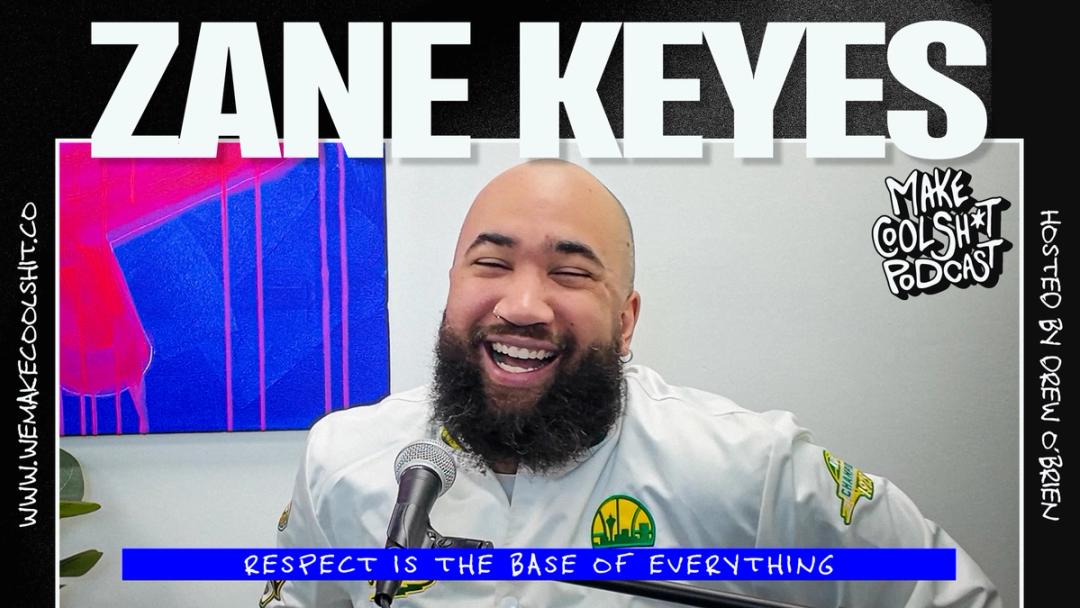
So I'mma let you know right now in this podcast. Mm-hm. There's only one rule for you. There's a rule for me? There are no rules. Specifically you. And this is a—this is a new rule: there's no Pokémon card talk on the podcast, alright? Oh my God. We're—we're focusing on you. You hater, bro. The community, the business side, no, actually the pod. I was just about to ask you how we could use these cameras for when I vend. After the pod, I have it here. I have my sports book, though. Oh, you do? With all the sports cards, so I'll show you that after. Damn, because I—I literally— No, no, no, no. Don't pull the phone out. No, no, no, no, no. No, no, no. We don't care about your— Are we filming a little—this is a little BTS right now? We're—we're ABR, baby. We're always—always be wrong. Stop crying, dude. Listen, I'mma let you know right now. I came here with something. Wow. Oh, wow. Yeah. Chet Holmgren. Why'd you give me a white guy? A green prisoner. I think. It wasn't just white guys. Like, you kind of look like— To be fair? To be fair, he is—he is a homegrown white. Yeah. The best whites in the NBA are European. Anyone in my home state, like, well, birth state. That's where he went to school. Washington? In Washington. Went to Gonzaga. Gonzaga's in Washington? Yeah. You know that.
Shout out Chet Holmgren. We'll tag—we'll tag him on this post. I appreciate it. It's a green prison. I mean, it's not super rare, but— We—we—we are filming on St. Patty's Day. That's right. That's—and then that was the theme as well, dude. I appreciate it. So give me my credit. We'll put it right here. Even though I'm a Pokémon master. Listen, we all like Pokémon. Did you—Mike, did you like Pokémon as a kid? Sure did. I did too, but like... Alright, you know what? We're going to move past the Pokémon cards. But to segue into keycuts, Zayn does have a boatload of Pokémon cards that you offer to the kids when they get a haircut. Do you give them to the adults or no? It's kids only. We had a—an adult come by the other day and start asking. I was like, "It's only for the kids." But then another adult that I liked asked for a card, and I let him take one. Okay, was it a good one? Was it a good card? They're all hollows. Uh, so like, the kids feel special getting them, but they're not cards that are worth like 5 bucks, 10 bucks, 100 bucks. Gotcha. Yeah, we don't do that. They're just the mini ones. I give them 28 cents holographic cards. Okay. Yeah. Listen, it's better than a lollipop. Yeah. You do have lollipops too. We have lollipops and that. I let them take both. One of each. Listen, that's— But I'm very—my whole staff
will tell you, I'm very stern about, like, if you try to take more than one, and some of the kids ask for that. More than one lollipop? More than one of anything. That's true, because one kid— I call them out because I'm watching them with their hands in there, and I see who, like, tries to grab three and, like, tuck it to their jacket real quick. I hate that. I—I'm calling out these little shits, man. But I love them. I love the families that come to my shop. You're going to be on YouTube. You could be on YouTube just yelling at a kid on Church Street. That's a fact. Speaking of Church Street, you are now the king of Church Street, right? Listen, let's not get your ego up and running, but you are on Church Street. You are the owner, operator of Keycuts Barbershop. Thanks for the introduction. Right, there you go. Right, now it's official. Finally have it. But—but you didn't start at—you didn't start on Church Street, right? So—so for the—for the listeners, Church Street is like a very popular street in Montclair, arguably the most coveted street that you can get a shop on, right? Very expensive, very high-end, very cute. It was featured a bunch in The Sopranos for people out there that—that want to have some type of reference. Nah, nah. But it's not a street where real estate even comes up often. No. Right? You had a significantly smaller shop, also called Keycuts, in downtown Montclair. Smaller in size, not in heart. Or in revenue. Maybe—maybe smaller in revenue.
Definitely was. Only had a couple chairs there, right? That's how we met. And I was thinking about it. Shout out to Tim Wright, who I haven't spoken of in a while. Yeah. But we were working years back, and he's like, "Yo." And I said, I was like, "I got to get a haircut." And I wasn't going to drive to his spot. The right cut. Is that—is that correct? That's it, yeah. I wasn't going to go all the way down to Rutgers to get my cut, so he—he referred me to you. At that time, you were cutting for someone else. What was it? Crest? No. Where were you at? I was at a shop a couple blocks away from— VSOSA. Now, yeah. VSOSA. Are they still around? Yeah, they're still around. Shout out VSOSA. Um, but I—but I met you there. Then—then you decided to start your own business, right? So that's where I'm getting. Not everybody has the gall to say, "Hey, I'm doing this, I'm making good money, I'm working for someone, but I want to stop what I'm doing here and do this completely for myself." Right? So what gave you that motivation to start your own business? Because, as you know, it's not the easiest thing to do, especially in a town like Montclair where there's a ton of competition. Yeah, so, one, thanks for having me on here. But two, to answer your question, in short, it was what gave me the—the—the what was the catalyst, what made me kick off and do it. Um, for me, I always knew once I saw the—what the numbers side of, uh,
ownership could be, that that's where I wanted my revenue to be at, and that's what I wanted to be a part of. And I also wanted to be more a part of the decision-making skills of running a business. So for—for me, I was tired of having ideas, giving marketing ideas, and doing things for other people's shops that benefited their whole shop, and I saw no percentage, no royalties, no part of that revenue stream besides what I was doing manually myself with my own hands. So to be interested in owning a shop is like when I was in cosmetology school, knowing that, "Hey, this is my master's," instead of after graduating Rutgers in 2016. I was like, "I'm going to get my master's now, but it's going to be me getting a cosmetology license in this nine-month program at Piscataway Votech." I was like, "Once I have a three-year license, when I looked up all the rules, I'll have an experienced practicing license, and I can own and manage my shop." Um, because in New Jersey, you're not allowed to—you have to have an experienced practicing license in your establishment when you have anything under cosmetology board. But, uh, you know, I knew it would have to be somebody else's license in there who could have some type of, uh, what is it? Uh, uh, uh, not blackmail, but it's like when they have. Blackmail. No, they have an incentive. It's definitely not blackmail. They have like an incentive on you, like. Gotcha. "Hey, I have the experienced practicing license, so I know you need me to." They're—they're holding it over your head.
Exactly, right? So holding it over my head. I didn't want anybody doing that, so I knew, "Alright, I'll work in and build my stuff up in the meantime." So I first, I was at, you know, Rutgers Barbershop in Highland Park, and then I went and helped Tim when he announced to me on his, uh, when he was visiting for a pro day. He was already in the NFL, um, about opening his own shop. I started to do marketing for him. Then I was like, "I eventually wanted to be back up in the Montclair area because I'm from here, raised here, grew up in this town, part of this community. And when I get up here, it's like, 'Hey man, like, I really, uh, know that it's a very affluent town, but it's very diverse.'" So I know having a black-ass shop in the middle of the heart of Montclair is something possible, which isn't as possible and, uh, welcomed in towns like, you know, Verona, Nutley. Like, obviously I've gone and ate and hung out with so many people I know from these towns, but that's not the communal feel there. You know what I'm saying? Montclair's—Montclair is a bit different, for sure. Yeah, and it has a super strong black history to it, you know, and the barbers I learned from in South End made me want to own a barbershop as well. So this was something to really answer what you said that was a—a flame inside of me from a younger age that I started to see, "Okay, oh, a shop can do 500k in revenue. Um, lower-tier shops do 300k in revenue. Alright, uh, let me see, what could an amazing shop do in revenue?" And that
was a conversation I even had with your business partner, Phil, just like, you know, I love when he asks the question that pushes you, and he goes, "You know, why not be the first barbershop that does a million sales in Montclair?" And that's my goal. Uh, I saw the money, the capitalist side of how I could be successful in it, but I also knew this was something I enjoyed doing every day, shooting the shit with people while making them feel excellent when they leave my chair. Yeah, I think you hit on something that I never really realized until you kind of just said it, right? To the outside world, Montclair is very affluent. It's very—it is very diverse. But to the layman, someone who lives maybe in New York City, they don't necessarily know that it has a massive black community, right? To the outsider, they're thinking about rich white people buying the $3 million homes. Absolutely. Right? So—and that is a big aspect of Montclair. Now, going back to your shop, you are in the heart, the absolute heart of the town, right? So now that you are on this amazing street and you have this amazing community, how has the community received you? Um, the cool part is that we were already—so you touched on it a little before, we were in the smaller establishment on Glenridge Ave and Bay Street, basically on the corner next to where Diesel and Duke used to be. Coincidentally, we moved to Church Street of Montclair, which is like, basically coming from the edge of a town in a little commercial space where there's like five commercial spots underneath apartment buildings. It's—it's a random location.
Yeah, yeah, yeah. It's on the border of Glenridge, but like, a part you don't even know exists of Glenridge, and near Mountainside Hospital. To then going to, like, the heart of a town that, you know, the median house or the average house costs 1.2 million. I get what you're saying, but it's like, when we moved to the bigger spot, uh, I had so much community already, and then it magnified times three because it's the maximum exposure that we could have, right? And that's talking about, like, community that I already knew in town that wasn't supporting in coming to us. Then they come. Then also, I'm in one of the best walk-in traffic spots of any town in northern New Jersey, probably the best, besides if you were in Jersey City near Grove Street or something like that. It's definitely the best in the world, for sure. Yeah, absolutely. So, like, being received well isn't something I was worried about, and isn't something I'm still worried about, even though I know what you mean by that question. But it's like, they had to get used to the fact that we're on the block, you know? Like. Love that. And that. I was hoping you'd answer that one. Yeah, and that, like, the—the long-term third-generation before me mentor, Celeste Young, Mr. Young, who taught all the barbers in town, like, he was on the ave first and then went to South End because of more racism and discrimination on Bloomfield Ave. So he was like, "Let me be in the middle of middle-class black households, uh, where we can all be, like, uh, doing great." The hardware store, the martial arts,
uh, dojo, the, like, South End Montclair, I don't know if everybody knows, like, there's a plethora of black-owned businesses that still thrive there to this day. And it's like, he went and built that. I feel like, and what Mark Williams, who just passed away, and Boo, and all my—Mahir and all my mentors say, it's like, "Zayne, you're making it so that the new generation, when the parents ask me and they go, 'So you could really make money being a barber,' like, I see Zayne's got a shop on Church Street. Like, I would never expect it." They go, "Exactly." Like, I can tell parents now, when they see you do that, that kids, like, see this trade in barbering brings a real income, six figures, able to take care of your family, able to own a business, able to, you know, make moves in life. So I just, uh, I welcomed being in a place that, like, was familiar territory but hadn't been familiar for a while. Yeah, well, I like it because it's—you kind of, like, planted your flag, right? And now, obviously, selfishly, you are also my barber. You are my friend and you are my client. You didn't get a cut today. Right, I didn't get a cut today. I should have got one done. I do have a—I do have a monthly standing meeting with—with Zayne. But I think it's great because a lot of people from Montclair, including me, right? I lived there for five years. I didn't grow up here, right? I grew up in Queens and then Bergen County. And I had a—I had the wrong perception of what Montclair was when I first, uh, you know, when I first
moved here, when my realtor, who's actually my—my aunt, she's like, "Oh, what about Montclair?" And in my head, I was like, "Yo, I'm—I used to hate those little rich white kids." Like, those are the kids we wanted to beat up playing sports. Now, ironically. MKA. Yeah, now—now ironically, like, I became one of the, you know, a part of the community. But you planting your flag, and I think it's even more amazing that you're on the best street in town and you're a local, right? Where I'm—where I'm going with this is so many people like myself come into Montclair and join the community once they've made some money or once—unfortunately, now you have to make a good amount of money to afford the town. Yeah, yeah. Right? That's true. Translate and come into town. Correct. I'm not joking there. Yeah, so but you're now a local, planted your flag. Right now, when I walk down the street, I'm so happy because I got you. I got—so I have a Key Cuts, I have the St. Clair, and I have, you know, the Becker Org. So like, when I'm walking down the street, I see all my branding, which makes me happy. But. You're doing phenomenal work too, Drew. I have to compliment you. Thank you. Thank you. I—I appreciate that. But yeah, Drew, I love walking down the street and seeing your logo and walking to your shop. Sure. I—I love that with any client that we have. I love seeing our work in the wild. But every time I'm in the chair
with you, someone's walking by waving. Or like a complete stranger. Like, I remember, like, a nine—like a legit 95-year-old man came in when I was getting my haircut last. And some—like some random dude I never met before, you open the door, your—your—your hospitality is amazing. And—and I think most barbershops lose that as they get into the thick of things, as they get caught in with the day-to-day. Not even just barbershops, actually. I think most businesses. Service industries. Lose that. Service-based industries, a lot of them have lost that entirely. Um, one, thank you for all the compliments that you said. I really appreciate it. It's always good to know that, like, we stand out in the way that we give service, but then also, like, people see that I'm a compassionate, empathetic, uh, community member. You. And, like, it's good to feel that and feel rewarded in that, uh, for everybody that, like, interacts with the shop. And, um, yeah, you've created the logos and done so much business with me, but you've also been a good friend and, uh, seen the growth along the way. So that's why it feels great coming full circle and doing this interview with you. But we were just talking about, um. Pokémon cards? No, you saw, uh, the older gentleman come in, and we were talking about the service-based industries, right? Yeah. So within the service industry, the cool thing, like, everywhere I've worked, I've always, uh, tried to be a sponge and say, "I wouldn't do that, and I would do that," everywhere that I worked, right? Whether it was at Whole Foods, right?
Whether it was at, um, uh, Market, which was a premier restaurant on Church Street, where I was a busboy, dishwasher, waiter, and I ended up being an expediter. And we ended up having a three-star Michelin chef. Um, sorry, I didn't put that in. Once again, all service though. It's all—it's all about the people. Exactly. So like, but everywhere I was working, it's like, I took something from there, right? And it's like, when you come back to, uh, owning your own business, you have to remember all those base plants in your mind about, like, what I would do and what I wouldn't do. And also how I would be there for my employee if I had somebody at the table, "Come here, boy." You know, like, specific interactions that would heat up one of your team members, knowing how to, one, step in and defuse the situation, two, be there for your employee feeling disrespected, three, like, I've thought of so many different scenarios. I'm half laughing because, like, that's why I can't be in the service industry. Because that wouldn't happen. Waiting tables was the worst at times, and it was the best at times, right? Like, you get what you give out, and then sometimes you really don't get what you give out. Even when you're, like, from the—from the doorway, greet at the table, et cetera, you're always trying to win this person over, even when they're a shitty human being, for lack of a better term. Yeah, because you could say this about all service-based business. And by the way, make cool shit, we're a service-based business too, right? So like, how I look at it is like, "Hey, is this experience that
I'm working with on my client, if I go into the meeting pissed off, or if I go to the restaurant pissed off, right?" Like, you have to—it's so cliché, but I say—I say it to myself almost every day. I do business as if I would like business to be done to me. Absolutely. Right? And it took me—actually, it took me a really, really long time to understand that. I used to have an ego. I used to be like, "No, man, I'm a designer. You don't know shit. You're hiring me to do this project, blah, blah, blah." Like, I would never actually say that out loud, but that would be my mindset. And now it's more of, like, a collaborative process. You would never say that out loud. Right. Well, I would say it out loud to you, but—but maybe not to the brand new people. But, you know, you—you have the, um, you have the grandfathered-in attitude past. But one other thing that I think it's important for you is, so you own the shop, you have this beautiful shop, right? And there's what, six chairs? There's six chairs in total, but we have seven employees and our mascot, Oreo Jamal Keys. He's a nice little French bulldog. He greets you at the door. He might snort, he might hump your leg, but he's there. Absolutely. But what's important is, I think other business owners, you could choose, you could have chosen to have your chair in your business where you cut, where you do your actual day-to-day business. You could have been in the back.
You could have been all the way in the back. But where are you? You are the first person that you see when you enter the door. You are the first chair you are greeting. So not only are you the owner, the master barber, you're great at what you do, but you are the first person when you're—obviously, when you're working, you are the first person to greet everybody through the door, right? And as much as you and I joke around because we're friends, like, we—we all make fun of each other. That's what friends do. Every time I'm sitting there, the cut is 30 minutes, but it might be 40 because you're out there talking to people, which I love, by the way. Which I love because you are giving everybody the time of day, right? Like—like I said, going back to the older guy. And then, by the way, this is all within a half an hour session. 95-year-old white guy, 80-year-old black guy, mixed-race family with kids, right? Like, there's all different types of individuals that go into that place. Irish guy. Irish guy, right? But going back to getting my haircut, right? I like going to you because you understand hair, right? You are mixed-race. You know how to cut black people's hair. You know how to cut white people's hair. You know how to cut Latino hair, Asian hair, whatever it is. You know how to do it because, A, because of your experience, and B, because of your background. Yeah, so it also is something that doesn't get pushed heavily in everybody's shop, being able to cut everybody's hair.
And that's something I take big pride on is, uh, we not only, right? So I've hired some people who are extremely talented, but then we've also built up people who had the work ethic and want to be talented, right? So that's. That's the most important thing. And that is like, it's like, so one, I have the most amazing team that I've ever had at my barbershop right now, right? Like, I have cultivated this team, chosen this team, not only by myself, but with my manager, CeCe, with my assistant manager, Charlie, with my receptionist in long time. She was an intern first, client first, intern second. Now she's our receptionist. Social media, she interacts with you, Drew, through email. But like, Ashley, uh, all the leadership parts of my group, and then even the people who are newest, like Rob's been here for some years, Arielle, uh, now in his second year, um, Derek, apprentice, Belle, apprentice, and Braider. But it's like, all these folks get a say in who we add on and how we feel about somebody after an interview, after they came in for a welcome moment, et cetera. And it's like, when you build a—a team that interacts and knows, "Hey, we're here to get money first, and, uh, we spend so much time in here, there has to be a base level of respect at all times," then we can all understand, "We're here for money first. We all get close because we spend so much time together." But respect has to be the base of all of that. And this is how Zayne runs his shop. And, uh, when all those things can—can just, like, be cohesive and there can be
chemistry and you've picked through the people that you've unfortunately and fortunately had to let go, it's like, man, you really built something special. And that's what really makes my shop special is everybody understands, "I have to be able to cut all types of hair. I have to be able to greet somebody who comes in my shop, uh, speak to anybody who comes in, be able to book them, check them out, et cetera. If Ashley's not in there, if Zayne doesn't have time and he's on the phone already, like, everybody knows that they have to. Everybody needs to be able to step up, be a role player. Yeah. And everybody takes the trash out except the women in my shop. And everybody, uh, uh, washes a doorknob and a handle. And everybody understands I'm big on this place being organized and not chaotic because. Yeah, and—and it—and to be fair, it is organized, it is clean, it's spotless. You do really care about all the—all the little things. Going back to building a team, I don't think non-business owners really understand how hard it is to cultivate the right people. It took you years to say this to me, right? Because you and I chop it up as business owners all the time. We might be talking about an employee we've both had, right? Like, take Mike here, who is now, uh, a part of the Make Cool Shit team, right? Yeah. What up, Mike? Yeah. So now Mike is obviously helping us, but, uh, it also is timing too, right? Mike literally hit me up, like, two months ago, and he was like, "Yo, man, I'm really getting into photography and videography.
Do you have any, like, work available? Or do you know of anybody in the space, right?" Because—and I was like, that day, no joke, like, an hour before he sent that, I was going to hire a different person. And the only reason I didn't hire that person is because he unfortunately told me that he had to sell his camera, right? So I was like, "Well, that's kind of a—kind of a deal breaker in this scenario, right?" No offense to him, but. Yeah, yeah. We're not laughing at them, but it's a big deal. But—but I was like, "Okay, listen, let me get back to you." And then literally an hour later, he hit me up. Now, I already knew Mike, right? So I didn't have to interview him and do all that stuff. I already knew how he carried himself. But finding the right team members, right? I have Richie now as the designer. I have all my freelancers that we use. It took me forever to cultivate the right people because, to your point, you spend more time with your employees usually than you do with your own family, right? And your employees do become your family. I—I personally can only really speak on CeCe because I've known her the longest, right? Like, if I saw CeCe out in the wild outside of the shop, like, I would gladly have a conversation with her, right? And—and I know it would be like, like we picked off, like, just like. A combo in the shop. Exactly. Like, but you don't really get that, right? And it takes so long as a business owner to cultivate that.
And to—you kind of hit on it, and Phil does it all the time, right? Sometimes it's tough as a business owner. You might have an employee that makes you so much fucking money, but they're just a shitty person. You got to get rid of that person. Yeah. As much as you love money as—listen, I'll be the first one. I love money, right? I love building the business. But if someone that works for me is a douche, or just a bad person, or a bad employee. It rubs off. Rubs off the wrong way. And—and more importantly, it gives the name of my company a bad rep. And it only—and it not only rubs off, like, in just, uh, yeah, man, when you keep that around, it, it, uh, it rubs off in the— It becomes cancer. It rubs off in a way of not just people, like, mirroring that, but people who don't like that behavior, who are on your team, and look at you as like, "Damn, you got favor." You let that happen. And you let the—exactly. Yeah. So it makes you look like a weak man. Which is worse, by the way. Yeah, yeah, yeah. So like, there's been a couple times where, like, I've waited till something got to a boiling point. And, you know, fortunately and unfortunately, some of us, like, it just—that's how it goes being a business owner. And, uh, there were red flags and signs earlier, and you go and talk to mentors and people in the same situation, et cetera. And it's like, you get to it and you go, "Uh, not yet." And it's
just like, I—I have learned that sometimes it's just like when I feel I'm tired of somebody. It's a gut—it's a gut feeling, yeah. It's like when you're tired of me and Phil having a great conversation, like, when you get to a point where you just go, "You know what? Like, I'm tired of repeating myself to this specific person." And it's like, "I'm done." It's like, that's—that's how it goes for me. It's just this moment in my head where I'm like, "All right, I'm done." Yeah. Yeah, it's time to sever this relationship, cut ties, give them—give them an opportunity to work elsewhere, you know what I'm saying? Like. Shout out to Phil because that's the—that's his thing, right? I'm going to give you the opportunity to shine somewhere else, right? But—but—but it's important, right? Because I've kept employees longer than I could have because I know it takes me longer to find someone talented that is in my price range, yada, yada, yada, right? Every business owner has the same issues that they—that they go through. But I think if you curate the right team and you keep that in mind forever, right? Because there's going to come a day where your current team member, someone moves on, maybe someone wants to build their own shop. Yeah, I'm always thinking of that, bro. Right? So—but I also know you're the—like, I'm making this up, right? I'll just use CeCe because I know and heard the longest. CeCe could come up to you and be like, "Hey, Zayne, like, I appreciate everything, but it's time for me to—to do this on my own." You're now the type of person where you might be like, "All right, cool.
I'll invest." Yeah. I mean, I've had all—so when I hire people, I tell them all of these possibilities in the beginning, straightforward. Yeah. That's like, one thing is, okay, so a little bit of, like, the more spiritual side of things, which I'm not religious, but just I believe there are things that go the way they go and are meant to happen, right? But when I went and met my dad for the first time since he, like, abandoned, stepped out of me and my mom's life, but mom's life in particular, about three, four years old, I went to Seattle. I visited and, uh, I told my sister I want to meet him. She told him to come meet her. He didn't know I was coming up there. I, like, surprised came up. We had a conversation, a whole interaction. It was a very powerful moment for me, um, coming from a single-parent household, just me and my mom, being a mixed-race child, black and white, and my dad being black and my mom being white. Like—like getting to that with all of that, all the questions I had in my life, all those things, I got to a point where, like, understanding, like, one, I put this person way too high of a priority on my list of, like, thoughts, right? Holding on to anger, holding on to depression, holding on to dark moments, right? Like, way too long to the point where I was like, "Don't hold on to things." And one of the things that I knew holding on to too long was lying, which I'm not going to sit here and say, like, I was a habitual liar and lie like this, but it's like, white
lies and small lies or, like, not living in your full truth at moments. Like, man, like, it's such a waste of time because it's a waste of energy and it harbors onto you and it holds onto you. So like, lying and holding or holding anything back, uh, it just feels like a big waste of time and energy and it—and it alters and—and falls negatively on whatever I'm trying to do and the process I'm trying to go through with things. So like, like you just said, like, being able to invest or tell an employee that they have a future with me or I could do something with them, I believe in all of that. And I believe in being very straightforward about it from the beginning. Because once I tell you all of the things that are important and how you work here and the possibilities of what we can do, you go, "Dang, let me see if he's about what he said." And you could look every single one of my employees in the face and say, "Did Zayne lie about what he said with this, that, and the third?" And my day one, my—my first hire, my best hire, CeCe, has—has said to this day, and she said it to me a couple months ago again, "You never lied to me." You know what I'm saying? Like, everything that you said was going to happen and how it's going, that's why I just keep rolling with you, Zayne. Because we went from, you know, not to just put numbers out there like everybody, but it's like, you come on here with me and you're an apprentice and you barely know how to cut, you're probably going
to make two to three hundred a week for the first six to eight months. And it's going to be hard and it's going to suck. That's why you usually get young kids who live at home with their family, right? Who can make that little amount in the beginning. But your—your main initiative, your main goal and initiative in the beginning of learning anything is volume, right? I need a ton of haircuts. Yeah, get your 10,000 hours. Reps. Yeah, exactly. Get your 10,000 hours. And so I know by year two, by year three, you're going to be a decently sharp barber who could handle average haircuts when they walk in. A two on the sides with a comb over, a dark Caesar wave cut with just some small tapers, temp fades, right? Like—like I know where I can get you to within two to three years. So you're going to first start making that first six to eight months, then you're going to be making five to seven hundred, like, by a year. Then you're going to be making—I'm talking about a week, right? Five to seven hundred a week. Then you're going to be making a G a week when you're established and you're towards the end of your second year. Then you're going to get to 1,500. Then you're going to get to 2,000 a week. Then you're going to be one of my master barbers. And then all of a sudden you're at 100K a year. Yeah, exactly. But you're going to be able to be more in control of your
schedule where I go, "All right, what hours do you specifically want to work? What can we keep as your repetitive this, that, and the third?" All right. And when you ask for days off or time off, I don't feel as inclined to go like, "Hey, you got to push that and move that to a different time or whatever." It's like, "All right, your sales are continually coming in and you know to pick up a different day if you need an emergency day off or you plan more than two weeks ahead for special time that you just need for yourself." And I'm fully with all of that. As now a seasoned barbershop owner, what do you think the biggest struggle has been for you, right? As an entrepreneur. Um, the—the—the toughest parts or, like, the parts that you have to get over are, one, like, being the most disciplined in not only spending habits, but organization of bills and credit and how they are applied and how they go, how to build it, how to build your business credit. That's one. Um, that's a tough part. Two, employees and managing employees is always going to be, like, the hardest. Money management skills are top tier and need that. They're like—they're 1A and 1B of all of it. But everything else, like, I've always believed I was a leader. I'm an Aries. My BDA is March 24th. I always felt that way. I didn't want anybody else making decisions for me. Uh, I've been pretty strong in that and knowing that, like, one, I care about people that I'm leading, right? So I don't—I, like, I genuinely am thrilled and, uh,
elevated in life when I see people doing better. Like, I've seen people go from living with their parents, multiple people, like—like working for me, working with me, for me, being a part of my team. Um, going from, like, living with their parents to getting a new car, having their own apartment, you know, uh, other folks being able to, like, take custody back of their child and, like, live a great life, right? Uh, and be on their own and have the apartment that they always wanted. Other folks touch 100K. We've had three people become, like, six-figure barbers underneath. Like, you know, and I—like, so when you know your system's proven and it works for people, that's what's like so fulfilling for me. So. That's incredible. I'm, like, smiling for you, right? Like, someone being able to have a business that is making a better life for its employees. Now, I never looked at that when I was an employee, right? Because I was—I was always like, "Yeah, like, let me make this salary. Like, this is what I'm owed, motherfucker." Right? Like, that was the wrong mentality, right? So, like, working for someone versus owning a business are obviously two totally different dynamics. But as a business owner, seeing your team grow and knowing that you were a part of that, to me, is such an incredible feeling. Sometimes it's even better than the—than the monetary value. Yeah. Yeah, I appreciate that a lot. Thank you for the compliment. And, uh, it makes me think of, um, so, like, one of my favorite clients
who's become, like, a big brother, his name's Ian Dunlap, uh, the master investor. He's on Earn Your Leisure podcast. Okay. It's a financial literacy con. Uh, yeah. Oh, you sent that to me before. Yeah, Market Mondays. It's actually a huge podcast. Uh, and they, uh, he frequently is on the Joe Budden podcast with another client of mine, Mark Lamont Hill. That's how I got introduced between the two. But besides that point, is Ian, like, and I have gotten real close. Uh, sometimes when he comes out to New York, like, I get to take care of him, cut his hair. And, uh, one of the last times we spoke, like, days later, we always, like, sharing, like, dope successful memes and stuff like that or, like, motivational clips or sports stuff. But, like, one of the motivational clips that I really like to quote is, like, "Chase excellence and the money's going to come." You know what I'm saying? Like, chase the money, you're going to have a hard time finding excellence, right? Like, but, like, if you chase the excellence and—and the excellence isn't just, like, the materialistic part of it, right? Like, the best car, the best plane. That's so cliché to get to, but it's like, chase the excellence of we're giving the best customer service when somebody walks in. I'm not lying to my employees. I'm being fully transparent about their numbers. I've worked in shops before. Somebody wouldn't let me see my numbers for the week until the end of the week. Why can't I keep track of what I'm doing?
You know? And, like, VSOSA showed me that, uh, that was some of the best business ownership I had ever been around. Uh, Julio and Frank, like, they were transparent with me. Um, I told them my goals from the very day one of them hiring me is, like, I wanted to be a Montclair and own a shop in Montclair. That might be in two months. That might be in two years, but I'm eventually going to do it. But it's happening. It's like, yeah. Like, and then Tim taught me, like, "Hey, be modern, be young, be cutting edge. Uh, have televisions in your shop, have an iPad, checkouts, work with Square, et cetera." You know what I'm saying? Like, there were different aspects everywhere. Darren, uh, was a very community. They called him D-Nice, D-Styles. He was from the Bronx, Puerto Rican barber in Highland Park. And most of the employees, the clients I had there were, like, uh, some Hasidic Jews, some Indian kids who went to Rutgers, some, um, what else? Uh, uh, uh, black folks who were on the football team at Rutgers, coaches. I cut some of my maintenance workers, et cetera. Like, this all, like, chasing excellence along this whole journey of barbering is what brings you to the point where I can be, like, so appreciative of what I've built it up to. And I still don't ever think it's enough, man. And that's what, like, chasing excellence is and, like, why Nipsey Hussle is my favorite rapper. Like, it's a marathon, not a sprint. We running all these miles and I'm never
done running because I'm going to outlast you with my work ethic and what I want to do and accomplish. Yeah, I think it's important because it's also a craft, right? So you also need to continuously get better at your craft. Like, I—I try to make sure, like, in design or—or art and drawing in general, I try to say to myself, like, I still got to try to learn something new every day, right? Because the day you stop becoming a barber, at least mindset, right? Maybe down the line you're not cutting every day or I'm not designing every day, right? Because we're both owner-operators right now. But the day you lose that mindset of, like, "Oh, I know everything about cutting," or "I know everything about design," that is that second, that day you have that thought, that is when your business starts to go down, right? So it's important for you to be like, "Yeah, like, I can cut, um, any different race, any different age, any different sex, whatever it is." Even hair texture, yeah. Right? If you come in here, I got you, right? And I think a lot of barbershops, right? Like, going back to—to—to my family and my wife's side of the family is all Dominican. Like, most of the people go to Dominican barbers, right? And most Jewish people might go to Jewish barbers. Most Italian people go to Italian barbers, right? Usually you stick, cliché wise, people stick within their tribe, right? But you walk into Key Cuts and there are other barbershops out there that are like you. But like I said, man, I've been just yours. I've been in the chair with you and I've, like, I'm sitting there watching and
I'm like, "Wow, man." Like, I can't believe the amount of diversity in sex, age, ethnicity, whatever it is, right? Like, you just have all different types of people that are coming through your shop, which is a testament to you and—and your employees and also a testament to the town, right? So I love seeing that. You're like, "Yeah, black-owned business, middle of Church Street. I'm a local. My plant—my flag has been planted," right? Like, I never really thought about it like that before because that's why I love this podcast, right? Like, I get to sit down and actually talk with you for 40 minutes straight. In a professional setting. In a—in a professional, yeah. If this was—this was the cameras go off. A lot more jabs in person. It's going to be a little bit different. We like to jab. But, like, looking at it, like, it's actually pretty incredible what you're doing. So I wanted to give you your flowers here recorded so that when the cameras do go off, you can talk shit about it. But honestly, I think it's amazing. And I think it's just a matter of time before there's Key Cuts number two, Key Cuts number three. So to that point, do you see that being an expansion of the business? I see myself investing in my, uh, in some of my team members. Sorry. Um, investing in some of my team members and their dreams, whether it's to work on set and help them establish, like, you know, a way that we can make that a bigger establishment or union of barbers. What does that mean?
Whether that's, uh. On set, what does that mean? On set, like TV and film sets. Oh, gotcha. Okay. Yeah, absolutely. Um, you know, maybe become part of, uh, a union. I've been talking to a couple folks. Uh, the thing is, like, I already get some of those jobs without being in a union. So I've had an OG who's like, "You don't need it." Um, but at the same time, it's helpful. And my account. There's pros and cons to both, like, is what I've been explaining. And then also investing in my barbers who want to open shops. Absolutely. Um, because I tell them I'm always a possible business partner if you like the way that I do business, right? If you're an employee for over a year, two years, I assume that you like how I do business and we can go and do something together. Um, so yeah, I always see that, enjoy that, and, uh, and see that as a possibility in the future. But I—my—my main goal is making this shop do a million in revenue because that means every single team member is making six figures and they're able to take care of themselves and their families. And, you know, six figures isn't what it was five or six years ago, right, before the shutdown. And, um, I, like, whatever can make sure that my employees are comfortable in the lives that they're living and they're proud to work where—where I'm at, like, that's what I'm about. So having two or three shops, that gets stressful, man. And you got to have somebody who's, like, your right hand, like a CeCe, like
a Charlie, like, in those shops, running those the way that you want them to and would expect them to. So I don't know. Like, that is exactly—is exactly in my—that's not exactly my goal is, like, a second and third shop, but it's like maximizing earning potential where I'm at and excellence where I'm at, uh, right now. And we were talking earlier, like, about the service-based industry. Like, it really fell off after the shutdown, after COVID, bro, because people realized, I believe, just, like, in a blink of an eye how the world can change, laws can change, uh, transportation can change, politics can change, right? And it's just, like, since the shutdown, the change in the service industry, that's what I wanted to touch on earlier, has been monumental. And, uh. In what way? In the way of how we were saying, like, hiring process, how many people you got to go through of who you can keep on, how people even care to, like, do service well. Like, most of these 80% of the restaurants that I have been going to and, uh, and don't go to, like, just have gone in and experienced in the last five, six years, I don't see waiters, like, waiting tables, like, with the expectations of I was—what I was expected to do as a young waiter in a decent and a high-end restaurant. Like, I don't experience that at a lot of places that I go to. And I like to go and eat by myself at a lot of places. And it's like, you know, you do have to pay a premium to get much
better service now. Like, I go to some places in town in Montclair and, uh, they treat me nicer because I'm a business owner. But some of the ones who don't know that I'm a business owner. Give me those names right now. Shit, I don't—you know me. Um, but like, when I go in there sometimes and somebody doesn't know I'm a business owner and, like, the way that they go about serving, like, "Hello, greetings." Yeah. You know, like, "How you doing?" "So you doing?" Yeah. Like, there's—it's like a lot of people are skipping over that at so many places. That's why it's nice to be in New Jersey where there's the most diners than any state in the United States, right? It's because you can still go to some of these old-fashioned diners where, like, I know half the staff voted different than me, but, like, I'm going to get treated like I'm a good person, like I'm family. Like. What's your favorite diner? Favorite diner in New Jersey? I—I have. Tops, bro. Tops is amazing. Tops is amazing. Um, I used to go to the Mattachin Diner and have a good time down there. Um, I like, uh, the Pancake House. Uh, is it the Pancake House? Damn, I'm messing up the name. Up in Caldwell. Uh, Pancake Factory. I know it's at OHOP, the original Pancake House. Yeah, the original Pancake House. IHOP. Yeah, it's called IHOP. OHOP. OHOP. OHOP. Original House of Branding. Who stole from who? Yeah. Well, I don't know, but we showing love to small businesses and local business. Um, and then, uh, yeah, Mattachin Diner, I used to frequent
Respect what you have, respect the process, respect your employees. Respect is number one, top tier in all business.
heavy when I was down in New Brunswick, Piscatow, all that area around Rutgers. Um, so yeah, man, like, I—I just, uh, the—the—the—the loss of and how hard it is to find the gems in the service industry. Like, you got to hold on to people when they have that good part of them and then, like, build them up skill-wise as a barber. And it's tough and it's hard and it's the hardest commitment, but it is the most rewarding and the most beneficial because we got two in-house that have been built up and now they're pro staff. And then we got another—and these are people who started as apprentices with me, right? But like, and then I got another two apprentices who are like just skyrocketing. Christabel and Derek are like, Derek wants to do twists and be a barber. Bell is starting to learn a little about cutting, but she's braiding and doing hair color, like, and she's been doing braids and dreadlock, lock retwists, you know, it's just like they both—everybody that we bringing on, I'm like, "All right, I need to know that you really, like, are about learning your skill, being a lead at your skill, and you care about how I run business." And I have one-on-one big-time exit meetings at the end of each year. And now we try to do it like every three to four months, just catch-up one-on-one meetings. Like, running your business, like, taking it seriously, man, and respecting what you have is—is big. Respect what you have, respect the process, respect your employees. Respect is number one top tier in all businesses to me. Well, just take your mic off the stand and just drop that shit because that's—that's—that's
a good place to end it. So where can people find you? People can find me on Instagram @CutByZane. Um, you can book, check out our website www.keycuts.co. There's no Z at the end. Everybody always asks me, like, because barbershops love to put, like, the little— Which, by the way, is very— In my humble opinion, isn't the greatest look to add just a Z. I know. Like, I—I wanted it clean and I have to tell people to, like, the way it's supposed to be spelled, Key Cuts, but—and you'll see your amazing logo, the amazing front of our barbershop, which, uh, you know, Big Drew over here, Big D, uh, created and made and maintained. And I know you wanted to pause me right there. But, um, no, it's just like you put so much amazing work, not only into our logo, into our website, being so user-friendly. We get so many compliments weekly, I promise you, of just, like, when a new person comes in, "Hey, your website." Like, I love when I get a new client, they're like, "It was so easy for me, bro. Can I make a standing appointment?" And I'm like, "Yeah, you got to talk to me manually about that because I don't just let anybody make a reoccurring appointment." But it's just like we get complimented on our website and the presentation and all of it, and you're a major part of that. And I knew when I started making bigger bucks, it's like, I know we did a smaller project when we first opened the shop at the smaller location. And then it was like, "Hey, Drew, now I know I got to throw you
some bigger bread and do this." And like, I can send people to you to—to recommend for your clients. Which you do, which is always appreciated. But that's how it's supposed to be. You're supposed to work with people who respect and do good business with you constantly because that just builds you both till y'all both at a level where the respect is taking you with the excellence to a whole new atmosphere. Yeah, it's not a competition. Everybody can eat. Mm-hmm. Everybody. And I'll not know. See you guys next week. Yeah. Thanks for having me on, Drew. Appreciate it. Of course, man. Love the fit, by the way. Oh, let's do an awkward. That was awkward. Yeah, make sure you got that on camera.