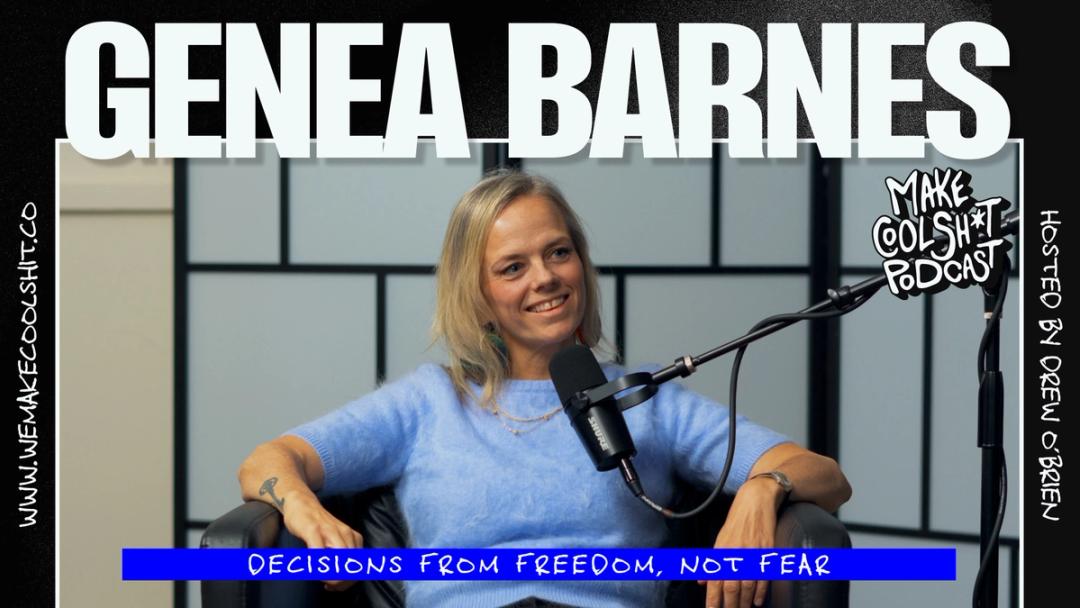
Welcome, everybody, to another episode of the Medical Shape podcast. Today I'm sitting down with Janae Barnes, the founder of Be the Wolf, coaching and mentoring. Now, we'll just jump right into it: how the hell did we meet? Do you remember? I do remember. We were at a Dave Meltzer dinner. We were, we were. And the only reason why I want to start with that: we just talked about Dave off-camera very quickly, if we're breaking the fourth wall here. But I met you at my first Dave Meltzer event, so why, why did you decide to enter that room, the David Meltzer ecosystem where we first met? You know, it's funny. I met Dave Meltzer through the School of Hard Knocks. Okay. And he came on that— Is that a Jay-Z song or is that an actual thing? No, it's an actual thing. He's got James— I can't remember James' last name— but he interviews people that he suspects are millionaires or billionaires, and he's gotten to be quite popular. Anyway, and he started this thing called the School of Hard Knocks, and so he has a lot of people who are millionaires and billionaires, people that he interviews and talks to, come and talk to his audience. And I met Dave Meltzer there, and I asked Dave Meltzer to be on my podcast, and he said yes. And then I got looped in. I really liked the way he was handling business, and I really liked the way his team communicated and dealt with me, and so I joined up with his networking group. And then I started going to Meltzer dinners, and there you were, standing, looking
fly. And then we had this conversation about being the wolf and being authentic in your branding and your communication and your creative things for your business, and you and I clicked on that. Yeah, I mean, that was important for me because I— my buddy Carl, who used to work for us here at Make Cool Shit, he told me about David. I'd never heard of David before, and he's like, "Hey, let's go to this meetup." It was somewhere in New Jersey, I don't remember, I think it was Weehawken. Long story short, I met Dave there, and I was like, "Okay, like, this guy's cool." And I looked at it more so, like, I liked being in the room with all of the other business owners because selfishly I looked at it like, "Okay, there's some clients to be had here." Right? So I didn't necessarily go in with the correct mindset. I went in it— went in it with, like, a, "Hey, how can I make money out of this group?" Now, I still think about that in general, like when I'm going to do something, like, "Hey, how is it going to benefit my business?" But then I joined the private networking group, and then I went to the first meetup— what's the place? Arno's? Yeah. Shout out Arno's. I think Dave mostly does his meetups there. And we went to, like, the basement of this nice restaurant, and I walked in there and I was like, "Oof." Like, I'm not always the best in those types of situations because I felt like the minority in that space where, like, a lot of people there are coaches, a lot of people there are, like, finance,
real estate, not necessarily a lot of creative people. Right? I would put— you're obviously in the coaching sphere, but you're also creative. We'll get into that as well. But there you were. I saw you, we started talking, I was like, "Okay." Like, that's what I needed. I always needed the one person to get me rolling in terms of, like, a networking event. Yeah. And then I was— I was on my way. And now, fast forward, now— that was, like, maybe a little less than a year ago— now David Meltzer is a business partner of mine in Shameless Pug, Made From Mistakes. Yeah. Right? So this could be launching in a couple months. But I'm not doing that just for the Shameless Pug. Like, I got myself uncomfortable, and I put myself in that room, and I went out and I networked, and I didn't let business come to me. I went out and got it. And I think that's a lot of— you know, you have— you have a similar mindset where you're not just sitting around waiting. No, I'm definitely not sitting around waiting. And also, when I go into a room like that— and I think this is important in any room that you go into— I remember the first dinner, first one of his dinners that I left, I was like, "Whoa." Now, that room was totally different because I left feeling high instead of drained. And the reason I left feeling high instead of drained is because I think people were there to give rather than to get. Yes.
And that was so different. And in fact, of all the people that I met that first time, there was only one person that I felt that, like, like sucky energy from. And I was like, "This is so different." When you're talking about a networking event or a networking group, how do you leave the room feeling good instead of feeling drained and like, "Oh God, now I have to follow up with all these people. I don't even know if I like these people." And I was like, "Whoa. I really want to connect with these people again and again and again." And so that was super different. I went in originally to get and not to give. So it's funny that you kind of made that distinction because, listen, I've been to a million conferences, I've been to a million networking meetups, and in general, I don't really go to, like, creative meetups or my peers, not because I dislike them, but if I'm spending time away from my family, like, when I go into New York City and I go to an Arno's meetup, that means I don't spend as much time with my daughter. Yeah. So if I'm doing that in any capacity, it's got to be worth my time. Right? So I could go to a designer's meetup and we could chop it up and we could be nerds about graphic design, but at the end of the day, they're not necessarily going to be clients of mine. Right? So going to a David Meltzer event, everyone in there is looking to grow their business and they have a growth mindset. But to your point, I've never been to the 100 I've been to before, it's always been a, "Hey, like, how could
we work together?" Rather than, "Here's free game. Here's free information." And I'm not necessarily looking at anything— I'm not necessarily looking to get anything out of this. I'm just trying to make you better. So much so that I started talking with Dave and then we talked a bunch and then I became a business partner. Shout out Laurie. I think you know Laurie as well. I know Laurie. I had to actually ask Laurie and be like, "Is Dave for real? Or is he just, like, one of these bakers that, like, say all these things and don't actually follow through on it?" And she's like, "No, he is— I've known him for X amount of years. He is the real deal." So Dave's not out here just spewing bullshit for the social media following, like I think a lot of people out there are. Right. He genuinely— he tells me all the time, he's like, "Dude, just call me." Like, "Yeah, if I'm in a meeting, I'm not going to answer," but he's like, "Call me. Don't wait. Don't, like, just do it and we'll get after it." And most people don't have that. He's like, "Dude, he gives his personal cell phone out to people on the streets." Anybody. And it's crazy. And it's his actual number. Right? It's the same number that he gave. It's not some Google number that you're going to get filtered through some shit. Yeah, but it's important to align yourself with the right people in those types of rooms. Right? Because mostly, mostly— listen, there's people in there that are shysty. There's people in every room that are not always aligned with
everyone else. Of course. But you have a certain aura and energy. Like, as soon as— when I first walked in and met you and we started talking, I was like, "Okay, like, you're different." And I'm attracted to people like that because when you're in the room with everybody wearing the same thing, acting the same way, talking the same way, they just blend in. Right? So you immediately— you were, like, present. You were, like, in my face. You were listening, like, in the best way possible. I was like, "Wow." Like, I was like, "Who the fuck is this lady?" It's just me. And then to your point, you always leave those marketing— or I should say, you always leave those networking events and you're like, you have, like, 25 business cards and you're like, "Okay, like, who do I actually want to follow up with? Who did I like? Blah, blah, blah." And you and I ended up following each other on Instagram, followed up, and then we started working together. Yeah. So before we get into how we started working together and all of that, give the audience, the three listeners that I have, my mom, my dad, and maybe my brother, for this podcast, tell us a little bit about what Be the Wolf was when we met and what Be the Wolf is as of today. Interesting question. Because as you know, there's been some transitions, some movement. You know, it's funny because we met and we were talking about authenticity and being real. That's kind of been our through line of our relationship.
Right. And for any of the business owners out there, if you've studied marketing, you know that you often, especially in the coaching world, especially in, like, service, you need to give— what they always say is you give them what they need, but you package it in what they want. And so I spent a lot of time studying marketing, and I had my little package of how to market what it is that I do, but it wasn't the truth. I mean, it is the truth, but it's like so many of the lies that we tell ourselves are based in truth. It's not the whole truth, not the truth. And the truth is, I help people heal from their trauma. I help people stop sacrificing themselves for others. And that fits in the whole Be the Wolf metaphor and ethos, and I'll talk about that in a minute. But what I was marketing to was, "Let me help you expand your business by increasing your success zone." And that's what I do because the thing is, everybody has some sort of fucking trauma. And what we don't realize about trauma is that it's just a moment when you got overwhelmed with the sensation and you pivoted away. Somehow, subconsciously, you ran away, you tried to get away from that feeling, and now that feeling is left unprocessed. And now, subconsciously, you're always trying to get away from that feeling. And so what that does when it comes to business is that you worry about what people are going to think. I think every business owner does. Secretly. Every. Every business. Whether they admit it. I think every person feels that way.
100%. Because at some point, you learned that maybe what you did was not the right thing, and that elicited some sort of feeling inside of you, and maybe you stood in it as a three-year-old or a five-year-old or a seven-year-old and felt that uncomfortable feeling until it shifted and changed. But most people don't do that. They're like, "Oh, this feels like crap. What do you do?" I mean, if you put something in your mouth that tastes rotten, what do you do? You don't chew it up and savor it. You fucking spit it out. Right? And we do the same thing with sensations that feel not good or overwhelming. And so subconsciously, what we start doing is we try to avoid any situation that creates that. And if you're a business owner, you cannot run away from situations. You have to be able to stand in the fire. And you've literally stood in fire. Yes, I have. Many, many hundreds of times, in fact. But if you cannot stand in the fire, if you shift your decision-making based on what you think other people will think or based on this guru or that guru— and don't get me wrong, there are lots of business gurus that know a lot— but if you're following them because you don't trust yourself and you're worried about fucking it up, you're worried about doing it wrong, all of these things that go on in our head, if you're making decisions from that place, you're going to create things you don't want. It's either going to be shit business, terrible clients, you might make a lot of money, but you might feel miserable.
Like, it's not going to be the full package. And I don't know about you, but I'm in this game for the full package. I want to have fun. I want to enjoy what I'm doing. I want to make an impact, and I want it to feel good, and I want to make money. I want all of those things. I don't want just part of it. Preach. So in order to continue stepping forward toward the things that you want, you have to be able to stand in the fire of the unprocessed crap that you didn't deal with at some point in your life. And so, yeah, most of my clients are entrepreneurs, and yes, their business does increase. And yes, that thing that I made up that I called the success zone and that increases, it's totally all true. But now I just talk about what I actually do. And so the Being the Wolf metaphor is based on the wolves of Yellowstone National Park. And so in the early 1900s, they eradicated all the wolves from the park to make it safe. And over time, it collapsed the ecosystem. The elk overpopulated. They ate the vegetation by the rivers. The rivers spread out. The beavers left, et cetera, et cetera. And in the mid-90s, they introduced 41 wolves back into the environment. And over time, everything began to recalibrate and balance out. The wolves didn't say, "Oh my God, I don't want that thing that happened before to happen again, so I'm just going to play small." They didn't do that shit.
They just operated as if they were a wolf because they are a wolf. They didn't say, "Oh, maybe I need to act like a beaver or maybe a woodpecker. That'll make more people like me or maybe I'll get more food." They didn't do any of that shit that we do because of our trauma. They just said, "I'm a fucking wolf and I'm going to be a wolf." Exactly. And in that, everything balanced out. Their gifts, what they naturally do is what created the ecosystem to balance out. And so the more people we have operating from that place, the more we will create our own ecosystems to thrive. And if we're denying parts of ourselves, like the powers that be denied the wolf as part of that ecosystem, if we deny parts of ourselves because I want to make sure people like me, I don't want to come off as arrogant, or I don't want to be too nice or too strong or too aggressive, if we're hiding aspects of ourselves internally, we're collapsing our own ecosystem. Yeah, I understand that well. I mean, you and I have talked a million times about my story. Everyone that has listened to this podcast or knows me kind of knows it as well. There's a lot of coaches out there. There's a lot of mentors. There's a lot of you fill in the mad lib blank. Right? What separates Be the Wolf from a David Meltzer or a Tony Robbins or a Bucky? Yeah, Bucky O'Neal. Right? So everybody, that's your coach. So you're a coach and you have a coach. Yeah.
Right? So for everyone out there, I think that's important because I have a business partner who's a coach. He is a coach. His coach has a coach. Right? Because if you don't have someone else to keep you in check, then you're just out here spewing knowledge. And granted, you might still be great, but you don't have anyone else keeping you in line. Right? Maybe somewhere down the line, there's like the ultimate coach and they coach everyone else. But why would someone sign up with you rather than any of the other people that we mentioned or any other coach out there? Right? What differentiates Be the Wolf and you as a person, Janeyah, from your competition, if you will? And I know you don't look at them like that, but. Right. Well, quite simply, this is so—it's so funny. This is the thing I always say. And the thing I say is you can only take somebody as far as you yourself have come. Wow. And there's a lot of coaches out there who talk the talk, but they don't walk the walk. Agreed. And you can feel it if you're sensitive to that kind of thing. Yeah. All the people we spoke about walk the walk, but there's a lot of people out there, especially on social media, that say one thing and do another. You know. Exactly. "Sign up for my course on how to—I'll coach you for real estate. Sign up for my course." Listen, if you had a course, if you have a $50 course, you became a millionaire off this course and you're a shit realtor. You know what I mean? So not everybody is who they say they
are. That's true. And so one of the things that is really important to me, and it's very important to the whole Be the Wolf brand, the whole Be the Wolf thing, is that I walk the talk or I talk the walk. I walk the talk. You guys know what I mean. But the thing that my life wasn't so easy. And so I talk about healing trauma. And let's just say I've been through a lot of shit, a lot of shit that most people can't even imagine. And to me, it just seems normal. But how do I go from being in this place of trying to prevent terrible things from happening all of the time? Because the first thing, the first big thing that happened, and there was lots of little stuff. My mom was super neglectful. She'd disappear for days at a time, things like that. But the first big thing was I held the hand of my best friend, who was a Vietnam vet junkie. I was four years old while he died of an overdose. So that was the first big thing. And then there were sexual assaults as a child. I was almost kidnapped three times. The babysitter's kids used to lock me in the closet after tying me up and leave me there overnight. Emotional abuse, physical abuse from my mom. So there was a lot. Yeah, yeah. That is a lot. Sorry, I'm laughing because that's how I react when I hear uncomfortable things. And that's truly what everything—because now that I'm a dad, I look at things through a different prism. I was like, "How can anyone do that
to a kid?" Right? But you went through horrid things that you spoke about and then some, unfortunately. Right? So is that what is your darkest days? What now makes you great at what you do? 100%. But the thing is that most people that have been through and had a life like I had, they're still stuck in it. Why do you think that is? Because what happens, remember when I talked about that definition of trauma? It's like overwhelm. And so if you don't process those feelings fully, it's like you're stuck in time. Imagine you're surprised, right? And they call it shock. And then something happens and it's almost like you're kind of frozen in that moment. It's like that. But what you end up doing when you have a lot of trauma is you end up working around it. You figure out how to work around it. How do I maneuver my life so that I never get close to touching those unprocessed feelings? Because when you've had big stuff, it's a little different than—well, actually, it's not. Because a kid who's three years old lost in a grocery store, that shit could be just as equally as overwhelming as any of those big things that I talked about. Now, the duration of the time is probably a lot less. Usually, a parent will find a kid within a few minutes, five minutes maybe, maybe even ten. So that panic is maybe a little bit less. And maybe there's not as much. They weren't locked overnight like you were, but it's still a traumatizing experience for a three-year-old. Right. And so for somebody like me, there's
just more layers of that stuff to work through to find access, process, release, clear. Somebody who had an average childhood still has many moments like that, but they might have it one or two layers deep, whereas somebody like me might have it ten. Yeah, I would put myself in that. So when you're living your life trying to prevent those things, you're not taking straight-line action towards any of the things that you want. Okay. I'm glad you said that. Right? Because now I'm putting myself almost in your shoes on a sales call. And granted, this is probably a year ago before you kind of moved into what you're really doing now, right? When you were kind of, from a strategy standpoint for your business, you were kind of half in. In terms of you've half figured out what you want to do, right? Right. Now you have clarity, you have strategy, all these things. So I go on your website, which we haven't redesigned yet, but I go on your current website, I book a call with you, right? And you give your spiel. And now I'm purely playing devil's advocate here, right? Okay, Janeyah, why would I sign up with you? I'm a business owner. I could just go to therapy. I'm here to make my business go from $200,000 a year to a million or a million to five. Or I'm here to be a better owner, better business owner in general, right? You're talking about trauma. That's therapy. I'll go to betterhelp.com and figure that out on my own. So when someone goes to you and says, "Hey, what does this have
to do with business? I'm here to get shit done and I could go to therapy. Why sign up with this three-month, six-month, 12-month coaching package?" Have you ever been to therapy, Drew? I have. And I've gone three different times. And you might appreciate this. I haven't enjoyed it in any way, shape, or form. I knew I went once as a kid because I had a horrible stutter. I don't even think that was therapy. I think I'm rethinking. It was like speech class. So we're going to cancel that. So mom, if you're listening, I'm not making up my childhood. I went, this is around 2017, 2018, kind of started my journey. I didn't realize at the time, but I had trauma. I got fired from my dream job in New York City. And at that time, I never had a real responsibility in my life in terms of now I had a mortgage. Now I had a girlfriend who I had the ring for and was going to propose to. And I have debt and I have real adult shit that I got to deal with. And now I have no job. And now I have the stipend that FanDuel gave me. It was only like a month and a half because I wasn't there very long. Right? To make a long story short, I was in the biggest issue of my life at that time, at 27, however old I was. I started having panic attacks, something that I never experienced in my life.
I started having all this stress, all this anxiety, but I didn't really know what that was because as how do I say this without coming off as such a douche? I was never really challenged or stressed in life. Life came rather easy to me. Right? I played sports. I was great at sports. I went to school in general, especially the art side. School was okay. Right? I succeeded in a lot of things in my life. And yeah, I had some trauma and I had some bad things and I lost some games and whatever, whatever. But I never really had a holy fucking shit moment until around that time. So then I went to therapy. Right? I didn't like it. Maybe I didn't get along with the therapist, but I felt like I was just like. Three or four years ago, I went back because I was just like, you know what? Let me just have someone other than my wife to talk to. Right? It wasn't because I was like having a panic attack or feeling any type of way. I was like, let me just revisit it. How can it hurt? And then in one session, my therapist started crying to me about her problems. And I looked at her, I was like, I wish you the best. And I got up and I just walked out. So I have nothing against therapy. I think a lot of people benefit from it. But there's a negative stigma towards therapy. Now more than ever, it's open and accepted. But also coming from an Irish Catholic background, it's like, oh, you got problems?
Yeah, you fucking dig that all the way. How deep can that go? Right? I'll give you a good example. The only real trauma I think that I have, I can't deal with death. You could die right now. I'll cry, whatever. And I care about you, but deep down, I'm just going to put it deep down inside that I have to forget that it happened. Right? I was super close with my grandfather. He died. I can't even talk about him without thinking about it. But I just have to forget it. Right? So real quick, point is I never realized all of these things do, in a way, connect me to being a business owner, to connect me to being a better person, a leader of people. But when the layman comes to you and be like, hey, what's up with Be the Wolf? What's this weird ass fucking coaching? You got me talking about trauma? I'm trying to raise my business from 20Gs a month to 80Gs a month. What does that have to do with trauma, Janeyah? You're crazy. Okay. So let's go here. Are you willing to go deep a little bit with me? Yeah, hit me. Okay. Oh, boy. Oh, man. Let's go. So you said you can't deal with death. How old were you when the first thing, person, animal, thing died? 19, 18, 19, if memory serves. I could be wrong. I'm at the point where I don't even—it's so repressed that I don't even remember the moments. I can't tell you the time, all that.
Yeah. And so when you lost your dream job, you were about to get engaged to somebody you love. And historically, men have been taught that they must be providers. Right? Yeah. And if you talk about your feelings, you're a little bitch. That's not how I feel. That's how. Yeah. No, totally. So here you are. You're in a situation. You've lost your dream job. You have somebody you love. You have a mortgage. And you haven't been able to deal with death. But at 19, you lost somebody. Was that your grandpa? Yeah. That you loved tremendously and you shoved it down. Yeah. It's all the way to my toe at this point. Right. Okay. So your toe is full of this unprocessed emotion. It's so shoved. It's probably out of my body at this point. Yeah. And so if you were to lose your girlfriend at the time, who you loved, you would be losing somebody else that you loved. Correct? Sure. And if you lost somebody else that you loved, would that potentially bring up other grief that maybe was not processed? I get where you're going. Years ago, my cousin died at 37. Hit me again. Repressed. Our whole family, repressed, repressed, repressed, repressed. Right? Whatever the next death in my family or the next close death, it'll probably be repressed, repressed, repressed. Right? So how would you advise? Sure, you could use me. But okay, how do you take that repression, if that's a word, and change it?
But how does that then tie me back to being a better business owner? Okay. So now you've got this. You can send me the invoice after this podcast. You've got this inclination of shoving down the potential loss of somebody I love. So if I'm going to potentially lose somebody I love, I can't have that happen because that might bring up all this unprocessed stuff. And so that means I must make my business succeed. Yeah. I mean, I agree with you. I feel that way no matter what. But I understand where you're going. And everybody knows your story. So you know in the beginning, you were doing everything that you thought would make the business succeed. You weren't being authentic and true to you. The complete opposite. And in fact, when you started being authentic and true to you, business went up. Yeah. Correct. And so if you're moving to prevent losing somebody you love, like, oh God, if I can't pay the mortgage, maybe my girlfriend will leave me. Maybe she won't want to become my fiancée and marry me. Then I have to make all these decisions from this place of preventing instead of creating. You're creative. I'm a creative. If you're sitting there working on somebody's logo and you're like, oh my God, I don't know if they're going to like it or not. You're going to stifle your creativity. You're going to make something pretty generic and pretty ho-hum. Correct? 100%. So if you're sitting in that place of fear, if you're operating from fear, what you have access to create gets real small. In fact, it only ends up being that you can create what you've already created.
You only actually have access to the creative part of your brain when you're in a state of either neutrality, peace, love, joy, freedom, those high-level expansive emotions. It's the only time you can actually create something brand new. And as a business owner, you need to innovate. You need to make creative choices. You need to have creative problem-solving. Because if you're coming from fear, you can only access what you've done before. And what you've done before has got you into the same situation you're in now. So that repression of not wanting to feel the loss of somebody you love subconsciously for you is going to create actions where you try to prevent that. Yeah. Yeah. You're not wrong. And so now that you're feeling you're married, there's a lot more security in the relationship. You realized it was safe that she supported you in being who you were, being true to who you are. I want to cut you off real quick because I definitely want to give my wife a shout-out because you unintentionally said something that was my biggest fear, which was I don't remember this time. I want to say it was like maybe 2019, something like that. Or no, no, no, no, no. This is closer. This is like 2022, something like that. The date doesn't matter. I've been in business for years before I even had this conversation with my wife. And there was one month where I had to tip into our savings to pay a mortgage. One month. Right? And I went to her with my head down, tail between my legs. I was like, hey, babe, I got to touch our savings.
Business wasn't good the last couple of months. I didn't set some things up correctly. And I was open and honest. And she's like, so let me get this straight. For the last five or six years, however time it was, this is the first time that you haven't been able to really pay yourself. I was like, yeah. She's like, I think you're doing a pretty fucking good job. And I was like, well, you know we have the house, whatever. And I started spiraling because that's what I do. That's what I did. Right? That's what I did. I used to spiral beyond belief. And she's like, we'll sell the house. But her saying that, and I doubt she even remembers. She probably won't even listen to this podcast. But her saying that, like, fuck it, we're good. No matter what, do you? That was probably the biggest whatever trauma that I did have of being the provider and being the guy who needs to bring this family into the future. I still have that just naturally. But I was like, okay, my partner with me, she's seen me fail. And she still supports me. She's not going to leave me if we sell the house. She'll still be with me. Right? When did you start getting more free in your business? It's probably around that time. Yeah. Right? Because now you didn't have to worry about losing that love. Yeah. Now that you think, now that I'm putting this together, I am just horrible with dates and times. 1999 in my head was like yesterday.
But I want to say, I want to say in 2023, yep, in 2023, I went away. And I think I've told this story on the pod too. I went away on my honeymoon, my very delayed honeymoon. I got married in 2019, but then we went away in 2022, 2023, I think. I went on my honeymoon, and then I went to Portugal with my business partner. So the way the two vacations worked, I was away business days for the whole month of July or something. And my business didn't close, but I realized that without me being there, I didn't have any new revenue coming in. A brand new client sign, which is unheard of for me because I wasn't there to take the calls. And then I had a realization. I was like, okay, my business isn't structured the right way. I need to be able to go away and do this because what happens if I get run over by a bus? The business is going to just fail. Right? But looking back at it, going away and having that freedom and then realizing, then that's when some of the negative business aspects, I was like, okay, that's when I dipped into my savings because we were away. But the point is, that's also when I realized that's around the time when I officially changed the name to make cool shit. Now, I don't remember what came first, but that was like, all right, fuck it. I do need to be myself. And I was actually just telling someone a couple of days ago where I have been in business for nine years.
Right? As of two days ago or something like that, it's been nine years, which is wild to say. But I really look at my business started around 2022, 2023. When you started feeling free to be exactly who you were without worrying about losing love as a result of the business failing. And so this is the thing is. Because that was my value. That was my perceived value. Yeah. And we all have things like this. Right? It's like, oh, I'm stuffing down part of me to make sure that I'm still loved, that I'm safe, whatever it is. And we're making decisions from that place because ultimately, everything we do, it's not about the fucking business. It's not about technically our family. It's not about any of that shit. It's about how do those things make you feel? Yeah, but I think business owners, we don't look at it. I'm generalizing. Right? You're starting to look at your business like, oh, wait, I don't have freedom. I want freedom. So now your business before subconsciously probably was a little bit about love. And now it's like, oh, well, the love is secure. I have the love. And do I still want to grind and grind and grind and not be able to take a vacation? Oh, no, now I want freedom. So now your business is what you want from it is freedom. And then I went on the vacation, got the freedom, and then came back. I was like, oh, fuck, all my stuff was messed up anyway. But the point is, obviously, I'm joking around about my struggles.
But even myself, someone who knows you, right? This is why I love having this podcast, right? Because even though we just did a little demo on me, right? Business owners, I think we have trouble seeing through the trees. Right? We're in the forest. We're just doing step-by-step. We're putting out fires. We're putting out fires. Most business owners are trying to get through today. Yeah, never mind next year. Right? Now, the right business owners are forecasting and planning and doing that. But when you're in the shit, when you're in the thick of it, right? It's hard for, I can only speak for me, I guess. It's hard for me to think about all of these external items that you're talking about that do have a legit influence on who I am because today I'm just trying to figure out, hey, we have a deadline tomorrow night. Right? We have to get it done. Yeah. What happens if you don't? I mean, we lose the client. We lose money. Going back to it, we lose the house. I lose my wife, and all of a sudden, I'm single in an apartment. It's the what's driving the decision-making. And so that's the big thing. It's like, what's driving your decision-making? It's about what you're creating. It's about what you're preventing. When you're talking about the forecast, if you're still in your business focused only on the day-to-day or this week and this quarter, your nervous system is not feeling safe. Your nervous system is not comfortable. And because of that, you're making decisions from lower-level emotions.
And 95% of your decisions are made because of an emotion. Would you not rather your decision-making be based on what's going to create the freedom in your business rather than what's going to prevent this client from leaving? I was literally just going to ask you as our final question is, what's the biggest value that you bring to your clients? And I'm pretty sure you just answered it. Right? Because I don't even think about it like that in terms of, yes, obviously, I think about big business decisions, but I don't think about where is this decision coming from? Well, where it comes from, whatever frequency, whatever state your decision that you're making is, the outcome will be the same. So if I'm making a decision because I'm scared of losing clients, the outcome is going to be more of that fear. Correct. Correct. So you're punting. I'm in the day-to-day. I'm in the day-to-day. I'm in the grind. So I'm just kicking the football or the soccer ball down the field to the same shit. But if you're making longer-term decisions, if you can actually not be in that state of fear and you're thinking about what am I creating, what am I building, and you're feeling excited about that, the decisions you make from that place is a higher frequency, and the outcome is a higher frequency. Now, obviously, as you're transitioning, sometimes we have to deal with the day-to-day, of course. Yeah, that goes without saying, but. But where are you coming from? Where are you operating in that place? And I don't know. You've talked about panic attacks and anxiety, and I don't know
anybody that likes those feelings. Yeah, that's a good point. I haven't had one in a decade, but even sometimes I'll still think about it. I'll even get a little taste of it, be like, okay. Now I have ways of dealing with it on my own now. For me, usually, I'll go for a run. Right? And I do think every business owner has their own. People do cold punches. People meditate. There's a million people go to therapy outside of your clientele. Right? There's a lot of different ways to go about it. But I think what you bring to the table for your clients is your point of view. Going back to what we said in the beginning, your horrific upbringing ends up being how you're able to shine light and help others. Right? So you took such a negative thing. And as an outsider looking in to seeing what you do, right? I hope that you look at your business as, obviously, yes, you're receiving revenue for your services, but you are providing such a value to people. Right? This is why I fucking love this podcast, right? Because I didn't know half of this shit about you. And I never really, yes, we did strategy sessions and everything, but we did a little mini session on me. I guess what I'm trying to say is I never truly understood your value of what you bring to your clients until today. Right? And that's maybe because we haven't gone through the full rebrand yet.
And now it's our job for Make Cool Shit is to just listen to this podcast while we're designing all your stuff and while we're doing the website strategy. But all joking aside, your level of clarity is what separates you from all the other coaches, whether it's the people that we talked about that we know are legit in the previous from the beginning of the episode or the shysters that we see online. Because I already see you're not the person that I originally met from a business standpoint. No. No. I've done a lot of things. I've shifted and changed. And again, going back to you can only take somebody so far as you yourself have come. And I can't bring somebody to freedom. If you're in a cage. If I'm in a cage. And that's where I spent most of my life. And I think everybody has their own invisible cage. And it's that cage that dictates your decision-making. And we know damn well in business, your decision-making is your number one asset or your number one detriment. And so that's the thing that makes the work that I do so important to a business owner. Because if you're not making the right decisions, if you're not making good decisions to get you to the outcomes that you want, a business that feels like freedom, time with your family so you can expand and feel that love, joy, because you love what you're doing and making an impact because that just feels so fucking good to you, but without the stress and the anxiety and all of that shit. Where do you want to go with your business?
Do you want to grind in the day-to-day in that hamster wheel? Isn't that the reason you opened a business in the first place so you wouldn't have to do that shit? But if you have a habit of feeling those feelings and making decisions from that invisible cage and those negative places, it doesn't matter what you create, it's still going to feel the same. I feel like you just peered through my soul on that one. Listen, I could truly talk to you about this for like 10 hours. I think this episode, probably more than any other episode that we've had so far, we didn't get into branding. We didn't get into marketing to an extent. We got into, this is what you bring to the fucking table that no other coach out there is doing. And why do I say that? Because you're doing it your way. Right? You're not doing it Bucky's way. You're not doing it David's way. You're not doing it, insert coach name here. Right? You're doing it your way. And I truly think you need to quadruple your prices because I think what you're doing is invaluable. Right? Because you could teach somebody to change their trajectory of their entire business without even having to talk about spreadsheets or cash flow. Right? That's not your acumen in terms of a coach. That's on them, but it's more so, okay, here's how you handle the cash flow and here's how you handle all those other decisions. Being on this side of the couch, I almost, in your last piece, I had a whole nother question and everything lined up, but I forgot I was a host.
And I was just listening to you going through it because, like I said, I've known you for almost a year now. We've talked a million times. And you're just so clear now on who you are and what you are able to bring to the table for the people that will pay you money. Right? So on that note, where can the right people go ahead and sign up for your services? Right? Where can people find you? You can find me on all the social medias at Genea Barnes. That's G, not a J, people. G-E-N-E-A. Last name Barnes, B-A-R-N-E-S. My website is Be the Wolf Now. It's under construction. Coming soon. Coming soon. But I also have weekly clarity calls every Wednesday, 7:00 AM Pacific, 10:00 AM Eastern that you can jump on. We dig deep. I think I was on one of those. You haven't been on one of those. Oh, no. No, I was on your podcast. Yeah, you were on my podcast. My podcast is Be the Wolf. I do Be the Wolf Live on Instagram and the other things. If you want to be a part of that, reach out to me. But the clarity calls are something new. I'm also doing events. I lead firewalking events. And you just did one. Oh, I have one coming up on January 22nd, 23rd, 24th. I'm co-leading one at the end of March, and I have another one coming up at the end of May. I also have events in LA coming up. March 1st, I think, is the first
one. That's a one-day event. So lots of ways to get involved. Lots of ways to dip your toe in the water if you're like, "Oh, I don't know." Come to a clarity call. That's open to anybody who's willing to go deep and get to the truth. Yeah. And at the very least, if you have a question, maybe slide into her DMs or ask a question, shoot her an email. Right? Honestly, Genea, thank you. You rented a car from New York City to come here today. That's not lost on me. I genuinely appreciate it. Thank you so much for everybody who got any form of value from this. And if you listened and you're a business owner and you got no value, then you just weren't listening. Or you got to get the cotton balls out of your ears because honestly, that was incredible. Like us, subscribe us, smash all the buttons. Thank you very much. See you guys next week. Bye.