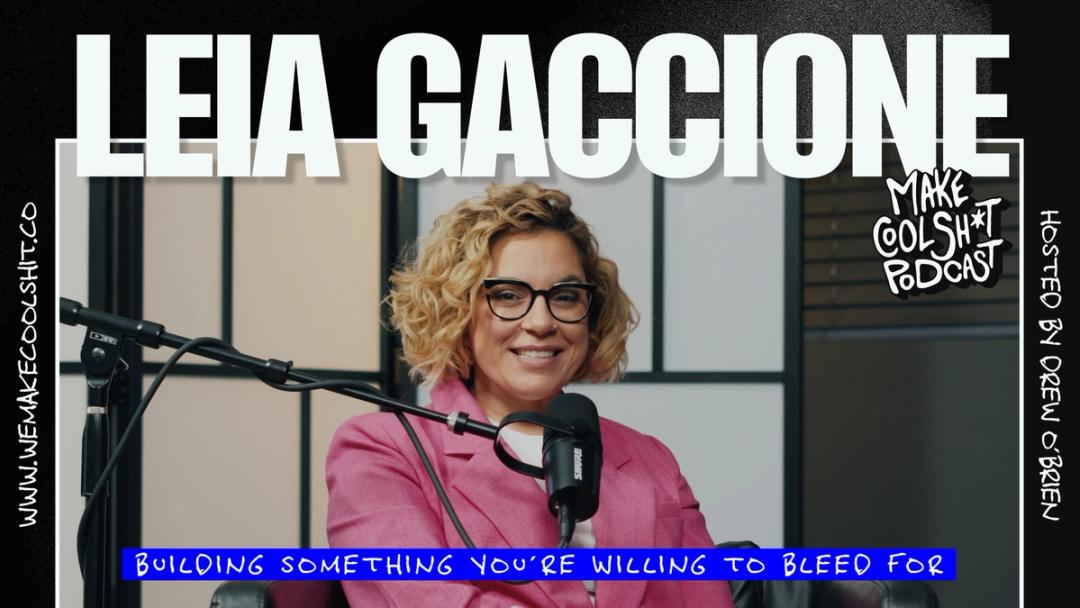
What's up, everybody—welcome to this week's episode of the Make Cool Chef podcast. I'm sitting down today with Leah Gashion, head chef from The St. Clair, the hottest new restaurant, some might say, in the entire state of New Jersey. All right. Listen, it's—it is, it's an amazing spot. The design is amazing, not just because we were a part of it, but it's truly an experience. So, for the people that aren't in New Jersey and have no idea who you are, give us a little bit of a breakdown on who you are and why you decided to open up The St. Clair in Montclair on Church Street if you didn't put that all together. I mean, where do we start? Do we start at the beginning? Yeah, I mean— Who am I? That's the first question. Who are you? Okay. And why are you here? Uh, I'm Leah Gashion. I have been a chef for the past 25 years. Well, I've been in the industry for the past 25 years, which is shocking, and— You don't look a day over 29. I know, I know. I keep using 29. I think I have to bump it to 39, but— Okay, okay. That's okay. Um, yeah, I love cooking. I—it's life-encompassing. It's taken over my life in the best way possible, and I am on a new chapter as of late, and it's really exciting and really beautiful. And, yeah, I'm just—I'm really happy with the direction that things are going currently with opening The St. Clair this year. Cooking is all-encompassing for you.
Yeah. As a chef, do you—does it need to be all-encompassing? Because are there some chefs that are like, "Oh," you know, kind of take it as more of a lackadaisical approach? Because I've seen you work, I've seen you literally in the kitchen, and you don't fuck around, right? No. But also, we've built so many food and hospitality brands at Make Cool Chef where I'm just used to it now, but the food and hospitality lifestyle is absurd. It's intense. Right? You're in there prepping early in the morning, you leave at 1 a.m. Obviously, I don't know the exact schedule, but like, you are living, sleeping, eating like 24/7 at The St. Clair. Is that fair to say? Maybe not 24/7, but I mean, I—listen, I was off yesterday. I had to go in and do inventory for 2 hours. I was on the phone with— But you were off. You were off. Yes. There is no off, number 1. There's no off. Yeah. When you own a business, whatever the business is, there's no off. It is certainly intense, and I don't think that a lot of people can understand the level of intensity it is when you specifically own a restaurant or even work in a restaurant. I think that there are very few industries that are as physically and mentally and emotionally demanding as this one. So, like, yeah, when you're—when we just opened in July, and when you're opening, you're 7 days a week, you're 90, 95 hours a week, morning to night, open to close every day.
But for me, that's the expectation. Now, being 4 or 5 months open, life is a little bit more normal for the restaurant. Not for you, though. Well, I mean, listen, I'm still working like 55 hours a week in the restaurant itself, plus whatever happens on my days off. Do I need to fix a schedule? Did someone call out? Do I need to go through Indeed? Do I need to type up the inventory and send it to Ed? Like, there are so many things that happen on my days off. Even like going out to eat or cooking dinner at home or getting a new cookbook. Like, I'll sit down on my day off and still continue to work. I feel like, yes, I think—do—are some chefs lackadaisical? Probably. But my circle? No. Because I think you should surround yourself with people that you aspire to be like. And so all the chefs that I know are the same, and they all work really hard at perfecting their craft. The chef that we have in common—multiple chefs in common. Multiple. —is Jamie Nott. Jamie Nott. And on the podcast, he—him and I were talking, and he's like, "Yeah, I don't cook when I go home." So—because I understand, because he's cooking all day—do you cook when you're at home and, like. Yes. So you enjoy cooking. I love cooking. Outside of work. I love cooking. Because I don't paint. I started as a painter. Like, my problem is I turn everything into a business, or I try to make
money out of a quote-unquote hobby, right? So when you're cooking at home, are you like, "Oh, that's a dish that I could put on the menu"? 100%. Okay, so you are also kind of always thinking about the business, even when you're cooking for fun. Always. So it's a 24/7 mindset is what I'm getting at. Yeah, like there are so many dishes that ended up on the menu because—I mean, that's how—really how I'm inspired. It's like, "Let's go to the grocery store. What are we going to make this week?" And like, sometimes you whip something up and you're like, "Wow, this is so good. This needs to be on the menu." And it's happened a number of times through my career. Yeah. Speaking of the menu, one—outside of the fact that we designed it—you are the—we've probably built, no joke, since 2017, 100 restaurants, brands, websites, whatever. But this is your favorite. St. Clair is the favorite, but also for the first time, my daughter is featured on the menu. Oh, yeah. Sophia's scrambled eggs is on the kids' menu. So that's a very kind of inside baseball thing. If you guys ever go to The St. Clair, order the Sophia scrambled eggs. So I—but. Only if you're like 12 and under, though. Correct, yeah. Other than that, order the most expensive thing on the menu. So Montclair in New Jersey is a very expensive town. It's a picturesque town. It's the town out of a movie, right? It's literally been in so many movies. You are on an expensive street, a beautiful
street. Why did you decide to pick arguably the most expensive town and the most expensive rental property in the town of Montclair? Meaning, why did you decide to put this momentous amount of pressure on yourself and your partners? Wow, you're stressing me out on a Monday morning. Well, you know, I really—I have to say, I feel like it's serendipity. I—the first kitchen that I ever worked in—second kitchen, first paid kitchen that I ever worked in was in Montclair. That was back in 2003, 2002. And so I have always kind of had Montclair in my heart. I've worked at a number of restaurants in Montclair throughout my career, and the most recent, even though it's not recent now, was another restaurant on Church Street. And I—I mean, it's just like the best street. It feels so cozy. It feels—it's just great to see all the people walking by and people sitting outside and musicians playing music and all the little shops. So I've always loved going there. I loved working there. And I don't know, I really—I—in my mind and in my heart, I kind of was always like, "I really would love to end up in Montclair. I really would love to end up in Montclair." And then 6, 7 years ago, I ended up reconnecting with my uncle, who is like one of my favorite people in the whole world, and I'm so grateful that we reconnected. And his tenant of 30 years in his two-family house was moving out, and he was looking for a new tenant. And I was like, "I'll move in." He's like,
"Really?" And I was like, "Yeah." So I feel like that was like the first step of the manifestation. And then last year, we found out that the space was going to become available. And I've kind of heard rumors about it for a few years, but nothing ever came to light. So when we heard this space was going to become available, it was like, "This is a no-brainer." You had to jump on it. Had to. Had to. Yeah, because in this specific area, these—on Church Street, the properties don't really come up very often. No. Especially in this space. And also, speaking of this space, out—and I'm not just saying this because our logos are plastered all throughout the restaurant—your venue, when you walk inside, yes, you're on Church Street, but when you walk through the doors, you can be in SoHo or Tribeca, right? So like, your restaurant is so beautifully well-designed. It is so beautiful. Right? The interior designer team, Brian. Brian and Marissa from D&G Interiors. D&G Interiors, shout out. Send you the invoice for the shout out. But all joking aside, your space is up there with some of the—some of the spots in New York City, which you have to kind of use as a barometer, right? New York City is one of the best fine dining spaces in the world. Yeah. You are right up there. Thank you. So why did you decide to invest so much in not just the food, but in the environment? Well, I think it's important. I think that the space is—I don't know. I would almost argue to say it's like more important.
I actually agree. Than— And I'm glad you said that, because the food could be dope. And it—by the way, it needs to be dope to be successful, but it's the vibe. I agree. It's the emotion. It's the feeling, right? Jamie said something along the lines of, he's like, "At the end of the day, I just care that you came in and had a good time," right? Yes, the food's important, the service is important, but did you leave with a positive feeling, or did you just leave like, "Eh, that was okay"? One of our, like, mantras is service is like an act of doing something, but hospitality is how you make people feel. Ooh, that was a bar. So like, that is really like the heart of what we want to do at The St. Clair. We want to make people feel something when they're there. And I think when you walk in and you see those ceilings, I mean, that's the first thing that I saw when I walked in. And Brian and Marissa and you adding the branding and the design elements. I mean, those chandeliers in the downstairs room are just. Gorgeous. Stunning. Like, there's no—yeah. And it's funny because from the kitchen, I look out and I see them at all moments of the day. But if I have to go into the dining room and chat with someone, which I feel so comfortable in the kitchen, and so I tend to stay back there. It's not often that I go into the dining room.
As soon as you cross that imaginary line. Yeah, really. When you go in the dining room, it just—it really feels magical. It really, really does. It's such a beautiful space. I can't believe it. And the upstairs room is like a totally different vibe than the downstairs room. And I think that, you know, we really wanted to use—like, we talked about while we were planning this—the dichotomy of like dark and light, of old and new, of feminine and masculine. And I think that, you know, I'm—well, I don't want to—I don't want to put the cart before the horse, so I'll wait until you ask me your question about branding. Smooth transition into that one. When you hear the word "brand," what does that mean to you? Well, I think that for me personally, because I'm so encompassed by the business, like, really the brand is me and I am the brand, right? And I feel like these things that we discussed in our meetings of like old and new and the dichotomy of light and dark and feminine and masculine, like, we all have that within ourselves. So like, for me, I would just say the brand is an extension of me and my vision. And it's not just about the aesthetic. I think that it also is about how you treat your staff. I think it's about how you treat your guests. I think that that is all the brand. It's the culture that you're creating for people who work side by side with you and for people who are dining in your home. Would you have said 10 years ago that the brand is an extension
of you? No, because 10 years ago, I don't think that I understood. I think 10 years ago, when I opened my first business, the business was me. And I think as time evolved, I became the business. And I think now I understand that so much more. And I don't want to sound egotistical or like I have a big head, but. Talk that talk, girl. But you know, but it really is. It's me. It's my heart and soul. And it's my brainchild and it's my baby. And it's personal. It should be, and it shows. The reason why I asked the 10 years ago question is because it's actually came up on every single episode of this podcast so far, where there's personal brands now, and then there's the business side of the brands, right? I make the joke, I think, every podcast, where I have a podcast now, right? I never wanted to be in front of the microphone. I'm usually the person behind there, right? But now I know that if people are paying us a lot of money, if people are paying me cool shit, $50,000 to do a project, they kind of need to know who I am. And they need to know that I'm setting the tone for the business. Yeah. Right? So there's the other side of the coin where I struggle with sometimes too, where it's like, yeah, but I also want me cool shit to live on its own and be its own thing, separate of your brand. But you're me cool shit. Yes. But five years from now, I might not be
able to work on every single project. Six months from now, I might not be able to be the main designer of me cool shit. Of course. So in the future, do you still feel like The St. Clair will be as much you as it is right now, right? Because you're still in the first six, eight months of business. It is very much you. You are literally there every day. Two years from now, three years from now, you might have another project. You might disassociate yourself a bit more from the business. So do you still feel that that will be just as much you in the future as it is now? I think that, yes, I will always—as long as I'm a part of it, I will always be associated with the business. But I do think in the future, it's like a little hard to see beyond the woods right now because we're—I think we're in like phase two where it's like. You're still in the thick of it on a daily basis. Yeah, like we're—I don't think you're like out of it until you have a year under your belt where you have some history and some data to base projections off of. Like we're still kind of like navigating what's going to happen during year one and business volume and holidays and what's going to happen in the winter. So yes, in two years, in five years, you know, we would love to do some more projects. And when that happens, I'm not going to be there five days
a week. Someone else will need to take the reins. But I think that like that's another really beautiful thing about this industry in mentoring people and teaching them my thought process and allowing them the creativity eventually to be able to build upon that and to continue this vision that we have at The St. Clair. To pass upon your knowledge to the younger generation, for lack of a better term. Yeah. Right? And really see those other people thrive. Yeah. Right? See your sous-chef thrive. See your general manager thrive. Because you can't do it all by yourself. No. I understand that you have partners and you have an amazing staff, but you can't have two, three, four, five, six restaurants and expect to be everywhere at once. No. I think that that's challenging for me. I'm so lucky. We're so lucky at The St. Clair to have this squad. I mean, it's—I say Josh, the general manager, he's like my restaurant soulmate. I've been missing him my whole life, but we finally found each other. And it's—we work really well together. It is an honor and a joy to work with him on a daily basis. Gianna, my sous-chef, we joke and tell everyone she's my daughter. And like the cooks will be like, "She's your daughter?" And I'm like, "Yeah, no, she's not really." I had her when I was four. But she's also a very, very hard worker. And I mean, Mary, Sean, Kristen, Alex, there's—Yason in the kitchen. I mean, there's so many people. Everybody who works there is a part of why that place is successful.
And it's really beautiful. It really—I don't know. There was a couple, I don't know, maybe last month, it was like a Saturday night and it was just very busy. And everyone was doing such a great job that. It was like a symphony. It really was. And like everyone crushed it. And at the end of the night, I looked at the kitchen and I got choked up because I was like, "I'm so proud of you guys." Like, you know, it was like three months in at that point and they just crushed it. And it's beautiful to see the evolution of how we can continue to improve. So you are able to step outside of the business literally and figuratively and like kind of see where you guys are at. Like you were able to have that moment, right? Because it's really hard to have that moment where you look around at the end of service and you're like, "Wow, that was amazing," right? Because usually you're just so in it, you're so in the actual moment, you got to worry about, you know, this dish needs this sauce and that cocktail needs to go out, whatever that is. You're so engulfed in what needs to be done now and you're putting out fires and you're doing all these things. So you were able to kind of take a step back and look around and be like, "Even this early in the business, that was fucking amazing." Yeah. And listen, there's some nights that are not like that. But on the nights where you're feeling that kind of pressure and it's—I tell especially like young cooks or newer cooks, they're like, "What can I do to improve?" And
it's like, you have to have like this internal fire. You have to have this internal drive. I make a joke and I tell people, "I walk in and I'm on fire all the time." I could see that there's boxes from a delivery that aren't broken down. There's a puddle of water on the floor. This light bulb is out. The sill over there is dirty. The bottles didn't get—like I can see all the things at all time, but at all times, but you have to like have this internal drive to push yourself to the limit. And it's beautiful when everybody on the team is pushing so hard and like the wheels start to rattle a little bit and you're like, "Oh shit, this could be bad," but like you push through and you crank it out. It's like it just—I guess it must be like what, like winning a basketball championship, maybe not, but I don't know. I don't really watch basketball. That is true though, because I've seen it. We've been in a meeting where it's like we're going over color palettes, whatever we're talking about, right? We're going over fonts, going over color palettes or whatever. And then in the middle of the meeting, you'll be like, "Hey, employee X, we need to go fix that," right? Like in the middle, because you just saw something happen in real time. Yes. And also I'm standing there like, "Yo, like can you pay attention to this meeting?" And the reason why I notice that is because I'm the same way, right? On fire all the time. On fire all the time.
Really just always being aware of what needs to go in. Like sometimes I'll be on a Zoom call with a client or something, right? Because not everyone's here in Jersey. So I'll be on—the other day I was on a call with someone from England. And then on my other screen, and they can't see that I see it, a huge issue is going on. How do you keep your cool? I looked at it quickly, because I could also see myself on the Zoom, right? So I was like, "All right, let me not see anything that's going down." Or I should say, "Let me not show the client that I have something else going on," because we're going over something very important with this client from England, right? So now I'm like, "Okay, I need to be here," but also in the back of my mind, I have, as soon as the Zoom call ends, I have to go put out a massive fire, right? So in the beginning of me running the business, I would have—that would have been all over my face. I would have been an absolute shit show, right? I would have been like flustered. I would have been like everything about my demeanor, you would have been able to see that, "Hey, there's something wrong with this dude going on right now." But after putting out a million fires, after doing this for nine years, okay, I've also learned where it's like, "Is that really a massive issue?" Right. What needs my attention now? What am I going to waste my energy on? And this current call that I was in, I was like, "Okay, they could pay
us a good amount of money. This is where my focus needs to be. This is a sale," right? And in business, the only thing that keeps your business open is sales, right? So in the past though, I would have maybe even ended that meeting shorter because I was worried about going dealing with some other issue. But you need to be able to prioritize, right? What's DEF COM level five or DEF COM level one? I don't know which way the scale goes, but what is the top priority? And then, you know, for example, if you hit me with an email five years ago, I needed to get back to you in 10 minutes. Listen, when you own a business and you're working every day and there's no days off, there has to be some kind of boundaries. Yeah. I wanted to say, I think that as you work and you learn, like people say to me, and I'm sure maybe it's different for you, but there's not like people watching you work all day, but there are literally people watching me work throughout my shift. The St. Clair has an open kitchen for. Yeah, so like. You could literally see into every single thing that's going on. So I'll tell you two funny things. Like people will be like, "How do you do that? Like you stayed so calm." And it's like, "I'm not calm. I'm freaking out." It's like even in the cooking. You're like a duck on a pond. Yeah. Even in the cooking competitions, people are like, "Wow, you seem so calm on there." And I'm like, "I, for like the first three minutes, my hands are
shaking uncontrollably." And then you just kick into like the most familiar mode. Like I'm just cooking. It's a flow state. Right. And you just settle in. A few years ago, it had to be like in 2021, because it was right after COVID and like inside just opened and we were kind of like gearing back up and we had outside and we had extra tables on next door's property and inside. And at that point, to-go's were crazy. So like to-go's were cranking and it was Mother's Day. And my mom and brother and sister-in-law came in for brunch and they sat near the open kitchen and they watched me work during brunch. And it was fucking bonkers. It was like the busiest Mother's Day we've ever had. And I'm like pumping 18 things of ketchup and like pulling tickets and like, "I need a bacon. Like I need a bacon right now. Can I walk? Where's the fries? Like let's go." And you're doing this for three hours straight, just nonstop. And when it all died down, I went over to the table and I sat down and my mom and brother looked at me and they were like, "Now we understand why you are the way you are." And I was like, "I've been doing this for like 20 years. You guys just get that now? Like you're just understanding that now?" But it's high pressure. It's intense. It's mentally challenging too to like remain calm in those situations, to be able to communicate with your staff in an effective way and not show them your stress. And it could be exhausting at times. Like I find for myself that I
like need time to recharge my batteries because no matter what's happening, like we're about to enter the two slowest months of the year. I'm going to be very stressed about that. But I can't show my staff that I'm stressed about that. Well, it comes from the top. Right. Right? Leadership comes down from the top. Yes. You have to, no matter what is going on, be this beacon of light and positivity and motivation and inspiration and camaraderie and joy for your staff. Because like I always say, you can't cook good food without love. You have to have love. Yeah. You could always cry when you go home. Yeah. I do. We've all been there. Yeah. But that only comes with repetition and years of. I think so. Of experience, right? When you were a sous-chef working at restaurant XYZ, you were just clocking in, clocking out. Yeah, you were probably trying to learn and trying to get better, but you had no idea that your head chef at that time had all of this weight on his or her shoulders. Correct. Right? Earlier you mentioned the cooking competitions, right? That's how I found out who you were. So my wife is obsessed with Top Chef, right? She watches it every single episode, every single season. And then like maybe four or five years ago, just like through osmosis, okay, now I'm sitting on the couch. Now I'm watching Top Chef. I don't know a shit about cooking. Now I'm asking questions. Cut to whatever season you were on, the first episode, they always like introduce who you are. And we always root for like the New York
people or the Jersey people. And we saw you. You had your signature frames. We're like, "Yo, let's fucking go," right? Dita. You didn't go as far as you would like. No. But please explain to the audience why you didn't go as far as you might have liked on Top Chef. It wasn't very transparent if you watched it. And even if you ended up watching Last Chance Kitchen, I think I probably spoke about it briefly. It's been, I watched it, but it's been a while since I watched it. Maybe when I go home. Is it hard to watch yourself on TV like that or no? No. I think I'm so much fun. Listen, that's good because I could barely watch myself on this podcast. So yeah. I'll watch it once. I'm not going to like sit there and rewatch and rewatch, but yeah, I think it was like a Thursday that I flew out to do Top Chef. And on the plane, I wasn't really feeling well. And so when you land and you arrive at the hotel, their team is there to take you upstairs and they go through your things to see if you brought anything that you weren't supposed to bring. What are you not allowed to bring? Well, they want to know like how many devices you have because when you start filming, they take all of your devices away. So if you have an iPad, a computer, an Apple Watch, or a watch or a phone, they're going to end up taking all that once you start filming. They actually also take the TV in your hotel room and the landline in your hotel room out once you start filming because
you're not allowed to contact anyone. So day one I arrived. I would never survive, by the way. I brought books. Day one I arrive, I'm on the plane, I don't really feel well. We land, they take me up to my room, they're going through my things, and I'm like, "Guys, like I'd really love to go to an urgent care." And they're like, "Well, what's wrong?" And I'm like, "Well, like I just met this guy. Like I don't know how comfortable I really feel with telling you what's going on." And they're like, "Well, we need to know." And I'm like, "Okay, well, I think that, are we talking about this on a podcast right now?" Listen. Fuck it. So I'm like, "I think that I'm getting a UTI. Dealt with this before." Which is common. Let's just go get some antibiotics." So like, "Okay, go to urgent care, get the antibiotics." Next day is like primary interviews, getting to know the chefs, wardrobe fit, blah, blah, blah. They like order you dinner, send it to the room. It's like a 20-hour day. It's a long day. Yeah. It's a normal day for us. Like we're used to doing days like this. It's no big thing. So I feel a little bit better. And then the day after that, we start filming. So you're in Kitchen State. No, not Kitchen Stadium. That's another reality show that I did. You're in like the Top Chef kitchen and you start like Padma walks in and Tom Colicchio is there and you're like, "Holy shit." It's real now.
Yeah. And you have to start. And the first challenge was difficult. And your hands were shaking a bit and then you got into it just like you were saying earlier. Yeah. You settle in. And then after that, you immediately have to go to Whole Foods and shop for like the big challenge, the elimination challenge. And so we got to Whole Foods and I like was not feeling well, was not feeling well. And I had to go to the bathroom and I kept telling them like I need to use the bathroom. And they're like, "You need to just wait until we're done with this. You need to wait until we're done with this." And like I'm waiting, waiting, waiting. And finally I go to the bathroom at like 6 o'clock. And by the way, we're in Houston in like August and it's like 95 degrees outside, 90% humidity. And I am freezing. You're just dripping. Freezing. Freezing cold. Like I'm always cold. My hands are so cold. Now, maybe you guys should turn the heat up in here a little bit. Just saying. Just joking. So I'm freezing. I finally go to the bathroom and I am urinating blood and I am freaked out. And so I go back and tell the people and they're like, "All right, well, we need to go back to the hotel and we need to film everybody in like the Top Chef room when you guys." But they're putting the filming before your health. Yeah. A little bit. Yes. So we go back, we do the thing. They take me to like this freestanding emergency room. I get like some IV medicine.
Next day I wake up. Elimination challenge day. They come to your room to film you getting ready. I am a mess. I am in pain. I have a fever. I'm scared. I'm weak. And I'm crying. And I'm like, "Just come back in 15 minutes and we'll. And you're feeling all that and there's just some dude wearing all black filming you while you film. Yeah. They want to like film you brushing your teeth. Yeah, yeah, yeah, yeah. So I'm like, "Let me pull it together." So, okay, now it's time to like go outside and BMW is a sponsor. So like all the chefs need to like get into a BMW. And it's like, "All right, guys." Let's get into our BMW X3. Yeah. Exactly. And they're like, "All right, now like run to the BMW and jump in and drive away. All right, everybody out. Go back to the starting point. Do it again. Everybody out." And it's like, "You have to do it." And then you get to the building where the challenge happens. And it's like, "All right, everybody run up the stairs. Everybody run back down. Run up the stairs again." And it's like. Because the average person doesn't understand the production team still needs to get those shots. Right. It looks normal when you view it on the TV, but it's not as. And the competition is real. It is. There's none of that happening during the cooks. Your time is your time. You don't get any redo's. And so by the time we're going on a tour of the restaurant, I like
almost collapsed. And the production team was like, "Are you okay? Do you want to do this?" And I'm like, "Can I please just go sit downstairs until it's time for me to cook? Like I just need to save my energy. And I'm in so much pain." Well, listen, I laid downstairs in the fetal position for a couple hours and then I went upstairs to cook and I was very disoriented, which is not normal because the kitchen is like my favorite and most comfortable place. It wasn't my best moment, but I was really ill. And after everyone cooks, you present to the judges, they all discuss, then you have to go back to where they do the judging and you're waiting for all the judges to get there and they need to do makeup. I am literally on a cement floor inside. It was like at a football stadium in a sweater curled up on the floor in the fetal position for hours. When we did judging, if you watched that episode, I'm not standing up. I'm the only one sitting on a stool because I was not well. And I got eliminated. And listen, could we say that my performance was the worst? Yeah. Could we say that I got eliminated because I was like dying? Like maybe. Both can be true. Yeah. Again, we need to go back to the room and say goodbye. And I'm like, "I need to go lay down." So we get back to the hotel. Cameras are done. They send a doctor to my hotel room. And I don't remember leaving filming and getting back to the hotel.
Like I was so out of it. Doctor comes, they give me an IV while I'm in my hotel room. And the next morning I woke up to use the restroom. And you're in a hotel room that's maybe a third of the size of this room. And walking from the bathroom to my bed, I completely blacked out, fell face forward, knocked my chin on the floor, woke up, didn't know what the fuck happened. I start screaming. Now again, they take away your cell phone, laptop, landline, everything. I'm screaming, "Someone help me. Hello, help, help." No one could fucking hear me. I don't know what they have in the walls at this hotel. So I army crawl, get the door open, go across the hall, knock on a PA's door and she's like, "Are you okay?" I'm like, "I need to go to the hospital." I'm in the hospital for like 11 hours, severely hydrated, almost have sepsis. That's how bad the infection has become. And I was like laid up for 10 days in bed. And it was scary because I don't care how old you are. You're sick. You want your mom. I wanted my mom. Yeah. And you're not in Jersey. You're in Texas. Across the country. What made me better was I binge-watched the Sopranos. Which features Montclair multiple times. And I used to have a nickname. They used to call me Meadow back in the day. So I watched a lot of the Sopranos. Made me feel comforted. And I mean, through that time, it was like pretty crazy how bad this infection became. I had to go see a specialist.
There was like, it was not normal. I'm much better now. But I wanted to wait to get back into Last Chance Kitchen. And I did. And I fucking crushed. And I crushed. And I crushed. And I crushed. And then I made a really fucking stupid mistake and I got eliminated. But I feel. You proved to yourself that when you were healthy, you were able to go out there and compete with all the other no pun intended Top Chefs. Yes. I did feel like some type of validation in getting back there. And yeah, I mean, listen, I still feel like I need to take a Xanax when I watch that show. It stresses me out. And to be honest, listen, I'm me and I love what I do and I'm proud of myself, but who the fuck's going to beat Buddha Low? Who's going to beat that guy? If you get a call from Top Chef to go back, would you do it again? I would do it. Yeah. It's scary. It's really hard too. I think like I think I saw a clip of this where or maybe it was something else. I think it was your podcast though. Were you talking about imposter syndrome? Yes. That is coming up on I ask everybody, how do you deal with that? I think, you know, maybe this might be true for men too, but I think for women, like body dysmorphia is a thing. And I think when you're like in for me, I feel like I have like food dysmorphia or like.
Yeah. Well, especially women, they're always getting if you're not a supermodel, you know, you're always getting compared to that body type or whatever the classical beauty. But I think that like I have like business dysmorphia where it's like, is this good enough? Does this look good enough? Does it look pretty enough? Is it tasty enough? And then like people will be like, "Everything was so good." Or they'll write a review and I'll be like, "Are they lying?" But like, no, they're not lying. But you have to like check yourself and be like, "Oh, people really like it." You know. Well, that ties into your ego too, whether it's positive or negative, right? So it's like what you're saying is, "Oh, am I good enough to cook a dish that makes somebody feel that way?" When we all know that you are, but everybody has that, you know, negative doubt at times. I think too, like this year has been really challenging for me personally and mentally, probably like the past year and a half. And I think that like in things that I've had to deal with in business, it has taken like a severe toll on my mental health and in the way that I see myself that I'm still trying to overcome. And I don't think like a lot of people like to talk about or I don't think I don't know. I think it makes people feel uncomfortable. I don't know what it is or it makes people feel. Well, when they tell me how hard it is to run a business. How hard it is to run a business, but also like I think it's hard
for people to be vulnerable and like share the mental challenges that come along with it and like the self-doubt and dealing with people who make you feel less than and like how that affects you long-term. It's been a hard year. Well, especially we don't have the same exact businesses, right? Creative studio versus a restaurant. But what we do share in common is subjectivity, right? People can think the brand that we built for you for the St. Clair is dog shit. And the next person to them think it could be the most beautiful brand that's ever been built. Yeah. Right? So I can't tell somebody how to feel, right? So for example, I go to your restaurant and I have these, the cornbread that you guys have is incredible, right? Honestly, it's dangerously good. So good. But the person that I took to dinner with could say, "Oh, that's not for me." Yeah. But that's tough to deal with because, okay, I made this thing with all of my heart, right? This person likes it. This person doesn't like it, right? So what have I done with that? I have just said, "Okay, I need to trust my taste, right? I need to just say, okay, the branding that we built for the St. Clair, I know that it works for the client. I know that it works for the town. I know that it works for the target demographic. I know in my own brain, my taste, the company's taste, I know that this will work. And I can't please 100% of everybody. But if you please 100% of
everybody, then you're actually talking to no one, right? If you talk to everybody, you talk to no one. Yeah. Those aren't our people. If they don't like it, somebody called up and they were like, "I want to talk to the manager. Like I saw the painting that you have in the bathroom of the Virgin Mary smoking a joint and like how dare you make a mockery of my religion." And it's like, it's art. It's just art. We're not making a mockery. I'm a good old Catholic girl. I went to Catholic school my whole life. I mean, I believe in God. It's just a piece of art. But again, if you don't want to see it. Yeah. Just don't come back. That's right. And that's okay. Yeah. But how long did it take. They go in the bathroom. How long did it take you to feel that way? Because like for me, for years, I was a people pleaser, client pleaser. And by the way, you still need to do great work for your clients, right? I'm not discounting that, but I now know that I could say no. I think that in this day and age, it's really important for me to if you don't stand for anything, you stand for nothing. In my last business, we started doing drag brunches. Sorry. I didn't hear you. Drag brunches. Drag brunches. Got it. Drag queen brunches. And I'm a straight woman and I have never been on the end of such hate. I mean, people were emailing us, "How
dare you do this? We're never coming back to your restaurant again. Why would you let those prostitute clowns in your restaurant? You're grooming our children." I mean, I was appalled and saddened and scared because people are crazy now. And if they are, you just don't know what people are going to do. Which is sad. Really sad. And for a minute, I was like, "Should we not be doing this?" But like those are not our people. To be quite honest, if you have hate like that, I do not want you to come to my business. Yeah. Those people that are saying all the ignorant comments. Absolutely. You don't want them enjoying your food anyway. No. So we continue to do it. I am proud to be an ally and proud to support the LGBTQ+ community. And I will continue to do so. And again, I think if you stand for what did I say? You either stand for something or you stand for nothing. Correct. You either stand for something or you stand for nothing. And so I stand for what I believe in. And if people don't like it, then there's other places that they can go. And I'm not saying that to ostracize people. But I do feel so lucky to be a part of the Montclair community because I think that there's a lot of like-minded people in that community. And I'm just really proud to be a part of it now as a resident and as a business owner. Yeah. I mean, that's why, you know, we moved our
family to Montclair as well. What's a misconception that people might not necessarily understand when it comes to running a restaurant, right? Because think about it. I see the back end of what's going on, right? But the average consumer, the average person just walks into the restaurant, gets sat down, receives a plate of food, enjoys it or doesn't, and goes home, right? So for the people that don't have any hospitality experience, what's something pretty major that the average consumer doesn't necessarily comprehend when it comes to running a restaurant? There's probably so many things. Give me two. We could go on another podcast right now. So I'll tell you what I never really understood until I started working with restaurants. The amount of prep that goes into before service even starts, right? Because like we've had meetings at like 10 a.m. and I'm showing up at the restaurant and there's 12 people in the basement doing some shit that I don't even know what's going on. Yeah. But service doesn't start till 6. But that's, you know, X amount of hours before you even. There's people at the restaurant for like 16, 17 hours in a 24-hour period. The biggest misconception. Well, I think, you know, I think, oh man, there's just so many. I think there's a misconception where people are like, I think there's a misconception about how much things cost on a menu. People are like, it's expensive. That's a good one. But like, I mean, short ribs are so expensive right now. And like we're not only talking about what the food is.
Like there's also the rent, the gas, the electric, all the paper goods, all the cleaning supplies. Payroll. The labor. There's all of that that has to be included. So I think like when you're buying food, you should keep that in mind. Like, listen, no shade to certain companies, but you will never see certain companies make deliveries at my restaurant because I really do pride myself in sourcing quality, high-quality ingredients. And I think another, there's so many misconceptions. I mean, like my brain is just like, there's this one and that one. My general manager and I talked last week and he said that there was a table upstairs and they were so happy and they were like, if we just had one thing to say, we just didn't understand like why we couldn't seat while we were waiting for the other two of our guests to arrive. That's our only complaint. And my manager very nicely explained to them that on a Saturday night, when every table is booked two or three times, it really becomes like a jigsaw puzzle. But, you know, I think all we can do is try to explain these things. And like I think shows like The Bear are a very good depiction of what happens in a restaurant. I think it's really. It's an incredible show. As someone who has never cooked in a kitchen before. In the last season, there were like moments where the camera would be in the dining room and like the dining room is so calm and like everybody's eating and like this lovely music is playing. And then they go back in the kitchen and it's like, fire this table, fire that table.
And it's like, that's real life. Like that is some real shit. So I think like if you watch that, it kind of puts it into perspective a little bit. So as an industry professional, you believe that they did a great job actually depicting quote-unquote fine dining. Yeah, I think so. Big time. I think it's like spot on. I think it's spot on. And I think even like I love how they dive deeper into the characters and I love how they're showing like their relationships and how challenging it can be to like make time for any type of personal life or commitment in this business. Well, yeah. I mean, in most jobs, but especially in the restaurant space, you spend more time with your coworkers than you do sometimes with your own family, right? So I do think The Bear does a great job of like, okay, you're in the restaurants and then showing the other storylines where they're showing their personal lives. You literally eat, sleep, breathe the St. Clair. Would you say starting the St. Clair would be your biggest fuck it moment, right? That's one of the questions that we asked here. Like what's one decision that kind of changed your entire trajectory of your life? Yeah. I think this is a pretty big one. I think maybe, you know, leaving working for Bobby Flay was one to start and work on my own career. I love me some Bobby Flay though. Me too. I love him. He just started a podcast too. Bobby, I'd love to have you on, pal. So I think that was like a
big step for me, but I do think that this is. Why was that a big step? Well, because it's like a very secure job working for, you know, what's one of the most high-profile chefs. Ever? Yeah. I mean, he's up there on Mount Rushmore. Yeah. And I loved working with him and I learned so much working for him and you're kind of branching off onto your own. And I think there's moments too in business where you're still learning and you're like, do I know enough or how do I continue to educate myself? How do I continue to challenge myself? And I think opening the St. Clair is like a really big step in that where I wanted to level up. And, you know, I'm excited. I'm excited to see this continue to evolve and I love it. I mean, you're definitely leveled up purely in terms of aesthetically, where you are, location. Everything about the St. Clair is pristine, amazing, on brand. The logos are dope too, that's for sure. But all joking aside, the food is equally as good. I know we've talked a lot about all of the outside branding and the feeling and the vibe, but the food is great as well. Thank you. So where can people find you? In Montclair on 32 Church Street. If people want to reach out to you personally. Leah Gassione at Leah Gassione on Instagram or at the St. Clair NJ on Instagram. Well, I genuinely appreciate you for coming here. Slide in. Slide into her DMs. I'm just saying.
She said it, not me, okay? So I can't get canceled out here. Now accepting applications. Well, I'm very busy. I just opened a restaurant. Listen, I'm just saying 60% of our following is male. Really? So. Like what age? I don't know. I have to pull up my Instagram demographics, but I'm going to guess. We'll chat. 28 to 38. I just made that up. I'll have to fact-check that. I'm a baby cougar, so. Baby? Wow. Okay. Well, listen, men, her DMs are open, but keep it classy. That's all I'm going to say, okay? Keep it classy. Because she deserves the best. Yes. Thank you for hopping on. That's a wrap. If you guys liked anything, like it, subscribe, share, spread the word. We appreciate it. We'll see you next week.