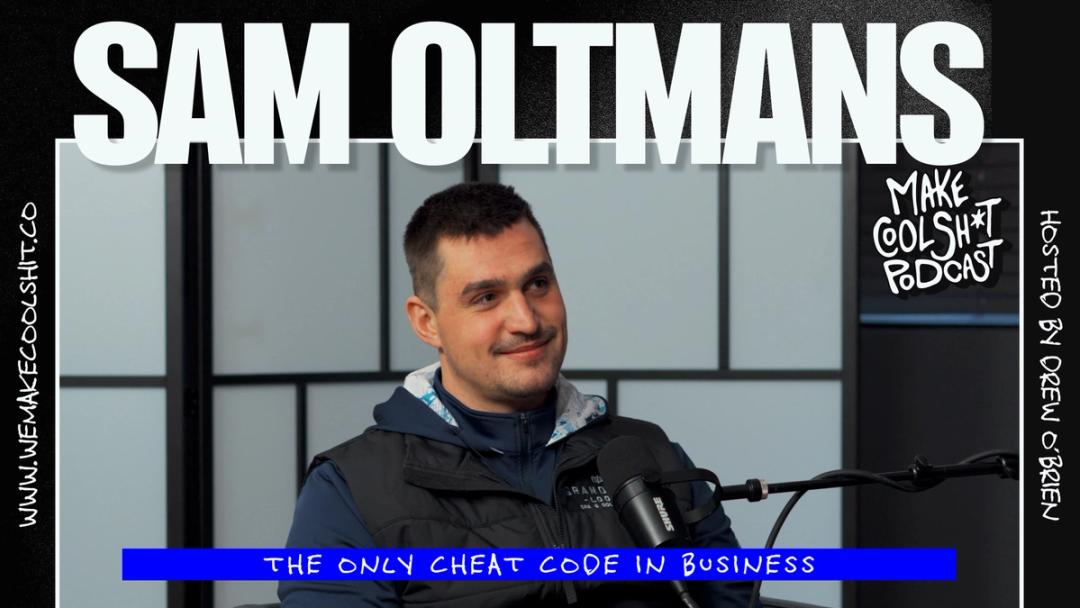
What's up, everybody. Welcome to the Make-Hoodship Podcast. Today we're sitting down with Sam Altman, the CEO of Coral Lacrosse. Normally I don't start the episode like this, but we have to give a shout-out to the guy that is the reason why we're sitting here today. Absolutely. And that's Connor O'Brien. Today, when we're filming this, it's Thursday, February 26. Happy birthday, my guy. Happy birthday. And usually we start the episode like, "How did we meet?" But. Connor. You, you, you play. You played. Did you play lacrosse with Connor? Same, same teams, area. Never on the same team, but knew each other, played with each other a lot, and then kind of continued our friendship for a long time into, obviously, into our 20s and 30s. And never took it to the business side. Obviously, when I had my own opportunity as a business owner, it was a perfect kind of way to take that friendship into this, which has kind of created our friendship and working together on this brand. But Connor is definitely the originator to this whole relationship. So definitely shout out to him for the birthday and shout out to him for connecting us and then making this happen. So you can be honest here on the pod. Was he nice at lacrosse? Yeah, he was. He was. Yeah. I mean, listen, there's, there's all levels to lacrosse. But no, Connor was a good player. Connor was a good player and a great dude. Good player. Yeah. Because you played D1, right? I did. You played D3, but do you think he had what it takes to go D1?
Yeah, yeah, I think he did. I think he had other things that he loved and was passionate about as well. That's a nice way to say it. But I think he could have. Yeah. And I think, listen, a lot of his friends that he played lacrosse in Stockton are my friends as well. Good dudes out of there. And I think the lacrosse community as a whole from D3 to D1 is good. So I think that ultimately everybody ends up where they're supposed to be. I think Connor ended up where he was supposed to be. And, you know, you look at where he is now and he's in a great place. So wherever lacrosse took him in that is awesome. But yeah, he could have played D1. He was a baller. He could play. Okay. There you go, Connor. There's your birthday present from Sam that you can play Division I lacrosse. That's your birthday present. Yep. So when you came to me. Yeah. I was skeptical. Yep. Right? And I told you this. I was like, "Oh, great. It's like my brother's friend." Yep. Right? And nothing against my brother, but I will always look at him as my little brother. Like, meanwhile, he turns 32 today. Like, he's a grown-ass man. Yeah. Right? But I was like, "Okay, like, who's this guy really going to, like, is this guy really going to care about a brand?" Yeah. "Is he really going to take this business seriously?" Yep. And to your credit, you were all about it. Yep.
You were about that life, right? So you, you played lacrosse. Yep. Now you work in lacrosse and you own your own lacrosse brand. Yep. Why did you decide to leave the company that you were at previously to do your own thing? Because that takes balls. Yeah. Doesn't matter. No pun intended. Of course. Takes lacrosse balls. But regardless of the company, it doesn't matter, right? Being an employee and then going from an employee to an owner. Yep. Is a drastic change. Yeah. Right? So why did you decide to make that jump? I think that when you get passionate about something, you get really good at something, you love what you're doing and you're doing it every day, you start to see the deeper sides of the businesses, of the industries, of what's going on. And I think as an employee where you don't have control over doing things the right way every single time, that's where frustration builds. It never builds with not being successful or not being able to accomplish things. It builds when you start to see the darker sides and you lose control of being able to do the right thing every time. And so for me, it wasn't necessarily a specific issue or thing. I just saw the way that the industry was going and I really wanted to make sure that we were going to do stuff the right way that benefited the kids. At the end of the day, we're lacrosse events, guys. We are there for the kids. Nobody else. Parents don't matter to me at the end of the day. I don't matter at the end of the day.
It's just that the kids are having a good time. And so I think out of all of that, it was really important for me that if I was going to continue to do this, to do it the right way every single time. And so in my eyes, I think that I had the knowledge, the experience, the connections to make that jump. But ultimately it came down to me. I wanted to be in control of doing it the right way every single time and really giving the product that our kids, the kids that are coming to our events deserve. So for our listener and listener, just like my mom, just my mom that listens to the podcast. My mom will listen to this one too. So that's two. There you go. All right, Michel. We got two. So we might not have the biggest lacrosse following here at Make-Hoodship, which is fine, right? But explain to everybody what Coral Lacrosse is. Yeah. And where you saw the industry going and where you didn't want to go in that direction, where you're guiding it into the, into, you're building the company into what you would like it to be. Yeah. So I think Coral Lacrosse Events is an events company, right? So we are running lacrosse events. We are bringing, whether it's professional lacrosse players, whether it's, and that's indoor or outdoor, whether it's NCAA coaches, whether it's professional development guys who work with the players, we are bringing those together and connecting those with kids so they're able to get better, be exposed for recruiting purposes, or in general, just grow as people and humans. And so Coral Lacrosse is kind of
centered in, no pun intended, it's the core of it is around transparency. I think in our industry, what it has turned into is a lot of window shopping, a lot of showing off stuff, a lot of this looks good or this might be shiny and bright, and it's got away from doing stuff the right way, bringing in the right developers, paying attention to those kids, making sure that the coaches are doing what they're supposed to do, because they ultimately do want to coach and be there. But if you don't care as the director or you don't put in that effort, of course they're not going to. So Coral Lacrosse is really centered around the transparency of these events and how these events are run. They're going to be run by the people that we say they're going to be run by. They're going to be run in the standard that we want to run them by. And I think that's where Coral Lacrosse comes into the industry and makes the change that I've wanted to make, which is transparency to the parents about the product their kids are going to receive. You're going to know what your kid's going to get out of our events every single time. So what you might have seen, and I'm generalizing, you correct me if I'm wrong, but where you saw maybe other lacrosse companies or other sports events, right? Because this happens in every sport. Every sport. Yeah. Right. Basketball, AAU, soccer, young youth development programs, right? Half of the people are just taking the 5K to sign up for the team. Yep. And just they don't really care about the player development, right?
They care about how many kids they could get on the roster. Exactly. Right? So is that the kind of vibe that you saw where it's like, okay, someone's making an event and they don't even care who shows up. Yeah. As long as they fill the 100 kids that were supposed to go there that day. Yeah. And I think to discuss this, you got to open up and discuss. There are a lot of guys out there doing it the right way, right? There's a lot of programs out there, you know, that are doing it the right way, that are developing kids and that do care about them and they really know their rosters. But I think what we've had is this big boom in lacrosse where a lot of kids are playing lacrosse. And so that's created a big market for lacrosse teams, lacrosse events across the nation. But I don't think there's a standard in how we're doing them. And I think there's a standard to getting kids in is the end all be all, when in reality it's creating an event for those kids that's actually something that they get something out of. And so I think that, you know, the struggle, I guess, in our industry right now is to how to find the middle area there, which is that every kid when they show up to an event gets a good product out of it. Not every event will be perfect, right? But I think that we all need to work together to get to a point where events aren't leaving kids disappointed or events aren't leaving kids felt left out. That to me is just unacceptable. So I definitely think there's guys in the industry
that have that. I also think there's guys in the industry that do an incredible job at what they do. But I think the industry needs to find a standard baseline of this is what's acceptable and this is not what's acceptable. And right now I just don't think we have that. Who are the companies that you looked at as like your North Star, right? The people that are doing it great and that you, you know, give props to, respect to. Absolutely. Because every business when you start, you have a North Star. That doesn't mean you copy them. That doesn't mean you become them. Yeah. It means, hey, they're doing a great job. Yeah. I think that there's, you know, a bunch out there. I think the easy one is First Class Lacrosse and Diemer. I think Diemer and First Class Lacrosse have done a great job of creating a development within a showcase, also creating a bunch of different events that essentially always make sure that the player's developed, always make sure that the player's put on the center stage in the spotlight, all the things we just talked about. I think First Class Lacrosse does a really good job with that. You know, I think on the club side, I think you have Mad Dog. Mad Dog does a really good job. Yes, they're the biggest and they are, you know, loud with everything they do marketing-wise. But if you look at their coaches, you look at the way they talk to their parents, you look at the way they
talk to their players, I think they did a good job of growing with good coaching, with directors, with communication and leadership. And these are all fundamentals that we all know as businessmen you have to have in your business. But I think in lacrosse, when you're putting a 25-year-old kid out there in a random state to start his own program, if you're not going to support him, we all know how that's going to go. It's going to go down quickly. Quickly. Yeah. So I think Mad Dog does a good job at that. I think Express has done a long, has been a longstanding kind of cornerstone out here on Long Island. I think there's a lot of programs in the Midwest that are getting going. Mad Dog obviously has their partners that are going out there, but, you know, Team Minnesota is doing a great job in Minnesota developing their players. So I think when you talk about who's doing it the best in the events world, it's First Class Lacrosse and Diemer and Matt Dunne and those guys. They are really at the cutting edge of our world. Seems like their name is pretty on point. They killed it. They did it. Yeah. First Class Lacrosse. They did a good job with that. So yeah, they are first class with their stuff. No pun intended there. So that the listeners can understand, Coral Lacrosse, you do not have a lacrosse team. Nope. You are not going out and playing tournaments with lacrosse, excuse me, Coral All-Stars. Nope. Right? You are solely an event company. Correct. So if I'm a parent and
I have my son or daughter, right now it's just boys, but I know eventually you're going to go into girls lacrosse as well. And let's say the event is $1,000. Yeah. Right? Why would I sign up with Coral Lacrosse versus signing up with First Class or anybody? Insert other company name here, right? Yeah. I think, and a big thing about me too is I'm never going to push people into an event that doesn't fit them, right? And a lot of people, our events don't fit them, right? There's certain events that do fit every, there's certain events that have a spot for everybody. And I think that when you talk about Coral Lacrosse and when you talk about what's different, you know, I ultimately think it's our transparency. I ultimately think it's the way that we're communicating with our parents and being open about what we're doing and how we're doing it. I've done this for a little bit now. I obviously went through the process, so did my, you know, the other people I work with. And so understanding that process is what we're trying to do to be different and trying to make that more transparent to parents. There's too many parents that are stressed out right now that they're not doing everything for their kid and they're paying $8,000 a year. They're taking them every training and all that kind of stuff, and they still sit there and they think they're not doing what they need to do to be the best parent. They are. And so I think what Coral Lacrosse gives those parents is the reassurance
that, hey, you've done everything you're supposed to do. Ultimately now it comes down to your kid going onto the field and performing the way he should perform. We don't really care about the politics of lacrosse. I don't really care who your dad was. I don't really care what team you play for. I really don't. Nor should you. No. And I think I really only care about how you play that weekend. And so I think that's really what gives our events a different standard is we truly don't care. And I mean that the best way. We don't care. I don't care who you are. I don't care where you're from. I don't care who your coach is. All I care about is how are you playing this weekend in front of those coaches. And so, you know, when it comes to Coral, again, back to it, transparency. Everything we do, we want you to understand and know what's going on. You mentioned in First Class how, or you said Mad Dog. None of these companies I know about, though. You are the only lacrosse events company that I know. Yep. You said that they're crushing it with their marketing, Mad Dog, right? So you came to us through my brother. We sat down, you came to the office, we did the whole entire brand process. You can check everything out now. It's live at coralaxevents.com. Yep. And IG is @coralaxevents. Yep. Shout out Richie for creating all this social media graphics that are out there right now, killing it. Top. But as someone who's never owned a business before until recently, why did you decide,
forget even Make-Hoodship, forget us as a company, why did you decide to take a serious interest in building a brand rather than just getting a logo on Fiverr, getting a bullshit website set up like a lot of new companies would, right? Just go out there with like the lowest common denominator and see what happens, right? You and your team invested heavily with us on building the brand the right way. I think that there's not a lot of cheat codes in business. Business is not something you can really cheat code. You got to earn your credibility. You got to earn your relationships, earn your networking. I think the one cheat code is if you're a business guy or you're somebody in your industry that has a lot of knowledge, a lot of connections, and you have everything in place to start your own business, I think going with a branding company is a cheat code, okay? And it's not a cheat code where you're skipping steps, but it's a cheat code where you're bringing together the team that you would build over an eight-month period with putting a graphic design team in place, putting a marketing team in place, putting a branding team in place, putting a website team in place. I think that I recognized early on, and I have for years now, I just hadn't had the opportunity to work with you, that that's a cheat code to really establishing a brand without having to take the months and months of time that it usually takes to pull that together. Working with you guys allowed us to do it, and, you know, we were way faster than I think you've ever done before, which
is incredible for us. But my point being is what we got done in weeks would have taken us, I think, months to a year. And I think you see that already in the response we've had online and the response we've had on Instagram is that we already created our brand instead of working to create our brand for eight months. And so not a lot of cheat codes in life or in business, but I think that this was a cheat code that didn't help us skip steps, but you helped us kind of make those steps very quickly. Branding is a cheat code. Yeah, it is. And I'm glad that you said that, not just because you just gave us beautiful compliments, which I truly appreciate, but there's two ways to look at any brand new company. Of course. You go out there with like a proof of concept, right? General logo, general website, and just get out and get sales. I have nothing against that either, right? The other side is doing what you guys did and invest heavily on a strategy and a rollout that is according with the business that you want to get out there. Correct. Right? So starting your business looking like a billion-dollar brand. Now where Make-Hoodship and every other agency, studio in the world, whatever you want to call it, where they struggle is when we're talking to a new client, we say, "Hey, this is a $50,000 project." Yeah. They will say to us, "What's my return on investment?" Yeah. Right? So I tell branding is not a vending machine where I put in a
dollar, I get out a piece of candy, right? It is a long play. Correct. But even in your short amount of time with the website, the branding, the systems that we put in place as well, that's another thing too, right? Yes, the visuals, you guys look amazing, but all of your analytics and everything's in one place now. Correct. All of your ordering's now in one place, right? So it also made your life easier. Way easier. Right? So at the end of the day, branding is a long play. It is. You just chose to get there quicker. Correct. Right? So what has been the early response on what you've seen? Not because I want you to just, I think the kids call it glaze. Yeah, yeah. Just a glaze. I'm not going to glaze you. I'm not going to, I won't glaze you. And yeah, we made $6 million. No, of course not, right? Like we wish that. Yet, yet, yet. Now, you know, I think that that is, you know, you have to have an understanding of what you're doing when you're doing it in business. And I know that sounds really simple, but when you break that down, you really need to understand what you're going to get out of something when you put into it. And you said it perfectly, right? I even think I brought it up to you. What do you think the ROI, or I maybe didn't ask you, but I talked about what the ROI was. And I think in reality, what I learned in
the first couple hours and days working with you is that the ROI is the brand itself, okay? So your return on investment is you get a company that'll last for years, right? You're not going to get something, nothing overnight is going to make you money other than you picking up the phone, calling people, and converting people into customer sales. Which is the only thing a business thrives on. Correct. Branding helps you get that sale because you look more legitimate, you feel more legitimate, you sound more legitimate. Basic sales process. You talk to somebody, they're going to go look you up, they're going to Google you, they're going to look at your stuff. Make-Hoodship has given us the ability to have that credibility, which allows me and my salespeople to have the conversations with the parents and let them see this is real stuff right here. Now, does that turn into a dollar sign tonight? It might. But in reality, what that does is create a customer that's going to continue to talk to other customers in the same industry about this cool thing that they saw. That's what building a business is. It's not making $100 tonight opposed to $500 tomorrow night. It's creating a business that's going to last over time. And I think that's what branding does. It gives you a company that is not a flash in the pan. It's a company that lasts for years to come and will continue to generate ROI year after year after year, not day after day. Day after day is too short to look at. If you're looking to make a brand, you want to create a business that's going to last for years.
Yeah. Like people come to me all the time and they're, how do I say this without offending people? Their business is struggling, which is hard. They want you to be the end all, the end all be all, fix it. Fix it for me. Exactly. And for example, if we're building out a $20,000 brand pack for them, right, and they have $22,000 in the bank, they are literally hoping that we are their Hail Mary. That's it. Right? So you hit the nail on the head where it's like, yes, we build the brand for our clients, and in your case, we work with you on a monthly creative basis, but we will never run your business, right? We are not the one on the phone making the sales. But think about it in its essence. It's ridiculous of a business person to come to you from, let's just say, a random industry. Let's make it up, the meat packing industry. It's ridiculous for a meat packing company to come to you and go, "Okay, we want to work with you and you're going to change our sales overnight." You know nothing about their business. You don't know any customers, connections, networking, et cetera. And on top of it, there's a time, and I put in a lot of work, and you did too, to understand the new business, understand lacrosse world, understand, of course, you had some sports knowledge, but you had to understand lacrosse more. And so I think that's coming into what I talked about before, know what you're doing and why you're doing it, right? Because if you don't know what you're doing or why, if you don't know what you're doing or why you're doing it, then
in reality, you're bringing it to somebody and asking them to fix something that you don't understand. That's where they're off, right? That brand is never going to bring you in $100 million the first night just because you have a brand new brand. It's the actual creating of the business for years that will continue to make that happen. Exactly. That fictional meat packing company, we could fix their packaging. We can make them the best website in the history of the world. But if they have no sales team, if their product is shit, that's another thing too. You are not this, but let's pretend we built you this dope amazing brand and then all of your events suck. It's nothing. The brand means nothing. No. And I think the important part there when we talk about the meat packing part too is it does happen every once in a while where you guys kill the marketing on the packaging and overnight shop, right? All of a sudden, everybody sees this cool new packaging and everyone's buying it. That does happen. And you go into this with the hope, that's a 1% chance that does happen. It's a flash in a pan. Yeah. If you have your stuff together though, and you really have done your pre-work and you come to the branding company with everything ready, you got a chance at that. But your bigger chance, your bigger hope, and what you're investing on and what you're building on is that you can build a company that people trust and believe in. And I think that's where branding comes in. People know our name now. People are repeating our name.
They're sharing our images. They're sharing our logos because they look good. They're not AI, right? They're really good, high quality. And that's something you're not seeing so much in the graphic design world anymore, I think, unfortunately. I think you're seeing a lot more of this AI creeping in, which don't want to bring it up, but I know, you know, you just see more and more of it creeping in. No, so like there's a lot of ways to look at AI. I've probably talked about it on probably every podcast, right? We use AI for tools that make our jobs faster. Yeah, we worked it together, yeah. We don't use AI to, like for example, we didn't say, "Hey, Coral Lacrosse, put in a CL logo monogram and let me see what it is." We drew it by hand, right? You saw it. You saw all the sketches. But the point is AI is a tool that some creatives use to their advantage and some people are scared shitless to use because they think that they're going to lose their job. Guess what? Those people are going to lose their job to AI because they're not talented enough to think for themselves, right? You've run Coral Lacrosse, you've run it for a bit before we met. How long have you been running the business so far? Three and a half months. Okay. I was expecting to say a little longer. Yeah, three and a half months. This question might not work for you yet because it's so new. What has the biggest struggle been as the definition of a brand
new business owner? Yeah. I think the biggest struggle has been just getting your name out there, right? We could talk about how great 2000 followers is. We could talk about how great all of our graphics, our website looks incredible. I think it's not a struggle so much. It's a lift. The lift is getting your name out there. Lacrosse industry is a tight, small community, which means that we need to talk to these people. We need to communicate with them and explain what we're doing. And so it's not so much of a struggle. It's just a lift. It's a time, it's a time suck. It's got a lot of time to calling people, explaining who we are and what we're doing. And that's what building a business is, right? So it doesn't answer your question of a struggle, but it answers more of the lift. The lift is just bidding, getting the name out there. And I think that's where the branding I've noticed as we've been able to release it, it's got easier and easier and easier because like what we talked about, I have a conversation with someone now, they go to the Instagram, they go to our website, they see us, they know us. We're getting a lot of success off of that. It's just a big lift to get your name out there when you're new in an industry with a lot of other guys around you. So that would be, I think, our biggest lift. I think the struggle for me personally has been learning how to delegate. You know, I know everybody talks about this.
I know every CEO talks about this. And, you know, I think we all say the same thing, which is that you have to be able to let go and understand that a project's going to be done at 98% of what you want done. It might not be 100%. And I think we all struggle though, and I've noticed this when it's a brand new business and everything matters and every moment matters and every post matters to really work to delegate, explain, and make sure that my guys understand what I want them to do. That's just been as a leader, you know, on this team, that's been my biggest struggle is learning to do that and getting better at it, but that's definitely been mine. So lift, getting the word out there, and I think struggle, just being a good delegator, making sure I'm giving them all the tools to achieve what I need them to achieve for me. That's a good mindset to have because I've been running this business now for nine years and I even still have struggled with delegation. It's hard. Specifically on the creative side, right? So you will have all of those problems from now until you close the business, whatever it is, right? But it's good that you're starting with that mindset now. One other free piece of unsolicited advice I'm going to give you is however amount of employees that you have, they'll never give a shit about the business as much as you and Ron does, right? I believe Ron is the other business partner, right? So you could have amazing employees, right? Like Richie, he cares about your brand.
He doesn't give a shit about Make-Hoodship as much as I would. And he doesn't care about it as much as Coral as you would. And I don't care as much as Coral as you do, right? Nor should we, and nor should he, right? What I've found out is hiring, firing, finding the right people, you'll never have someone who is actually in the trenches with you unless they have sweat equity in the game. And I think that's important. You know, our two main guys have that. You know, we gave them that. And that was important to me. It was given to me previously. And I couldn't agree with you more. Get them involved in it. I think the piece there is what you talked about is so key, which is that they have skin in the game. It matters to them. Yep. And I don't think there's anything else you can do to get somebody to change that mindset of switching over from employee to owner to this, my name's associated with it. It's the only thing you can do. It's the only thing you can do. So yeah, those have been, you know, the struggle and the lift, but the branding's helped with all of it for sure. You know, giving us that credibility. It hasn't made it happen, but it's given us that credibility to be successful and to continue on doing what we're doing. In your mind, what do you see Coral Lacrosse's future, right? Are you nationwide, right? Because you're already doing, off the top of my head, you're doing one in Texas. Texas, right. One in Jersey.
Jersey. Right. So you're already, for a three and a half month old company, you're already going all the way over to Texas. Yeah. I think, you know, my big motivator in this, my big thing that I love is the nation, the national drive for this game, okay? We've had this game on the East Coast at a high level for a very long time. And then the last 10 years and 15 years, it's grown West and it continues to. And working with guys like Mad Dog West, working with guys like Stangs and Texas Nationals and guys like Team Minnesota and Mad Dog Team Illinois and these guys across the nation, that's what I'm really passionate about is that I want everybody in the nation to be able to play this game at a high level. And so I get fired up when I pull a kid out of Minnesota who's six foot four, 245 pounds, and nobody had any idea about this kid. And now he's going to a big-time school to play. And so, you know, my vision with Coral Lacrosse is to provide lacrosse to as many kids as we can at as many different talent levels as we can, from development to team building to showcases to clinics for guys that are just learning how to play. That's really important to me. So taking this from the East Coast, pushing as far West, especially in the Midwest as I can, is really important to me. Grew up in Indiana, you know, first picked up a stick in Indiana, and I want to make sure this game gets back out there. And so Coral Lacrosse in five years will be a nationwide lacrosse events company that's
hopefully touching as many states across America, outside of America as well, as we can. So you're looking to grow the game, and through growing the game, it will grow your business. I think the game has to grow. The game's given me so much, right? I'm still here in the game, and I mean this. I went to Blue Chip when I was a kid, which is a big-time showcase, and it changed my entire perspective on my lacrosse career, but also me as a person. What position did you play? I was a midfielder. Yeah, I was a midfielder, and I was kind of the early, I would say the early edge of the defensive midfield specialist where I came on with a shorty and played D and tried to get a matchup win there. And so I think early on, you know, I had that experience at Blue Chip, which was awesome, and it kind of gave me this passion to create essentially that same experience for kids. And so bringing this nationwide, yes, I want to grow that, but I also want to grow the game, right? I want people to know about it. So one thing about it that I think our game needs is some education on where the game came from. And guys like Zed Williams, guys like Frank Brown, guys that have been around the game at that level, understand stick making, understand blessing the fields and doing stuff like that at another level, that needs to be done. There's too many lacrosse players today that, you know, they have $4,000 worth of equipment and they have no idea that this is the creator's game.
And they have no idea where this game came from. It started with the Native Americans, right? Native Americans. Native Americans started it, and it was a completely different game. You know, they played it over miles and they played it for different things. It was not the same game it is today, but those are our roots and that's where the game came from. And so it's very important for me to make sure that education is getting out there to kids however we can because it's very important for me for kids to understand the game is a blessing, right? We get to step on the field and like I miss it when I'm not on the field, but you step on the field, nothing matters. Nothing in the world matters. School, girlfriend, whatever you got going on in high school or college, it doesn't matter. You're on the field. You're playing. And I think that's the gift of the game. And I think that making sure that kids understand that is the only way to truly make sure that they understand the gift that they're being given, which is however many hours you're out there, you don't got to think about anything else in life. You just think about playing lacrosse, having fun with your buddies, sticking up for your buddies, scoring goals. And so educating and growing the knowledge of the game across the country is really important to Coral Lacrosse. That's very interesting because I'm not in the lacrosse world per se, but my whole entire family is, right? I'm the only one that didn't play lacrosse. But even other companies, even when we
were doing research working with you, not once did I hear or see anything about the history of the game. Well, it's not an ROI, right? I'm just being honest. It's not an ROI. There's not going to be money made off of that in the instant, you know, that moment. You're going to spend to get those guys down there. But what you're spending on is educating the kids on the actual game they're playing. And I think the benefit in that is the parents. And when they get in the car with the kid and the kid's talking about how this guy blessed the field for them, I think what that creates is shatter sales in the future of parents talking about this great experience. So it's definitely an investment. It's definitely not an ROI moment. I think it's not shiny. It's not sexy. It's not something that everybody wants to do. It's not going to pay the bills. But it's the right thing to do. And I think we talked about it earlier on here. It's why I left those other, not left, but it's why I decided to go out on my own here. I want to do it the right way every time. And I understand the game. I see the passion in Zed and how much he understands the game. And so I want every kid to understand that if they can. So yeah, it's not sexy, it's not flashy, but I think it's what the game needs. And sometimes it takes somebody to say, "Hey, we need to do this for
it to actually happen," as simple as that sounds. Well, you said you grew up in Indiana. You now live in Jersey. You played college lacrosse, right? Why, I think it's pretty obvious if anybody's watching this podcast right now or listening, you're not just a guy who created a lacrosse company, right? You eat, sleep, breathe. This is in your veins, right? So why does this game mean so much to you? This game gave me freedom as a kid, right? Like I was a kid who was very talented athletically. I was very academically talented. And the only time that I felt like the world was quiet is when I played lacrosse, right? And I know that sounds corny. No, I understand it. Yeah. Like it was the only time the world shut off for me as a kid. And like looking back on it, you know, to every high schooler out there, like this is just high school. It's going to pass and your life's going to go on. And these are tiny moments. But when you're in those high school moments, when the world slows down for your special moments, and for me, it was always when I played lacrosse since I was a kid. And so I think what it taught me was passion. That's passion, right? Where everything else in the world shuts down, right? I'm sure it's the same with a NASCAR driver. He's not thinking about anything else besides when he's driving. So I think my passion and my love for the game has come out of
what the game gave me, right? Which is freedom and a clear mind and just being able to be myself with no worries, right? That's what I want to pass on to these kids. That was the gift that was given to me with this game when I was allowed to play. Are there any specific, by the way, that was an amazing answer, right? I literally, I saw you, you got like into a borderline flow state. Yeah, that was my, yeah. But I think, listen. That's my why. That's why I do this, right? Yeah. That right there, right? Yeah, we'll clip that one for you. But all joking aside, I think if you keep that mindset, I think Coral Lacrosse will be huge because listen, everybody wants to make money. You're not in business to make no money, right? I want to make as much money as humanly possible, but the difference is it comes from a passion, right? Just like you, I wake up and I love this shit, right? And I understand, granted, for me it was soccer, for you it's lacrosse, but like, yeah, I'm 37 years old now and I play soccer every Saturday morning. And that two hours that I'm there, my phone's off, right? Like I'm not worrying about what I got to do with clients. I'm not worried about my family duties, right? For that, when my feet are on that grass, just like in lacrosse, like it's my therapy almost. It is. It's therapy. And I think, and that's why I'm also passionate.
I think some parents need to learn and I talk to them. Don't take that away from your kid. When you're the parent on the sideline that's screaming at your kid, screaming at the coach. Well, before I make fun of them, I need to make sure I'm not going to be that person. No, you won't. You won't because Connor knows this too. And you guys both get this. You're not doing anything to help that kid, right? You want to talk to him in the car and help him up, that's fine. But what we just talked about is the shutting off of the world. As a parent, every time you yell at your kid, you're pulling him out of that moment that he's having of just freedom, of forgetting about whatever he's got going on, a social studies exam, whatever it is. And so, yeah, I think that's the passion and that's the moment and that's why I do this. And so I couldn't agree with you more. That's the fight we have every day, right? Every business has this. There's a lot of ways to make money, but there's only some ways to make it the right way and to make lasting money, right? And I think that's what we're invested in. We're invested in making lasting money here, which is money that builds the game across the nation for every kid across the nation. That's what our kind of investment in this is. And we know that won't be a million dollars tonight, but we know that it's going to be a million dollars in the future here with a company that lasts
for a long term. Yeah, because how you're looking at it is the more kids that you help, the more money that you make, the more you're actually giving back to the game. Correct. And I think that our giving back to the game, we'll never give enough back to this game for everybody that's what we've gotten from it, right? And we're not going to go down the road of Native Americans and everything they've been through, right? But like I don't know if we're ever going to be able to give back to the game enough for what it gave it, just me alone. So I think that the goal of always trying to give back to that game and growing will ultimately continue and fall in line with our business plan. And however that matters, however that works out, we'll make it work. But that is my main focus, making sure that that aligns with what we're doing. And obviously we're going to be successful with that. That's a very important factor there. But those two things are critical to what Coral Lacrosse is. You hit on two things that I want to bring back. One is, I think it's important for people to understand at core, not every kid that's going to this event is going to be a starter at Notre Dame when they're a freshman. No, I think the lacrosse world's very, it's a very interesting world, right? There's no million dollars at the end of the road, right? All of these other sports, when you get to the end of the road, you get to make a million dollars, you get to get the fancy cars and all
that good stuff. Top PLL players are making good money right now. They're not making. Don't some of them have a job? Most of them have jobs, right? So most of these guys have jobs or they're doing lacrosse full-time outside of it. Joe Nardella is a great example. Joe Nardella is the best face-off guy in the world, in my opinion. He is a whip snake. He plays for the Fire Wolves. He does face-off factory full-time and he's a real estate agent full-time. So that's the reality, right? And he's obviously a grinder who wants to make it, but. So just to be clear, he's the best athlete in his specialty, arguably in the world. Yeah. And he's a real estate agent. Correct. That's insane. But again, I think that's the understanding that kids need to have, right? We're killing ourselves right now. We're paying all this money, doing all this stuff. And I don't think the goal should be past college. I think the goal should be, and it's my goal always, is to find a home for four years. And I think if the goal attaches to the school's going to pay for 60% of your school, we found a match, right? We found a match. And by the way, that's incredible, right? Even to have that mindset because having a family, especially a kid that comes from a family that can't afford college, even mediocre college now is 20, 40K a year. Astronomical. Right? So it's out of control. So even having that mindset of like, okay,
this school will help you go to college because unfortunately, it's not like soccer or the NFL or the NBA where if you are a quarterback and you're good, you're getting paid $50 million a year. No, and we hope it gets that way, right? Like Paul Rabel and the PLL, they're working to do that. And I think we've seen growth the last couple of years. I think we're going to hopefully continue to see that. But I think we also have to be realistic of the fact of, you know, there's 250,000, whatever there is, plus lacrosse players out there. There's only a certain amount of players in the PLL team. There's only 20 guys, whatever, on the roster that there is. And of those guys, the numbers get smaller as we go on the line. Okay, so we really have this very small number of guys that are playing there. So as a parent, as a player, let's get our mindset right, right? Let's really see like what are our true goals? Do we really want to go just play lacrosse or do we want to go to a school where we're academically putting ourselves in a great position? Maybe we're comboing an academic scholarship and an athletic scholarship now. Now we're in a really good position. You know, I think that's the way that people need to change their mindsets with this whole lacrosse experience because it is a great way to get into college. It is a great sport. I love it to death. You are never going to go make $5 million as
a professional lacrosse player in the next five years. It's not going to happen. If you had to guess, and I know you don't have it in front of me, what is the most money that the top lacrosse player makes? I have no idea. I bet you the top guys make 120, 150,000, maybe the top 2, 3% of the league are making that kind of money. Add in sponsorships, you might get to a two for one or two guys, right? Or 200K. You know. Think about that, kids. Yeah. That is not that much money if you live in areas where we live. That's maybe at the end of the day, $75,000 after everything's paid, everything, taxes, all that kind of stuff, and you get down to it. So now we go back to it and I go and I sit with a kid and I say to him, okay, and nothing against Delaware. I love Delaware and nothing against Amherst. I love Amherst. But I say to a kid who has a four, five, you know, GPA and family has money, they're able to assist. Maybe we have a little bit of athletic scholarship and we have Delaware and Amherst on the table. Those are just two different schools. And if you have the academic ability to be at an Amherst, then you need to because playing at a Delaware is not going to get you a PLL $7 million contract. Going to Amherst might get you a $300,000 salary coming out of college where you move to the city and now you're making 350K. Correct. It's about the network. It's about the alumni.
Correct. Right? And that's something that I never really got to experience. But a good example is my wife's cousin, his name's Donnie. He was an amazing athlete. He went to Wesleyan D3, played football and baseball there. Got drafted by the Cubs. Long story short, he didn't make it in the pros, but the network that he has from Wesleyan. Yeah. My network right now. It's like better than Harvard, like the people that he could hit up. And you know, I got lucky in that my industry is lacrosse, but like my network for my alumni is insane, right? You know, Coach Brecht does a great job at Ruckers. Ruckers. Shout out Scarlet Knights. Yep, we're doing, getting some wins early on, but like Jules Hindenburg, right? And these other guys, I was just texting with Tommy Coin, who's a Chicago kid who came to Ruckers and balled out and played lacrosse. The amount of connection with Zone, right? Who's out west coaching up kids at city side lacrosse. The amount of connection to come with those alumni, it's substantial. You know, there's a lot of schools now, coolest thing out there. If you're a college and you're not doing this, you should look at this. There each year, they get a suit from the actual team. And that's a suit. So an actual full suit, it's custom. Ohio State has done this, for example. That's awesome. Paid for by the alumni. They get custom suit each year so that when you finish, after four years, you have four suits that are ready for the business world, right?
That is something that's really impactful. Wow. I'm a, right? Ohio State. Ohio State. I think all guys did it. I have four suits, I think. That's what I'm saying. I only wear them at weddings. Right. But the fact that they're doing that and to give you your flowers is like the parents that are out there, the other lacrosse, not all, the other sports companies, forget lacrosse, they're not thinking the way that Sam and everyone at court is. They're thinking, okay, I have an event in Dallas. Our minimum is 56 kids. It's $800 each. We need to make this. I get it. You need to run a business, right? But Sam is trying to build all these people up at core so that they have a better future because truthfully, lacrosse is not the end game. I think that's the biggest difference. I grew up playing soccer mainly and basketball and baseball. All those three sports, if I was as good as I thought I wanted to be, I'd be, I'd have a generational wealth. Oh yeah. I wasn't. Spoiler alert, which is why I'm here. But it's funny because I'm used to seeing lacrosse, right? Like even Montclair, New Jersey, which is the next town over. Big on lacrosse. Huge. East Coast lacrosse in general, huge. Long Island, where all the other O'Briens are from, the Mecca, right? Minnesota, cool. Maybe like, I don't know shit about the rest of the country, but it is also like a culty sport in a good way, right?
Where like it's a tight-knit community. But I also can't think of a sport, now that I'm thinking about it, outside of like maybe volleyball. I'm more so saying a sport that you play in high school, where there is no actual professional end game. Track. The only other one I could think of. And there is professional, but no, there's not, right? Soccer and everything else. And that's unique about it, right? I think that also shows the love these kids have for the game, right? What I just said, a lot of these kids understand that. A lot of these kids know that there is no future in it, but they love the game. They love playing with their boys. They love their coaches and all that kind of stuff. So I think there's an element to this at the end where it does show off that passion that I have that, you know, we talked about, it's in all of these kids a little bit too. It's a really fun game. We love to play the game. It's a lot of fun. It's a game of runs. It's a game of excitement and a game of loss when you lose. So I think what you see in that is that they are all humans, right? And what you're talking about is how I look at it. I don't look at it as minimums and budgets and ROI and what is this margin. I look at it as these are humans and how can I create a really fun day for these guys, whether that's with 80 kids, 50 kids, 120 kids,
or 200 kids. I don't look at it like that. They're humans, right? They're not actual business pieces or products. They're humans. So I just look at the day as a whole and say, how can I make this a really cool day and how do I get these kids what they need out of it, whether that's recruiting, development, clinic work, whatever. I think that's how you have to look at it because that's the passion for our game. It's true. And I could see it in you. If there's a parent listening here that has a kid that plays lacrosse, right? I understand that every event is different and it's in different locations. Give me a general breakdown on how a day might go. I know it's usually a weekend, right? So it's usually a two to three day event. Saturday check-in, coming in, you're going to meet everybody. College coaches will be there. Instead of showcase, you're going to get warmed up and then you're going to spend some positional time with those coaches. And that's where I tell kids too, you know, it's a moment where sometimes they take a little bit of stress off their shoulders. I'm just with my position. I don't need to worry. Those coaches are watching you at that point, right? They want to see how you interact with your teammates. So they'll work with their positions for a little bit in the morning and then they'll go into some one-on-one, two-on-two type, building up to game situational kind of things.
And then we'll get them on teams. We'll create the teams. I think I'm pretty good at that, trying to create some fun teams that have some competition. And then we'll get into some games and the coaches are going to watch your kids play at that point. Coaches are the ones doing the All-Star votes. We'll go around and kind of collect the All-Star votes, but they're going to play games. We'll record the games. And then day two, we come back with an All-Star game. All-Star game in the morning. So there'll be about, call it 35 kids, 38 kids there with every single college coach from the event. It happens before the day starts. So it's just them and those college coaches. I was going to say, are all the other kids watching it? Yeah. So no, I do it at 8 o'clock in the morning. I do it just for those kids, right? And then the thought being there is there is another element there and a lot of kids do come and watch their teammates play, but the other element there is it's really cool to see at 7:30 when the air is a little cold still in the summer even and they're walking in, there's some dew on the fields and it's like these are the All-Stars and here are every single one of the coaches that are at this event with their coffee watching you play. Yeah. Who's going to show up? Exactly. So, you know, that's cool in the morning and then into some more games, right? And that's what a showcase is. And I think that parents also need to
understand that. A showcase is a way for your player to hopefully make a connection with other players, with a coach, coach likes him, his play, his attitude, et cetera, and to get game film, right? You can make a highlight film so you can have that kind of stuff. That's what a showcase is. So if you're getting some development, you're getting good game film and you feel like your kid's being represented in, you know, in terms of how hard he played, what plays he made and that kind of stuff, you're at a showcase that's doing its job. It's not an end-all, be-all, fix-all. Not going to make your kid just commit to a school if he doesn't do what he needs to do on the field. But that's two days, you know, some developmental work, some games, some All-Star games, and a lot of time where the coaches get to watch your son play lacrosse or your daughter play lacrosse. So there's a chance that there could be a kid that he's good and he lives in, I'm making it up, right? He lives in Minnesota and then he comes here to Jersey or wherever it is, right? He's at that event. Coaches never even heard of them, right? They show up, they play in the All-Star game. That doesn't mean that they just got a full ride to Duke, right? But it means, oh, who's number 17? Correct. And I think the importance there of, you know, Team Minnesota is a great one to talk about. You know, Team Minnesota is somebody that I've worked with for a long time where they aren't being seen for what they are.
They're big kids. They're big kids in Minnesota. Watch out, East Coast boys. They are big kids. And they'll run through a brick wall for you. They don't care. They are there. They're going to do the right thing every single time. And so. They're country strong. They are country strong. And I think that's exactly what you're talking about is brought them out and some guys got to see them play and I think it put them on the map a little more. They were already doing incredible stuff to get on the map, but me making sure that there was no politics involved in who got in the All-Star game and the real guys got in the All-Star game gave those kids a shot that they had earned to shine where sometimes at another showcase they see the word Minnesota and they don't make it in the All-Star game no matter what they did. And that's extremely frustrating. Because they're not from. St. Anthony's or something. Exactly. Yeah. It doesn't matter what they did that weekend. I mean, there's some showcases where there'll be a guy in the All-Star game that didn't come to the event. Interesting. So it didn't even show up at the event and he made the All-Star game day two. Parents, that should be your sign. That's a big wake-up sign. That kid didn't show up for the event and he's in your All-Star game, you might be in the wrong spot. Yeah. I mean, I would not, as a parent, as a player, first and foremost, I wouldn't let that, even as a parent, I was like, okay, so I paid
$1,000 for this event and little Johnny walks in just to get his shine with the coaches and then goes home. Little Johnny didn't even come to the event. That's what I'm saying. Little Johnny signed up for the event, never showed up, but he was from so-and-so school and so-and-so club. And so he got pushed through the All-Star game because they never noticed that he didn't even come to the event. The kid never showed up. Oh, that's even worse. That's what I'm trying to say. So that's the kind of stuff that I think what I help with, with these Minnesota kids, with these kids from Louisiana, with these kids from Idaho, these smaller states, is making sure they're represented. Don't get me wrong. If those Minnesota boys show up and you guys know this and play like trash, they're not getting in the All-Star game. But they show up business-like. They just travel across the country. They're ready to play. They usually play pretty well and get in that All-Star game, but in other events, they might not ever be seen for that. So yeah, I think that there's a big element here to making sure we're doing it, like I've said in the beginning, transparently, the right way for every kid. That's incredible because at the end of the day, all I'm hearing is that you are just trying to bring value. That's it. Right? The same thing you brought. The same thing you brought to us with our brand, right? You know, we talked about ROI and branding. I don't think ROI is a branding thing. I think it's a value thing, right? There is ROI incorporated in it, but
I think that ROI has too many other factors involved in it, right? There's too many other things that need to happen between sales, marketing, and them seeing your brand. But when you talk about value and you talk about overnight change, that is what we make cool shit did for us, right? Overnight, we became a more valuable company, right? You can look at it how you want to look at it. We were worth more when we came out with your branding than we were the day before. It's not ROI. It's value. It's value in my company. It's value in how people see my company. It's value in what I can charge for it, right? It doesn't change what came in the bank account that night, but it changes what that company's actually worth. I think that's where, you know, you really helped us overnight kind of change that value. Well, shit, I don't even think I could have a follow-up question to that. So for everybody that's listening, watching on IG, where can they find you? Where can they find you as a human and where can they find everything core? You can find me as Sam Oltmans on everything pretty easy. It's just Sam Oltmans on Instagram and everything. Core Lacrosse Events, every single, you know, social media platform that there is, and then corelacrosseevents.com. If you are a lacrosse player, feel free to fill out the application. If you're a parent, fill it out for your kid. We'd love to see you. And if you want to get in touch with me, shoot me an email, sam@corelacrosseevents.com. And if you want to change your branding,
hit these guys up for sure and they can help you with that. I mean, I don't even need to be here anymore. I appreciate you saying I'm coming here. Honestly, I learned a lot. This is why I do the podcast, right? I just learned so much from you. And I saw more, by the way, how many hours did we speak while like building the brand and everything? A lot. Now really getting your backstory and what you're really trying to go and then having this now go out there where you could send to a parent. Yeah, exactly. Right? You can be like, hey, listen, if you don't, if you want to know what we're really about, hey, check out this episode. No, exactly. Not even saying that so that you promote our podcast, but the information that you just provided to me, if I was a parent, if my daughter 15 years from now is now in high school and she wants to be a lacrosse player, I want her going to a company that has your mindset and your values. Yeah. No, I appreciate it and couldn't agree more. I'm excited to kind of see where this thing goes, but you know, my shout out for you guys is if you're in the lacrosse world and you have a brand, you don't love your brand, you don't love your logos, you don't really love how it looks, that is why I came here. This industry is something that's a little messy. So check these guys out for sure. If you're looking to kind of upgrade what you have in terms of your branding, it will make a difference.
So yeah, man, appreciate you having me up here. It was a great conversation. That's a wrap, man. We'll see you guys next week.