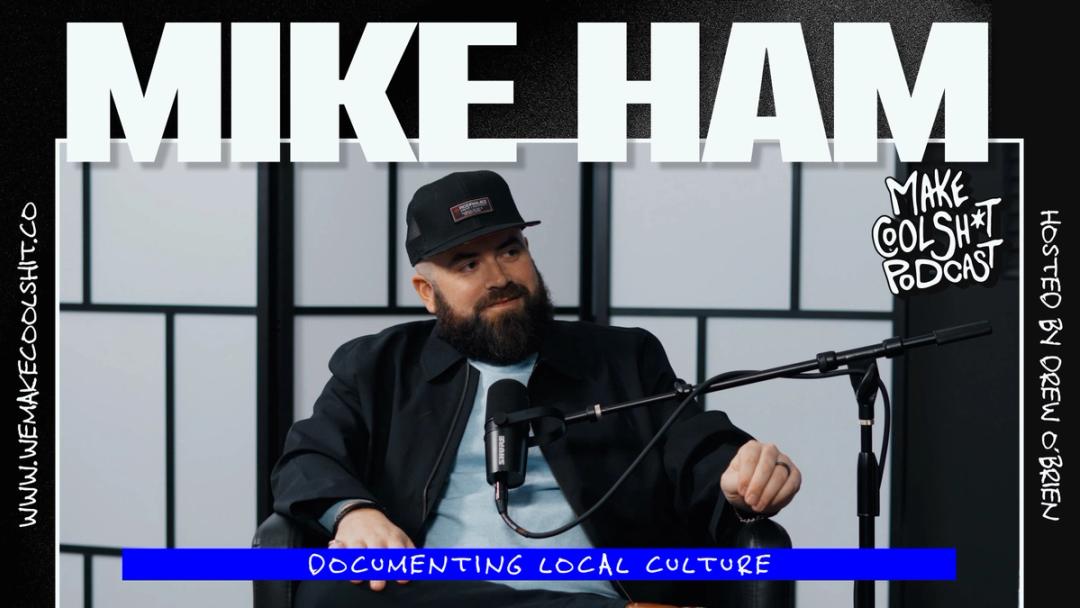
What's up, everybody. Welcome to the Make Cool Shit podcast. Today I'm sitting down with Mike Ham, creator of Local Originals. Mike and I first met with his previous creation, "Greetings from the Garden State," which brings us here today. Why change "Greetings from the Garden State" to go to Local Originals? Wow. Big question. Right into it. Uh, the gate. So for those that don't know, "Greetings from the Garden State," I ran that show for 4 years. It was something that I wanted to— I started it because I wanted to tell stories, right? And like, when I started the show, it was literally: I wanted to go have in-person interactions, in-person interviews with people. And it was just easier because I was in Jersey, you know? So like, why not just get a little mobile setup, couple mics, one camera, drive around, do my thing. And after, you know, 4 years of doing something one way, it just started to kind of seem like I wanted to do things a little bit differently and just focus more on the visual side of things. Because it was always something that I was interested in, but never really dove into really significantly, I guess. And then, you know, over time, started to kind of, like, make that shift a little bit more. Got a little bit more into photography, bought a couple new lenses for the cameras, and then I recorded my first episode of it. It's coming out in January, just as at a buddy's oyster farm down in Tuckerton. And it went really well, and I was really happy with the way I
was able to, like, tell a story in a more condensed format. And then also open up my world a little bit more to things outside of Jersey. And like, Jersey has given me a lot of things. Like, everything that I have in my life right now, I owe to this state, really. Whether it's the show or just life or whatever. And there's still going to be, like, that running thread between all the different things that we do. Because it's easy for me to get to places in Jersey because I live here. But I was meeting people and seeing stories and seeing topics that I really wanted to explore, but felt like I was kind of in a little bit of a box with what I was doing previously. So now it just kind of gives me a little bit more creative freedom to do things differently. So we already have a few guests lined up for it that we'll record after the holidays and, you know, take it from there. And it's going to be great. So it was a natural evolution. A natural evolution. I think, like, with any— I don't know. For me at least, creative projects, not that they have, like, a shelf life, but if I start to feel like the product or the quality of it, or at least, like, my general interest is starting to wane a little bit, that just gets passed on to a listener, a viewer, a community member, whatever. They can feel it. They could feel it. And like, I know, and I've— or
I did this a few times this year with different things that I tried to start or do or whatever. Like, I'd be sitting there, whether it's talking to somebody or doing something solo, and I just, like, would cut it short. Or I would— I just— it wasn't scratching the itch anymore. And I just felt like "Greetings" was such a successful show for me personally. And like I said before, it put me in a lot of different rooms that I really had no business being in. But because I was able to build up a level of credibility and a level of success with that show in a lot of different ways, it just was time. You know? It was time to kind of almost take what we were doing, level it up on different platforms. Or like, different, you know, avenues, whether it's the visual side or the photography side, whatever. And now it's something that I'm proud of because, like, I wouldn't be able to do the stuff that I'm doing now if not for that show. You know what I mean? So I think, like, it's put me in a really good spot to continue to grow, to continue to evolve, and start to tell more stories. Because that's really, at the end of the day, what the whole point is. Like, I find people just super interesting. Like, my wife makes fun of me all the time because she thinks that's such a ridiculous thing to say. But I, like, genuinely think that people, like, their stories and, like, the way that— what makes them tick, their backgrounds, where they're from, like, all that kind of stuff,
like, rounds you out in such a way that to tell that story, no matter how big, quote-unquote "big" you are or small you are, like, it's— it's important. And I think that this just gives me a chance to tell more stories, basically. And especially on a podcast, right? The last episode I had someone in my own family on, and when the podcast ended, we were like, "We haven't sat down and talked for 45 minutes." Yeah. Ever. Right. Without being interrupted or being at a family event or what have you, right? Yeah. So you really do— our podcast, like, I'm going to find out things on this podcast that I didn't know about you. We have a personal relationship. Right. And we have a professional relationship. But when you sit down and you uncover those stories and you really dig into who the people are, that's really, outside of social media content, that's the main reason why I have this podcast. Yeah. And I think, like, you start to realize that, like, like you said, you have relationships with people, but then you start, like, you know, digging on certain things. And like, I always say, like, as a host, you are a story. Give me some tips. Give me some tips. You're a storyteller, but you're telling my story. But you know some of it, but not all of it. So like, you have to get me to tell what you think is interesting because ipso facto, your listeners would probably think that's interesting as well. So if you're able to get me from A to B, you decide what that B is, then that's how you create and craft, like, a story from start to
finish. You know what I mean? So if you're doing a 45-minute episode, one thing that we're doing with Local Originals, we're cutting it down to, like, 7 minutes. And I'm not on camera at all. I really wanted to kind of make that shift and kind of just do more of, like, the behind-the-scenes type of thing. But with a 45-minute episode, like, there's so much you could talk about in that length of time. So you're taking a 45-minute clip and editing it down to 7 minutes total. Yeah. So what we're doing is, just specifically, like, I'll take— like, let's say you're my guest. And we'll— I'll record you, video you throughout your day, basically, doing your thing. Like, designing, having meetings, whatever. Once that's all done and I feel like I have enough clips, I'll just sit down with you off camera. I'll put a mic on you. I'll ask you questions that I have kind of written down beforehand, which I never used to do. Like, I just like the organic flow of a conversation. But I think that there's also times where, at least for me, like, there were stories that I felt like almost got— like, significant parts of stories that got washed away because you have to fill 45 minutes. You know what I mean? So if you have, like, one really significant, awesome story, and that takes 6 minutes, but then there's another 39 minutes that you have to fill, you know, assuming that you're trying to go for 45. So I was like, I'm just going to really take— I'm going to get as much as I can. Like, for the episode that I did with Matt, we recorded
about 30 minutes of audio. And I took that, I transcribed it, I went through, I picked out what I thought were all the best, you know, soundbite bits, and then stitched it together. So it's kind of like a voiceover overlay monologue type of thing. That's his voice. And that's the one thing that we really want to try to do is, like, you want to hear from that person. So like, when you watch this, it'll be Matt's voice or Drew's voice or whoever's voice is the guest, and them telling whatever their story is. And then with the aid of all the visuals that we'll get over the course of the thing. So yeah, I'll probably record about 30 minutes or so of audio, and then I'll clip it, you know, where I see fit. I like that, though. Short-form content versus the long-form content that you were doing before. Yeah. You know, and like, maybe there's a day eventually where, like, I feel— like, I'm calling it more like a mini doc series than a podcast. And we— honestly, I probably won't even really put it on, like, a Spotify or anything like that, simply because I just want it to live the way I want it to be consumed. Like, I want it to be watched. I want you to see, like, all the stuff that these people do, how they work, how they live, how they go through their day, with obviously the audio component of it. But I just think that, like, maybe one day it grows from mini doc to a longer-form type thing. But right now I feel really comfortable with, like,
just, it's, you know, 5 to 8 minutes and just hammering you with the best bits of that person. And you get, like, a really kind of just deep dive really quickly into their life and career or whatever the case may be. The sad part is, the world has such a pathetic attention span. Right. So I do think a 5 to 8-minute clip is something that can easily be digestible. Yeah. Something you can get more views on, right? So I think from a business perspective, that's great. And it's something that I don't see out there as often, right? Most people have longer-form podcasts like this. Why do people have this type of longer-form podcast? Because you hope that you get 15 clips that you can put up on social media. Exactly. Yeah. Right? But to your point, I was talking with Mike here at Goose Media off camera, and Alexandra, our guest that we had last week, it's not planned. This conversation is not planned. So you're not organically in your head saying, "Okay, that's a 12-second social media clip." Yeah. "That's a 15-second social media clip," or whatever. It's a free-flowing conversation. And you have to hope that you're able to then cut, stitch it to make the social media content make sense. Yeah. So I actually really like what you're doing because you're kind of doing the opposite. You're recording everything, but you're consciously and purposely. Yeah. Clipping, cutting, editing to be a mini movie, a short, rather than an actual podcast. Yeah. One thing that I need to get out there before I forget, to kind
of go back to "Greetings from the Garden State." Yep. Selfishly from the Make Cool Shit side, we'll put the logo on the screen in the edit. It is one of our favorite logos that we've ever made. It's one of the best logos, I think, out there right now. So. Hands down. It came from an accident, though. It was an accident, yeah. It came from an accident. It was like a secondary thing on a different logo. Shout out to Jacqueline Davies, Jacqueline. I'm going to send you this clip because in case you don't listen to this episode. But it was all Jacqueline. So she created, like, a podcast microphone as a logo. Yeah. With little sound icons, like, little sound lightning bolts. Yeah. Right? And then she just thought it was really cool. She's like, "Oh, it's kind of shaped like the shape of New Jersey." And I looked at her and I was like, "Holy fucking shit." Yeah. Genius. Yeah. Literally just, like, so serendipitous. I remember, like, we were in, like, Belmar or Asbury or something like that. We were with some friends going to a couple shows. And that's when I got, like, the initial deck or, like, the options from you guys. And like, I was excited because— and I was, like, showing it to them, you know, my wife and, you know, her best friend and our friend Josh who you met at our barbecue and stuff. And like, I looked at the microphone one with those little Jersey lightning bolts, and I was like, "That lightning bolt is
sick. Like, is there a way that we can do more of that?" And it just, like, it really kind of just took off. And then it became, you know, obviously it was the podcast logo, which it remains that way. When we launched Radio Garden State, we kind of took that and whited it out and made it— kept, you know, the synergies between the brands. And yeah, every time we— I wear that hat or wear something with that logo on it, I always get somebody to be like, "Is that New Jersey?" Like, and they always ask questions. And I think, to me, that's just a testament to, like, what you guys did for that particular project. Like, if you get people to ask you about it and talk about it, that's what it's all about. And I think that that's really— when we, like, brought the lottery on as a sponsor for the podcast, when we, like, changed the theme song, when we changed the website, the logos, like, it was just such a perfect synergy thing. And it just, like, worked out so well. And I was just so happy with how all that went. You've had a successful podcast. Yeah. Right? Most people who have podcasts or are creators or what have you don't necessarily have the success. You had a sponsorship from the New Jersey Lottery. Yeah. You had general sponsorships. Something as small as that, just period, having someone paying you. Yeah. To be sponsored on your podcast is a big deal in terms of revenue, right? Whatever you received is whatever it is. But you built this thing for
four years. Now you are clearly going into a new venture. That's a pretty ballsy take, right? Yeah, it is. Or stupid, whichever. No, I think it's ballsy, right? Because you looked at it and you're like, "Greetings from the Garden State." It did what it needed to do. Yeah. Right? But what made you pull that trigger, call it something else, rebrand it, and more importantly, forget the branding, forget it, as a human being who now is a new husband, married, you have personal life expenses, right? Yeah. Like, this is a risk. So you weren't a business owner before. I remember to cut back— to cut back in time, you and I were texting and you're like, "You know, man, I'm going to go, like, full-time with this." Yeah. And I was like, "Yo, man, like, there comes a point where you got to pull the trigger. You know, you got to shit or get off the pot." Yeah. It was around— it was all that was, like, around that same time. Like, I laid off my old full-time job, and it just was like, you know, the universe coming together in this moment where, like, you and I met and we did the rebrand and we signed on the lottery. So it was really just, like, this— it was, like, the moment. You know, like, if you're going to try this, try it. And if you're going to do it, you know, go for it. Like, see what you can make happen. So. This is a— this is your second moment. Yeah. I have another moment. Yeah. So why— why did you get struck with
inspiration? Why did you decide to change? Because most people would just say, "Okay, year five." Yeah. Year six, "Greetings from the Garden State." Let me continue that and then also start Local Originals, right? Like, that's another route you could have went. Yeah, definitely. I think that's a really good question because I remember sitting in my meeting with the lottery and talking about renewal because we renew every October, essentially, as kind of like our renewal time. And I, like, in that moment, I was. That's when you go ask for more money, right? Sometimes. You know, but— well, like, last year we had launched Radio Garden State, so I was talking to them about that, and they supported that as well. Obviously, on a much different scale. But like, I also, over the course of this year, like, I had, like, a lot of really significant guests on this year. Like, we had Governor Murphy on, we had Governor Lech Sheryl on, we had a bunch of different really cool, interesting people on the show. And like, the more we got down the road, the more we got, like, through the summer and then into the fall, and I was like, I knew that this meeting was coming, and I knew that I was starting to kind of, like, back off on the amount of recordings I was doing for the podcast. And like, part of my contract with them is 52 episodes over the course of an entire year. So to. I was going to say, that's exactly what a sponsor doesn't want to hear. A year-long commitment. And I was like, I don't— I don't
want to commit to something that, like, it has, like, a physical toll on me if I'm not doing something that I, like, really want to do. Like, if I— if I— it's hard to explain. Like, I just knew that it wasn't a thing that I wanted to commit another year to. It didn't draw attention to you. It wasn't— yeah. And I just think that, like, there's a better— as I was kind of formulating what eventually became Local Originals, I was formulating that idea, and I knew that there was, like, a better way to go about what I was doing. And like, when I started "Greetings," it was— I was probably one of two podcasts about New Jersey. Then the Garden State guys came on, like, shortly after me. So there was, like, three. And it was New Jersey is the World, me, and the Garden State guys. So three very good shows. New Jersey is the World since stopped as well, I think, last year. Obviously, like, I, you know, took this time off. The Garden State guys are crushing it. But since then, there's, like, 100 more, you know, like, that have kind of tapped into this pool. And they're all— whether they're doing it similar to me because there are shows that are doing kind of like what I did, like, going to places and sitting down and setting up mics and recording a show for, you know, 40, 45 minutes. Other ones that are more, like, in studio that are specifically Jersey-focused. And I just, like, was— I felt like I— my time in that realm, I
did a really good thing. You know, like, I think it was a significant show for a lot of reasons, for myself and just, like, what New Jersey media was and is. And I think that now it's just a time for me to, like, do something else. Like, when I sat down in that meeting, I knew that I wasn't, like, in good faith could not say, like, "Yeah, let's do it. Pay me the money that, you know, they've been paying me for the last couple years." Which is significant when you look at, like, what an indie podcaster generally makes. Like, in that two-year span. It's very significant. I made more than most indie podcasters will probably ever make. And it's not a knock. It's just, like, the nature of the business. It's hard. And, you know, like, I hung up from that meeting and I was like, "Oh boy, like, this could go one of two different ways." But it just— it just was the time. And like, I talked to Christy about it a lot, and I just— I kind of laid out what this idea was. And I really wanted to have, like, things that I was really interested in and have a chance to, like, do those more. So like, I'm writing more for this one in terms of, like, blogs and posts and different things. Obviously, like, the photography stuff is something that I've been interested in but really have kind of tapped into now. And then the video component of this stuff, like, I really wanted to do those things. So this was just, like, the logical next step. And then it gives me, like, a little bit of a runway to just kind
of see, like, how it goes at the very beginning and then, you know, see if we can make something of that in the first couple months. And then I'll— but I think I have a pretty good gauge of, like, if something's successful, if it's clicking, if it's interesting. You know, and then once we get to that point, you know, we can kind of take it from there and see, like, what the next steps are. You're taking more of, like, a creative director role or even a director role, period, right? Because before, you were a host. And you're a damn good host because I feel like I don't even have to talk on this episode, right? Because you're already known. I love being a guest on podcasts, by the way. I don't have to— I don't— like, you're doing most of the work asking me these questions, and I could just answer them. It's easy. Yeah. No, listen, just to be clear, we do zero prep here at the Make Cool Shit podcast. We just— we just keep it free-form. I'm all about that. But for better or worse, I'm not saying that's a good thing. But you are now taking on new creative roles, new adventures, if you will, in the creative space. Yeah. But with "Greetings from the Garden State" and now with Local Originals, you do also build websites. You build brands in partnership with us. Yep. You run social media, or maybe you did run social media. We could talk about that in a minute. In addition to your own content, you bring on clients, you help build their brands, you help get them exposure.
How is this version of taking on clients going to be a little different than "Greetings from the Garden State" was? So "Greetings from the Garden State" never really had, like, a client beyond the lottery as, like, a sponsor. You know what I mean? Like, or other sponsors that we had, like MPAC, I got to shout them out because they were a sponsor from almost day one up until I got my last check from them and I sent it back. And I was like. We're changing it. Maybe we'll talk about this later on. But shout out to MPAC as well. But, you know, so, like, ostensibly, like, the podcast was just a podcast. And then, like, the ham radio production stuff, that was kind of, like, my— I was trying to find what my transactional skills could be. How can I make money with this? Exactly. Which is not what people normally talk about, though. Yeah. Right? Like, if you don't have a full-time job, how do I have fun, do something that I love, and still support myself and my family? Right. And I think, like, for me, you know, like, I— like, ego-wise, I think that I'm a very good host of a show. That's not something necessarily that always puts you in a position to make money aside from hosting a show or getting paid to host a show or whatever. And so I was starting to try to, like, go into the realm of seeing, like, what could we do to— or what could I do specifically to put myself in a position to actually, like, make some money. So I, like, ran some social accounts for some restaurants this year, which I
wasn't— like, the more I did it, I was like, "This isn't really for me. It's hard." You know, small businesses have low budgets. It's hard for them to kind of maintain. Especially restaurants. Yeah, especially restaurants, especially new restaurants, all that kind of stuff. And I think that as I started to kind of, you know, go down the road of, like, what could be those, you know, transactional skills, like, I just booked my first photography client last weekend, which was great. And they're going to keep, you know, me going. Oh, I'm paused. Yeah. Thank you. Thank you. And by the way, I'm not— I'm not joking. Yeah. Like, that's a big deal. It was you. Like, I— they— I mean, honestly, like, did they ask me for a few— because I've worked with a lot of photographers, a lot of really incredibly talented photographers, way more so than me or more experienced than me. And I gave them three different options. I mentioned also that I was, you know, for hire, basically, and they picked me. And I did a good job, and then they wanted to keep me on, like, every month. I'll go back in and get, you know, more shots for them and all that. So you're creating content for this client. Photography specifically. Photography specifically. Yeah. For their website, for their socials, all that. Like, I'll show up for a couple hours during some workout classes, you know, because it's a gym, take some pictures, and, you know, that's— that's what that is. And then for the Local Originals, one of the things that I also started to see and why I started to get,
like, a little bit burned out with "Greetings" was the fact that, like, after a while, it just felt like it was so promo-y. Like, everybody— and I get it. Like, it's what— like, I'm promoing the stuff that I do with you right here. You know, the client, the guests you've had on already have done the same thing, I'm sure. There's going to be other people that promo stuff down the road. But it just was, like, taking what the crux core of, like, the whole point of what I— why I started "Greetings" at the very beginning with, like, telling those stories and finding interesting people and all that, and, like, started to kind of just be like, "Let's just talk about your, I don't know, smashed." Oh, you have a book coming out? Your smashed— yeah, your book, your smashed. And I was getting pitched, like, constantly, like, 10 times a week sometimes on different topics, different guests, different whatever. And I was just like, "This isn't it. Like, this wasn't the point." So with Local Originals, I have a very specific way that I'm going to be choosing guests and receiving pitches. So, like, we could work with, like, a tourism bureau, we could work with a municipality, we could work with a local business. But if it's, like, a self-submitted thing, then there is some sort of, like— there has to be some sort of, like, fee or whatever. It's not going to just be like— and it also has to fit the vibe of what we do. Like, if it's just somebody that doesn't quite fit, like, what Local Originals does. Someone that just wants to use you for your
exposure. Yeah. And, like, knows that it's going to be good stuff. And that's all— that's all fine and good. Like, I'm cool with that. Maybe there's a different way that we can, you know, engage in a business sense as opposed to just, like, come on the show and talk about yourself for— well, this is seven minutes, but, you know, for that— for that amount of time. So I really also wanted to try to, like, reposition myself, kind of shake off a little bit of what— not a stigma, but, like, get out of the box that I was in prior and just being like, "That's— that guy just hosts a podcast." Now it's just more of, like, "This guy is a creator and kind of, like, you know, in what I hope is, like, a full essence of what that word kind of means." Like, I do different things. I've always done different things for the last five years or six years coming up. And I think, like, I have a lot to offer, and I just felt like I didn't position myself the right way at the beginning to get it where it needed to go in terms of, like, making money. And, you know, for this, I think I have a better, you know, trial by fire type of thing where I just, like, have put myself in a position to be someone that people seek out for different things, for help, for, you know, advice, for coaching, for whatever. And now, all of a sudden, I'm in a spot where I can, like, use those skills that I've developed over the last six years to, you know, continue to make this more of a self-sustaining business.
You have a bigger toolbox now. You have a bigger arsenal. Bigger toolbox. 100%. Yeah, that's a great way to say it. I have some criticism for you because I just thought about this, right? Okay. I'm in a similar place. Yeah. And what I mean by that is I have my personal brand, and then I have the Make Cool Shit company. Mike Ham, as far as I know, has no personal Mike Ham Instagram where he shares his work, he shares his life. In the past, at least, and once again, unless you've changed this in the last time I checked Instagram. Yeah. You are using Live Originals kind of as a pseudo-Mike and. Yeah, me and the brand. Me and the brand. Yeah. So I believe now, after hearing what you're saying, Live Originals should be Live Originals with a sprinkle of Mike and a collaboration with a personal account. And now, Mike as the creator, as the photographer, as the consultant, what, you know, all the arsenal that you have on the table. Also, that's a good way for you to make Live Originals live on its own. Right. Yeah. I don't disagree with that at all. And it's definitely something— there was a point while I was running "Greetings" where I was like, I was— not that I was anti that show at that time. It's just, like, I knew that I needed to have more of, like, a personal presence because, like, even without that, like, you know, Mike Ham as a person still, like, in different circles throughout New Jersey, like,
has— it's a name that has some cachet. You know, like. Exactly. But it doesn't on social media, though. A minimum— minimal social media presence on, like, Instagram. But, like, LinkedIn is where kind of, like, I shine, particularly, like, in that realm of people, whether it's, you know, different organizations that we work with from a government side, from whatever. And, like, that's where those people live, and that's where most of, like, my personal stuff goes, I guess. But it is something that I'm actively thinking about and seeing if, like, I have the bandwidth and the time to split kind of, like, what I've been doing because I think the Local Originals page, which is basically just the "Greetings" page, rebranded because I wasn't about to start building backup on other things from scratch. No, no, it's smart. Keep your demographic that you've already had. Yeah. And, like, people like the content that I produce. The people that follow me, at least, like the content I produce. So this is just going to be, in my opinion, better. So hopefully that keeps them there and then attracts more people and all that. But, yeah, it's definitely something that I've— I totally agree that that's something that probably should be something that I do. I just haven't done it yet. And it is another page to run, but I can only speak for myself, right? My personal page on Instagram, I only have, like, 2,700 followers or something like that. Yeah. Only 2,700. That's a lot if you think about it. Put 2,700 people in this room right now. That'd be a significant amount of people.
I said this— I think I've said this on multiple podcasts, but I have a problem where I don't know where enough is. Yeah. Right? So, like, Instagram, by the time this goes live, we'll have probably close to 40,000 followers. Probably, right? I get around 2,000 followers a month. Yeah. My brother said to me— and I don't even think my brother remembers this— he said to me, like, six months ago, when I had 20 or however long ago when I had 20,000, he's like, "Dude, you could sell out Madison Square Garden." Yeah. And I was like, "Wow, okay, that hit different." But at the same time, it's good to acknowledge that, but I do want 50, 100, and not from a greed standpoint, but more eyeballs means more customers. Okay. It means more revenue. Yeah. And, like, if you have— if you have that K, you know, if you hit the 10K and then it's bigger or whatever, like, I think that there is something to be said for just, like, it sounds so superficial and whatever, but people, like, almost respect that more. Like, when they look at your stuff online and if you have that significant online presence, like, they're like, "Oh, wow. Like, this person has a huge following. Like, we need to do stuff with them." You know? And vice versa, if you are— like, 2,700 is a lot of people. But, like, if you had the option, ostensibly, of, like, 40,000 versus 2,700, more often than not, you're going towards the 40,000. Yeah. It's psychology. Yeah. It's also proof that if you have the higher amount, you're probably— assuming it's
not, like, paid for fake followers and stuff like that, right? Yeah. It's proving you're worth to an extent. Going back to the personal brand side, how I look at it is it's also good for you because I have Make Cool Shit, I have Sunday Sauce, and I've made from a steak. So I have three companies, right? So I'm also positioning myself similar to what you're saying where, like, "Hey, I'm the guy with taste." Yeah. I'm the creator. I'll help you build all of these types of things. It used to just be, "Okay, Drew's part of Make Cool Shit." Right. But I don't really post my personal stuff, right? I'll post something with my daughter, something with my family. But being able to separate Drew from Make Cool Shit, and then that's what you should be doing for Mike Ham too because then you could be more photography. You could be more— by the way, Mike is a connoisseur of grilled meats. Pause. That's because his wife, Chrissy, works for one of the bigger meat— Chefs Warehouse. Chefs Warehouse. Alan Brothers Chefs Warehouse. She was a butcher for a long time, a chef, all that. And she's a little badass. She's the best. Send some Tomahawk steaks over to the office. Yeah. I'll pick up my outfit today. I look pretty good. That's what married life is like. It's great. You have— by the time this episode airs, I would like to see a personal Mike Ham Instagram account. Okay. So you'll have your— I have— I have one that exists in the world,
but, like, I don't— But you— hold on. But you don't fucking follow me? Yeah. I haven't been on that one in forever. Uninstalled. It's called Ham Bone BBQ because that was, like, another stupid idea I had years ago. Kill the BBQ, though, and keep Ham Bone Great Instagram. It is a great name. It's one of my nicknames, you know? But, yeah, I do agree that it is something that needs to— needs to happen. You have a personal brand. You're launching a new brand. You work on other clients' brands. Yeah. When you hear the word brand, what does that word mean to you? So I think we were talking about this off-mic a little bit. Brand, to me, is— it's— it's extremely important. And I'm not trying to take anything away from it. It's how people react, how people feel about you when they see you, your stuff, all that. I personally think that brand, like, authenticity for a while during, like, COVID and you would be, like, in all those, you know, clubhouse chat rooms and whatever, and everyone was like. Like, what? Authent— clubhouse? You remember clubhouse? Oh, yeah, yeah. Sorry, sorry. Social audiences. I do remember. I do remember. And, like, you'd be talking about people like, "Oh, you got to show up as your authentic self, authentic self, authentic self." And, like, authenticity to me at that point just got so bastardized that it kind of took away any meaning of what it really was supposed to be. And to me, like, brand— not that
it's in that same realm, but I do feel like there is a point where I think you just need to be, like, accept the brand for what it is. Stop trying to, like, constantly, like, work on it or shake it up because that is a thing that I— a trap that I fall into personally. I'm always, like, tinkering on stuff to try to make it so perfect and get it to, like, you know, be across all my channels and across all this stuff. And I think that sometimes people are hesitant to start things because, like, they don't have the perfect brand or they don't know, like, the audience that's going to connect with that brand. Again, it's super important. It's, you know, like, that is one of the things that I really wanted to make sure with Local Originals that it was a brand that was— and I think you and I talked about this a couple weeks ago— like, totally separate from what "Greetings" was. And that was really important for me because I did not want it to be something that was seen as, like. Just a light refresh. Yeah. Like, a little— yeah, just like, like, a logo change and a name change, but it's the same show. Like, I really want it to be totally different. The color scheme is different. The name is different. The vibe is different. You know, all of that. So for me, it— brand is how people react when they see you or your project or your thing show up. And just to me, it's just, like, I have to— I don't even know exactly, like, where I was going with that whole brand thing, but it was more just
a matter of, like, accepting the brand for what it is and then being able to kind of build it naturally and not force it. Like, that's— I think that's really what it is because, like, authenticity became a thing where people are trying to force their authenticness on you. Like, "Oh, I'm so cool. And I'm— this is— this is really me. And I'm wacky. And I have a lot of tattoos or I have this or I have that." It's like, that's not authentic. Like, it's just you trying to be what you think authentic is. And that's. Yeah. To me, like, brand almost kind of falls into that same trap sometimes. Like, people fall into that same brand trap. You know? It's like, "Oh, I have to have, like, this awesome brand." And while that's amazing and I'm sure will help and, you know, obviously, like, we talked about the brand that you helped me build with "Greetings," like, that was such a significant thing for us and such a huge help in as how we changed and adapted and kind of refreshed ourselves after the first two years of doing that show that, you know, I can't take anything away from that. But I do think that it's, you know, it's— you have to be mindful of how you go about building one, basically. Yeah. You need to start with strategy. You have to start with— yeah, you have to have a plan. And that's something that at the beginning, like, the first ever podcast I started, no plan. It was just, like, "We're just going to see what happens." Second podcast, better plan. Refresh two years in of "Greetings" was kind of
even more of a plan. And now with Local Originals, it just feels like to me, I finally have just, like, I'm mindful with what I want to do. I'm, you know, picking my spots. I'm creating the stuff that I want to create, not just for other people, like, for myself. And if I find it interesting, I hope that other people would find it interesting. What do you want to— or maybe you just answered this question, but what do you want people to feel, say, react to when it comes to Live Originals, right? Because you just gave this whole breakdown. Local Originals. What did I say? Live Originals. That's so cool. I like Live Originals. That's a subsection. Maybe we do, like, a live show. Live event. Yeah. A live event. Yeah. There you go. We do live events, so. You just changed two letters. Yeah. But how do you want people to feel, right? Because one of my definitions of a brand is— there's many— but it's what people say about you when you're not in the room. And I also believe, additionally to that, brand is an emotion. Yeah. Right? Because design is subjective, right? Whether you are authentic or not, it's all through the viewer's eyes, right? So it's mainly subjective. But how do you want people to feel? And how do you want people to talk about Live Originals? After it drops, once you got some momentum in your perfect world, what's that reaction from your end user, from your client? I want people to watch it and feel
like they could be a guest on that show. I really want it to be something that is so natural and organic and, like, approachable that it makes you feel like, "I could follow you around all day with a camera. You can answer my questions and we can put together an episode," because that's ultimately what we're trying to do. Like, we're going to have some, you know, cool guests on, like, a couple of them. Like, Jamie's going to be one of them. He's going to, like, one of our launch episodes because it's just easy for me to start with some people that I know. And if I need to, like, reshoot or change some things, it's easy to ask a friend than not. But, like, our friend Candy, she's a stripper down outside of Philly. Like, we're going to do an episode with her. We met her through our friends at Tony's down in AC. Like, we have. That's going to get some views, I think. I think it's going to get some views. But it's all going to be, like, it's not her stripping. It's, like, her story and, like, how she preps, how she winds down, how she does that whole thing. And, like, that for me is, like, that's what's important about this is, like, I genuinely, like I said before, genuinely think that people, no matter how, like, where you fall in that totem pole of what you think, you know, recognition is, like, everybody has a story that is important to them, important to other people in their lives. And if we can craft things that make you feel like you can connect with that person and, like, be friends
with that person and not, you know, in more of, like, a, like, "This is an interview and this is why we have this guest on and you do— you've done this, this, this, this." Like, it's less that and more just, like, natural storytelling that is hopefully going to be able to connect to people and make them feel like, like, they're a part of it. Like, that person could be a friend of theirs, you know? And I think that's really what I want people to— in a perfect world, that's what I want this show to do. Has anyone asked you that question before? And have you ever said that out loud before? No. Okay. The reason why I'm asking that is when this episode goes live, you need to clip that 25 seconds that you just spit out. Yeah. And your entire brand and your entire company should be looked through that lens because I truly believe that if you build a business, not just a podcast, not just photography, not just a service. Yeah. If you build a business and a brand through what you just said, whether it's New Jersey or around the world, that is a brand that is going to be the definition of. Yeah. 100% authentic and original. Yeah. I appreciate that. And I definitely agree. Like, our short tagline is, "It's stories from the people and places that still matter." But then when you really start to, like, dig. So I'm going to tell you right now, you're going to have a different tagline. It's going to be different. Because you truly go back and really listen. Yeah. I almost forgot my entire train
of thought on as being a podcast host because as you're saying this, as a brand strategist, I'm like, "This is the company." Yeah. Right? And the reason why I ask you, most people, when we're working with clients, no one gets asked these questions before, right? Unless you've worked with an agency before. Right. Or worked with a strategist before, right? Yeah, sure. You've been down this road before, but no one really knows how to strategize and build their brand based on their target demographic. But more importantly, it's not your wife. It's not your friends. It's not your clients. You are the steward of this brand. Yeah. Right? You are steering the ship just like I'm steering this ship creatively for all of my companies. If I don't trust my taste and if I don't trust my direction and my creativity, then what's the fucking point of doing this? Yeah, right. Right? So your little spiel that you just had is truly exactly what should be on your brand manifesto. Yeah. It should be what you look at every edit that you're doing. And I know this seems a little extra, but truly, like, that breakdown that you just gave is a perfect rendition on what strategy should be because you didn't overthink it. No. You didn't think about age demographics. You didn't think about this. You just looked it through a lens of, "Hey, I want you to feel like this is doable for you. And more importantly, I want you to feel connected to everybody that is on screen." Yeah. Yeah. I mean, it was a great question. It was almost like as soon
as you said it, like, the answer just came to me so instantly. Like, you weren't even done with your question. I already knew, like, how I wanted to answer it. And I think— and that just goes back to, like, you know, like, all the other stuff that we talked about, like, the chasing the algorithm, the demographics, the, you know, "We need to have a sponsor before we can launch this. We need to do this. We need to do that." And, like, those things are— they're a part of it because obviously, like, I still want people to see what we're doing. I want them to watch. I want them— and there's a way to do that online and all that. But I think that at the core, that's very core, like, that's what "Greetings" started to get away from a little bit. It's kind of straight off the path. And it just— it was just kind of the way that things worked out. There was money involved. There were sponsors involved. There's different people we're having on. There's high-profile guests. There's all these different things. And it was a matter of me trying to, like, steer that ship and make sure that we stayed as close to the brand as we could. But the more it starts to kind of get widened out, the further away from the core you are. And I think with this, we just have a new opportunity to really be mindful and thoughtful about how we go about doing things and how we really tell stories. And like I said, we want people to feel— to feel that. And I think that's, you know, that's what I
want this for Local Originals. That happens a lot where, you know, you hear the word "sell out," right? Like, you have a fashion brand that was, like, super low-key, underground. Yeah. And then all of a sudden, you know, they're, like, huge. And I was like, "Oh, you sold out." First of all, no, I just started making money. Yeah. Right? There's nothing wrong with that. But it's really hard to get to a higher level, grow in exposure and in revenue. Yeah. And in responsibility and still stay so core to who you were when it first started. Yeah. Right? So you need to keep that in mind now going forward with Local Originals where it's like, "Okay, once again, harping back to your answer from, you know, how do you want people to feel is the reason why I truly need you to transcribe it, clip it, and clip it and we'll send it to you is because you can't get that answer again. You were just in a flow state. Yeah. Dude, I saw you, dude. Yeah. Like, if you're watching this on YouTube, like, you were. Yeah, my brain clicked. I felt my brain click. You were, like, Allen in the hangover, just, like, sitting there, like, you see all the equations going. Yeah. Like, dude, you were locked in, right? Yeah. But the point is billion-dollar brands and small businesses, they lose the core demographic, or I should say they lose the core of why they did this. Yeah. Right? You said, "I'm tired of chasing algorithms. I'm tired of," in a meaner way of saying it, like, "pleasing the suits." Yeah. Right?
Like. Yeah. Just doing things because I got to get done because, yeah, I have rent or I have a mortgage and I have a family, right? Yeah. But. Which are all, like, realistic things. Like, those don't go away. And you need to be able to balance that too. I don't mean to cut you off. No, no. But you make a good point, right? But because I'm in a similar place, right? Like, I own a company called Make Cool Shit. Yeah. Right? And I, we as a company need to have a level of not giving a fucking, not in a disrespectful way, but in a way of, like, "Hey, you're either with us or you're not." Yeah. You've said that since, like, the day I met you, you know, like, when we did the interview together at the studio over in Montclair. Like, if that offends you, if it's not part of, like, what you want to be, like, that's cool. It's just not— this isn't the bus you're going to ride. You know, it's like, it's got to be something else. But the people that do resonate with you, and I think that you've seen that too, is like, they come back to you time and time again for work, for advice, for brand stuff, for different companies, for all sorts of stuff, you know, here on the show. And I think that's just, like, a testament to what you and your team there have been able to do for the last seven years. Nine years. Nine years. Which is crazy, but yeah. It's crazy.
And, like, but that's just— that just goes to show, like, how well you're able to do that. You know what I mean? And there's a little plug for Make Cool Shit out there. Make Cool Shit. Thank you very much. You're welcome. But we didn't start like that, right? Yeah. I started as Drew Urbain Creative LLC because I didn't know what the fuck I was doing. Yeah. Then I was like, "Oh, it sounds like it's just Drew in his apartment in Montclair," which it was. Then I went to Urbain Creative Group. Now I sound big. Yeah. Call me OCG, right? Then I went to the design company. Yeah. Because I brought in partners, right? So my name was literally on the door and, you know, I had partners now. So I took it off. But I wasn't being authentic in any of those businesses. Now, my work was for the clients. Yeah. But— and I've said it a million times. It's on every podcast I've ever been on. I've said it here. I was being the guy that I hated. I was being the guy that I thought the person paying me money wanted me to be. Right. Which is falling into what you were potentially going into with. I think so. "Greetings from the Garden State," where you started with this real, raw, authentic, "All right, I'm going to go to a dive bar in Asbury Park." Yeah. No one was doing that. Like, no one was setting up their show like that when I— at least as far as I know. I'm sure there was, but just,
like, the way that I did it, like, I really wanted it to be, like, very boots on the ground, very raw. Like, I didn't give a shit if there was, like, silverware clanging in the background or, like, you know, people chatting or whatever. People would be like, "Oh my God." Fire trucks? Fire trucks. Like, whatever. Like, it happens. Like, it's part of, you know, that's part of the creativity and, like, the path to whatever that end game is. You know what I mean? So, like, you can't be, like, the shiny ball syndrome. Like, it has to be so perfect. And if not, I can't play with this ball. It just, you know, just go for it. Make it happen. You said chasing algorithms. Yeah. Something that I genuinely also try to do. For us, outside of, like, making sure there's a hook or making sure it's engaging. Yeah. Right? I don't think I've ever done— that's not true because you could go check our Instagram— but we try not to follow trends. We try not to do what everyone else is doing. We try to curate our own look and feel and vibe, right? Why were you so tired of chasing algorithms? Because I know you manage social media accounts for other people. Yeah. Right? Is that something that you're still doing or? It's not something that I'm doing for other people as of right now. I'm not ruling it out, but I think it needs to be the right client, the right spot. And, like, again, like, it was just— I just took some jobs
because I needed some money. And it just was one of those things. It just. Well, hold on. I want to cut you off, right? Yeah. Because that's important. Money's important or? Money's important. Yeah. Sometimes, right? Now we have the pleasure of, like, yes, kind of picking and choosing who we work with. Yeah. Right? But at the same time, there's been multiple months where I'm like, "Yeah, like, I got to take this because we got payroll." Sure. Right? But this is the thing that people don't talk about in the creative space because people look at our Instagram. People might look at our website or whatever and be like, "Oh, these guys are doing amazing." And we are for the most part. But I can't tell you how many times I haven't paid myself, right? Yeah. Or I can't tell you how many times I took on a shitty client that I knew was going to be shitty. Right. Right? And it's not even their fault. Like, it's my fault for taking them on because they've just never done this before. Yeah. But people don't talk about in the creative space, "Yeah, sometimes you just got to take things because you got to pay the fucking bills." Right. And it just, you know, seemingly at the time, like, it made sense. Like, I knew a little bit about restaurants just, like, from my experiences, my wife's experiences, my friends that own restaurants and all that kind of stuff. So we just kind of, like, I did it. Didn't go the way that I really wanted it to go. But I'm glad that I did it simply because it
gave me an opportunity to, like, try it and see, like, what it's like working with a client, what they expect, like, what their expectations are, what they want. And it's all different. And you have, like, a lot of different personalities and people involved and opinions and all that stuff. But so I'm not, again, not ruling out doing that again down the road. But for now, like, I don't think it's our guiding star. It was just, like, a thing that I tried. I think I have some other ways that can fill that void and fill that gap. But in terms of chasing the algorithm, like, when I say that, I'm talking about, like, the broad spectrum of all the numbers that I would have to kind of keep in mind when I'm, you know, having my monthly meeting with the lottery or having my meeting with whoever it is that I'm about to pitch a big project to, which we've had success with on some things. We actually have one that should come out by the end of the year that's, like, a separate project of all the stuff that we just talked about. And I can't even really tell you. I could tell you off-mic what it is, but I can't talk about it here. But it's huge. We've done a lot of really cool things. I've posted some pictures of stuff with, like, the Devils and Ken Danico and Erica Gran and some other guys, but it's all part of a bigger picture. But anyway, to me, it was like, you know, it's newsletter numbers, it's listener numbers, it's YouTube numbers, it's social numbers, it's website traffic,
it's, you know, retention with the radio station. It's, you know, how long they stay on the feed, how many songs, how many ads, how many sweeps do they listen to? Like, there's so many things that just, like, you know, I get that that's part of having, like, a media-focused business. Like, you want to know that people are actually consuming what it is that you're doing. But at the same time, like, I also was clipping stuff out of my episodes and, like, you know, like, I'm not going to say it's not interesting because most of the time it is. But, like, if you see two people sitting on, like, a couch or on a couple chairs, again, no disrespect, but, like, sometimes I think that there's a lot of that out there. Oh. Right? And, but, like, if you do it the right way, like, it all works out. But I do think that there is something to be said of, like, the way that we're repositioning what our content looks like and feels like. It's less, you know, two people having a conversation. It's more the visuals of you're going to hear a voice, but the visuals of what we're trying to accomplish with, you know, the footage that we're getting, I think to me is just, like, that's just to me more interesting. And it may not click in. It may, you know, it might not have enough, like, stuff transcribed or stuff, whatever, to kind of, like, click into, like, the algorithm, so to speak. But we're just going to put our stuff that we get out there. We're going to be mindful about what we get, how we get it.
And we talked about before how we're going to almost, like, edit it down to bite-size long form, basically, because our long form is only seven or so minutes. That's not long form, but yeah. It is. But, like, compared to what we're going to post on socials, which might be 60 to 90 seconds tops, probably less, honestly, like, probably 60 seconds or less. And that's going to be what the socials are. So, like, when I say, like, I'm not chasing the algorithms, it's less that, like, I'm constantly, like, hammering numbers and really trying to get onto trends or, you know, use trending audios or whatever, like, stuff like that. To me, it's just more like the content that I'm going to post is just stuff that I think is aligned with the brand that I talked about before. It's approachable, it's realistic, it's things that people actually, like, want to, like, they feel like they could be a part of. And to me, that's what I—when I think about how I want to run socials from here on out and, like, run the website and run all these things, like, that's what I want. I want it to feel like it's, you know, like, you could do this too kind of thing. What I'm really hearing and reading through the tea leaves here is that you really just want to trust your own intuition and your own taste. 100%. Yeah. Yeah. I think that I have a good barometer of, like, who fits and who doesn't. And not that, again, like, I want it to be for everybody, but just, like, the way we're telling these stories, especially at the beginning, we want to be able to build, like, strong credibility for what this brand
is going to be. And I want to have a couple guests. Like, that's why Candy's going to be one of the guests out of the gate because she lives in Pennsylvania. We're going to get somebody from Brooklyn or the city or whatever. Purposely leaving New Jersey. Purposely leaving New Jersey in the first five episodes a couple times so that it feels different, you know, overall. But then, like, at the same time, like, the stories themselves, like, I want them to be interesting, obviously. Like, that's what we want. But as it grows and as it becomes more of, like, a living, breathing, you know, organism, like, I want it to be something that people can actually engage with. So when I'm picking those early stories and then even stories down the road, like, I think that I trust myself. Like, I've interviewed 500, 600 people over the course of my life. Like, I know, you know, what clicks, what doesn't, what resonates, what doesn't, and what people, like, actually want to hear. So I think, you know, at least at the beginning, I'm really going to just trust myself visually, storytelling-wise, and get, like, what I want to do. You know, and that sounds so selfish, but, like, I think that most great artists, great creators, like, that's what they do. They trust themselves. They do what they want to do. And then if people resonate with that, awesome. You know, like, but if you're creating for somebody else, it just doesn't, like, the math doesn't math. It just doesn't work like that, you know? Trust me.
I understand. Yeah. Wholeheartedly. The reason why I love this podcast for my own selfish reasons is that I didn't know that you had this creative mindset. Yeah. Obviously, yes, I knew that you're a podcast host and that involves creativity and running a business involves creativity, but not to the level of, like, you're kind of taking the route where I'm at right now, right? Where you're kind of overseeing, you're shaping, you are the creative director, for lack of a better term. Yeah. Of your company. And you're making sure that, okay, like, everyone on my team, I'm like, guys, this is where I believe we should go. Right. Now, albeit subjective, it's a subjective situation at times. Yeah. Right? Because we could build an amazing brand and think it's dope as hell and then the client could be like, "Yo, this is dog shit." Right? Most of the time that doesn't or very rarely does that happen because of our strategy. Yeah. But I love hearing that you are now taking on this creative challenge. What is your favorite part about creating? I think this kind of goes back to, like, trusting myself. Like, I, like I mentioned before, I find people really interesting. I think that, like, the way that I see the world is different than the way that you see the world, the different the way these guys see the world. Agreed. The way my wife sees the world. So, like, if I'm able to take, like, there's a reason why, like, subconsciously why I think those things are so interesting. And if I'm able to take that and put it and frame it in such
a way that people can actually see the way I see it and the way that I, like, interpret these stories and interpret these visuals and all that kind of stuff, like, I just hope that when they watch it, when they see it, they feel like what I feel. It's like a visceral thing. Like I mentioned, like, if I'm not into it, like, I, like, it pains me physically. Like, I can't describe it. But, like, when I love something and I'm so interested in it, like, it just, it consumes my whole existence and being much to Chrissy's dismay sometimes, but. Yeah, because you get in that flow state. I get in the flow state. And she just, like, she understands it. She doesn't, she always says, like, "I don't quite get it, but I do think that, like, it's something that I, a gift that you have that I just don't have." So for me, like, the joy of creating comes in being able to have somebody see what I see through my eyes when it's talking about these stories or telling the stories or seeing the visuals of, like, seeing how, like, the episode we recorded with Matt, like, him just around this little rickety boat. It's like 30 degrees on the Great Bay down in Tuckerton. We're freezing our asses off and he's, like, doing his thing. And we're just, like, chatting. I'm filming. I'm, you know, pulling oysters out of the bay, sorting them, you know, bringing some back to shore, all the stuff that he was doing. Like, the first boat we took out, the propeller broke.
So, like, that became a whole thing. And, like, all that, like, I was able to kind of capture that and then just, like, put it in this little seven-minute package. And then once we hit January, be able to deliver it to people to see, like, "Look, this was our experience and how cool this story is and how, like, intense Matt feels about his stuff." So, like, you know, hopefully you feel the same kind of way. What's your least favorite part about being creative, not about running the business. Yeah. Specifically when it comes to putting out your vision? I guess my least favorite part, I think, because I'm just, like, like I said before, like, when I get in that flow state, I become so, like, obsessive about things. Is it hard for you to get into the flow state? Not, well, yes, sometimes. But, like, if I know that I need to kind of continue pushing and, like, getting stuff out or force myself back into that flow state, sometimes it is hard for me. I don't know why. It just, like, sometimes just doesn't click. And then I try to force it and then it doesn't, you know, it doesn't always, like, work the right way. So I would say that might be it. I don't, I do really enjoy, like, the creativity side of it all, you know, most of the time. So yeah, I think I would say, like, sometimes getting myself into that mode is sometimes hard. And I guess that would be the least favorite part. A piece of advice, and obviously everybody is different, right?
Yeah. I understand that feeling more than most, right? So usually for me, if I'm being creative, whether I'm building a brand for a client or I'm drawing or I'm sketching or I'm painting at my house, I have found over time that I have certain triggers, right, that will get me into that flow state, right? I obviously, I need to put my phone away, right? I need to listen to a certain type of music. For me, specifically to relate it to make cool shit, if I'm building a brand or Sunday sauce made from mistakes, I'm designing apparel, I start from the sketch. So not only do I put my phone away, I'll have the specific music playing, but I start from the foundation of sketching and drawing because that's how I started as a creative. Yeah. Drawing, right? So whatever your, like, pure foundation is, right, always start from there. And then over time, like, in my experience, that's how your body kind of starts to trigger you and be like, "Okay, you're getting creative. You're getting creative." Now, for me, music is like 80% of my flow state. Yeah. Right? If I have the wrong song and that comes on a playlist, for me personally, I'm out of the flow state. Yeah. I got to change it. So I have playlists when I'm working on it. I even make playlists for clients. So, like, if a client is doing a heavy metal, you know, rock vibe, I'll listen to only Metallica. Yeah. Right? So that'll put me into that thing. Now, you might not be as well-versed in the flow state yet just because you're
finally entering, like, this. Yeah. Creative renaissance. Finding my footing. Yeah. Finding your footing. But as someone who's been doing it for two decades now, which is crazy to say out loud. Yeah. Where it's like, start to kind of look at yourself. So, like, self-reflection, be like, "Okay, wow. I looked up and all of a sudden five hours went by." Yeah. Right? It's a little harder for me to do that now with being a parent. Sure. But now it's like, you need to realize how you got there, right? And then over time, you'll start to figure out your own trends and your own triggers of how to get into that flow state. Yeah. Yeah. For me, it's like, it's either early mornings, late nights, or generally, like, my best times because it's, you know, either Chrissy's sleeping or she's already left for work. In the morning, she goes to bed early most nights. So, like, I have some time to kind of just, like, really focus on things and just, I shut everything off. It's just, like, just quiet, chill, dogs are sleeping, I'm chilling, on my laptop, wherever. And then also sometimes, like, it's just going out and, like, mixing it up with some people. Like, go to the Great Notch Inn, have a couple beers while a local, you know, dive bar band is playing and just, like, interacting with some, you know, deplorables. Like, sometimes that's the best way to kind of get me back into, like, that storytelling mode of just, like, "Yes, this, like, I want to tell your, like, tell your story," basically.
Like, that to me is sometimes how I'm able to kind of, like, then the next, whether we get home or the next morning, it's like, "We're back," you know, and we're doing our thing. Just make sure when you're out with the deplorables or out in general, right? Because I fuck up with this all the time. I forget to write my ideas down. Yeah. I've always, that's something that I'm really trying to get better at. It's like having something with me to write stuff down. Put it in your phone. I have a notes app with notes. Yeah. Right? But. Crazy. It's, yeah, right? It's almost like they knew that we needed this. So normally, I would ask people, "Where can they find you?" But you don't have a personal Instagram, right? Which you will. You can find them on LinkedIn. Yeah. But where can, where can people find you? Where can people find your new brand? Yeah. Local Originals. So Local Originals on Instagram is local.originals. That's the Instagram handle. It's, like I said before, it's a rebrand of Greetings from the Garden State before, but you can tell that it's different now. The website is the localoriginals.com. We just launched the site officially two days ago. So it's still fresh. It has, like, one blog, a bunch of pictures up there. We start launching episodes in the middle of January. The episodes will start populating in there as well. So the local originals, the localoriginals.com is the website, local.originals is the Instagram handle. And by the time this episode drops, you'll probably have some more episodes and some more content on the website and some more content on social media.
100%. Mike, I appreciate you hopping on here. I've been a guest on Greetings from the Garden State. Yeah. So I had to go ahead and repay the favor and have you guest on the Make Cool Shit podcast. Yeah. I appreciate you having me and looking forward to all the stuff that you have coming up. Appreciate it. If you got anything from this episode, like it, subscribe, hit all the buttons. You know where to find us. Peace.